

If you have ever received a message that simply said “XD” and paused to wonder whether your friend was laughing, crying, or just mashing random keys, you are far from alone. This short combination of two letters has confused parents, puzzled coworkers, and triggered more “wait, what does that mean” replies than almost any other piece of internet shorthand still in daily use.
The explanation, once you see it, is actually very simple. XD is a sideways face built from ordinary keyboard characters. Turn your head slightly to the left and look at the letters again: the “X” becomes two eyes squeezed shut from laughing, and the “D” becomes a wide open mouth stretched into a grin. Together, the two characters form the picture of someone laughing so hard that their eyes have closed. That is the entire mystery behind it.
Even though the meaning itself is simple, the way people actually use XD is far more layered. It shows up one way in a group chat between close friends, another way on a dating app, and yet another way inside a gaming lobby full of strangers. In a formal Slack channel, it usually should not appear at all. This guide walks through everything worth knowing about XD in 2026: what it truly means, how it gets used differently depending on the platform, and when it is smarter to leave it out of a message entirely.
What Does “XD” Mean in Text?
XD is a text-based emoticon that represents intense, uncontrollable laughter. Unlike modern picture-based emojis such as 😂 or 🤣, XD traces its roots back to the earlier era of internet chat rooms, MSN Messenger, and IRC channels, back when people built entire facial expressions out of punctuation marks and letters rather than tapping a ready made image.
It is meant to be read as a small face, not as an acronym standing for a phrase. XD does not stand for “extra dramatic” or “extreme,” and it has no connection to any hidden word at all; it is purely a visual shorthand for a face caught mid-laugh with its eyes squeezed shut. That is the fundamental difference between XD and something like LOL or BRB, both of which are genuine abbreviations built from real words.
Even in an age of enormous emoji libraries and animated stickers, XD has managed to stick around because it feels more personal, a little more nostalgic, and slightly more intimate than a polished, mass-produced emoji. It also carries a practical advantage: it works on literally any device that has a keyboard, with no rendering issues, no missing emoji packs, and no risk of looking different on someone else’s phone.
The Most Common Meanings of “XD”
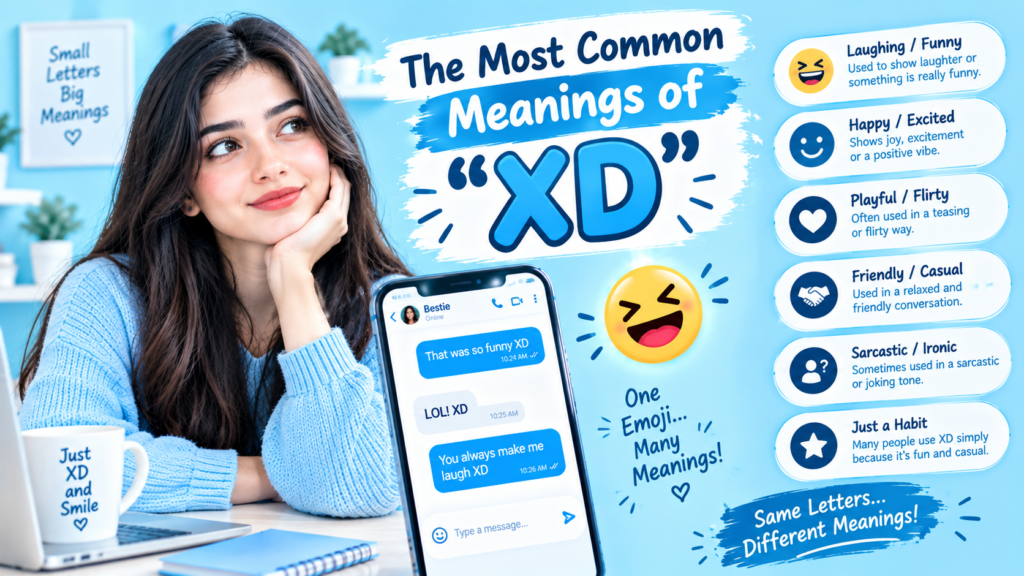
XD is not a single-note expression that always means exactly the same thing. Depending on the surrounding tone, the relationship between the two people, and the platform being used, it can carry several slightly different shades of meaning.
1. Laughing Really Hard
This is the original and still the most common use of XD. Someone types it when something is genuinely, uncontrollably funny: a well timed joke, a viral meme, a ridiculous video clip, or a hilarious story a friend just shared. In this sense, XD functions as a stronger, more visual cousin of a simple “haha.”
2. Reacting to Something Silly
Sometimes XD is not about full blown, doubled over laughter at all. It gets used as a lighter reaction to something mildly ridiculous, slightly awkward, or just plain absurd. Think of it as the digital equivalent of an involuntary snort-laugh rather than a genuine belly laugh.
3. Friendly Teasing
XD frequently shows up at the end of a joke made at someone else’s expense, softening the blow of the tease. Adding it after a playful jab signals “I’m messing with you, please don’t take this the wrong way,” turning a potentially sharp comment into something clearly affectionate.
4. Showing Playful Energy
People also use XD simply to keep a conversation feeling light, fun, and low-stakes, even when nothing specific was said that was actually hilarious. In this role, it works less like a laughter marker and more like a tone marker, quietly telling the other person “I’m being playful right now, don’t read anything too serious into this.”
5. Gaming Reaction
Inside gaming chats, XD is a fast, low effort way to react to a funny in-game moment, a ridiculous death, an unexpected lucky win, or a glitch that breaks the game in a hilarious way all without breaking the flow or rhythm of the match itself.
Also Read This Meaning What Is LBVS in Text
How “XD” Is Used in Real Conversations
Context changes almost everything about how XD lands. Below is a breakdown of how it typically shows up across the platforms where people actually type it.
| Platform/Setting | Typical Use of XD | Common Vibe |
| Friends & casual texting | Reacting to jokes, memes, funny stories | Warm, familiar |
| Instagram & Snapchat | Commenting on funny posts or stories | Light, quick, casual |
| Dating apps | Softening a joke or flirty tease | Playful, sometimes flirty |
| Gaming & online communities | Reacting to funny gameplay moments | Fast, informal |
| Work or professional chat | Rarely used; can feel out of place | Often seen as unprofessional |
Friends & Casual Texting
Among close friends, XD is practically second nature and barely requires a second thought before typing it. It gets dropped into conversations in much the same way someone might type “lol” or “haha,” usually as an instant reaction to something funny that just happened moments earlier.
Instagram & Snapchat
On social platforms, XD often shows up tucked inside comments or quick story replies, especially in reaction to memes, funny captions, or old embarrassing throwback photos. It works as a fast, low effort way to signal amusement without writing out a full sentence.
Dating Apps
On dating apps, XD frequently appears right after a joke or a light, flirty tease. It can soften a message that might otherwise sound too blunt, and it signals clearly that the sender is being playful rather than serious or confrontational.
Gaming & Online Communities
Gamers use XD constantly, and it is often paired with a clip, screenshot, or short recording of a funny in-game fail or an unexpected win. It is quick, requires almost no effort to type, and is universally understood across nearly every gaming community online.
Work or Professional Chat
This is where XD tends to feel noticeably out of place. In professional settings, it can come across as far too casual, especially when messaging colleagues you do not know very well, or in any formal client-facing communication where a polished tone matters.
Is “XD” Rude, Flirty, or Offensive?
Generally speaking, XD is friendly, harmless, and carries no negative baggage on its own. But, like almost any piece of slang, the surrounding tone and context can shift how it actually lands for the person reading it.
When It Feels Positive
Used right after something that is genuinely funny, XD reads as warm, lighthearted, and enthusiastic. It is a simple, low-effort way of showing the other person that you are actively enjoying the conversation you are having with them.
When It Might Feel Slightly Rude
If XD follows a comment that pokes fun at someone and the joke does not land the way it was intended, it can come across as mocking rather than playful. In these cases, the emoticon does not fix a joke that already missed its mark.
When It Feels Flirty
Paired with a teasing message on a dating app, or sent to someone you already have a crush on, XD can add a flirty, lighthearted edge to an otherwise ordinary sentence. It signals interest without requiring the sender to be direct about it.
When It Feels Awkward
Using XD in the middle of a serious or emotional conversation for example, right after someone shares bad news usually feels badly mismatched. Even when the intent behind it is innocent, it can easily come across as dismissive or careless.
How to Respond When Someone Says “XD”
There is no single universally “correct” way to reply to XD, but matching the tone that was sent to you generally works best in almost every situation.
Casual Replies
“Haha same” “XD I know right” “Lmaooo stop”
Funny Replies
“Bro I’m actually wheezing” “XD this is why I can’t have nice things” “Okay that’s actually iconic”
Neutral Replies
“Haha true” “😂” “Yeah that got me”
Professional Replies
“Ha, good one!” “That’s funny 😊” “Appreciate the laugh”
Common Misunderstandings About “XD”
Because XD looks unusual or unfamiliar to some people, especially those less used to internet shorthand, it gets misread more often than most people would expect.
Thinking It Is Angry
Some readers mistake the “X” for anger, frustration, or a symbol used to cross something out, similar to how an “x” is sometimes used to mark a mistake. In reality, the “X” represents two closed, laughing eyes, not annoyance or hostility of any kind.
Confusing It With Sarcasm
While XD can occasionally accompany a sarcastic remark, it is not inherently sarcastic on its own. In the vast majority of everyday conversations, it simply signals genuine amusement or enjoyment.
Believing It Is Always Childish
XD is often associated with younger internet users and teenagers, but in practice it is widely used across many age groups in casual digital spaces, not just by teens texting their friends.
Thinking It Means Something Inappropriate
XD carries no hidden inappropriate meaning of any kind. It is purely and simply an expression of laughter, despite occasional confusion from people who are unfamiliar with the term or have never seen it used before.
Similar Slang Terms You Should Know
XD belongs to a much broader family of laughter-based text expressions, each with its own slightly different intensity and typical setting. Here is how it compares against some of the most common alternatives.
| Term | Meaning | Intensity | Common Setting |
| XD | Laughing hard, eyes closed | High | Casual chat, gaming |
| LOL | Laughing out loud | Medium | General texting |
| LMAO | Laughing my a** off | High | Informal chat |
| 🙂 | Simple smile | Low | Polite, friendly |
| 😂 | Tears of joy | Medium-High | Social media |
| 🤣 | Rolling on the floor laughing | Very High | Social media |
When You Should Avoid Using “XD”
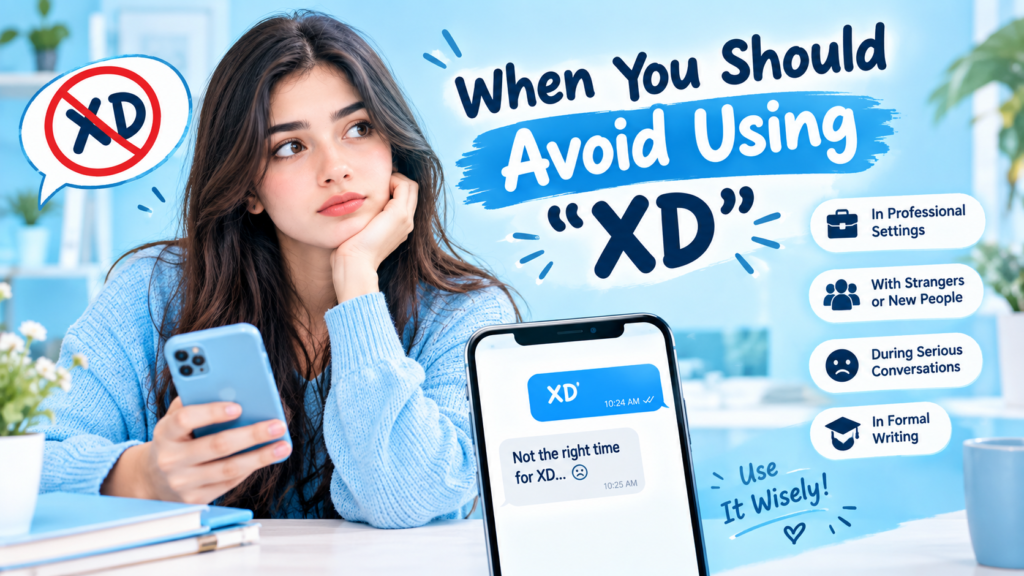
Even though XD is harmless in most casual, everyday settings, there are certain moments and situations when it is genuinely best left out of the conversation entirely.
Professional Settings
In emails, client-facing messages, or formal Slack channels, XD can quietly undercut a professional tone and make an otherwise well-written message feel less credible or polished to the person reading it.
Cross-Cultural Conversations
Not everyone around the world recognizes text-based emoticons in the same intuitive way that they recognize modern picture emojis. In some cultures, or with people who are simply less familiar with internet slang, XD may create confusion rather than clarity.
Sensitive Situations
When someone is sharing sad news, venting about a hard day, or discussing something genuinely serious, XD can feel dismissive or out of touch, even when that was never the intention behind sending it.
Final Thoughts
XD is one of those small pieces of internet language that manages to say a great deal with very little effort. At its core, it is simply a sideways laughing face, closed eyes, wide open grin used to express amusement, playfulness, or lighthearted teasing between two people.
It thrives naturally in casual texting, gaming chats, and quick social media comments, where a fast, low-effort reaction is all that a moment calls for. In more professional or emotionally serious conversations, though, it tends to feel noticeably out of place and can undercut the tone you are actually trying to set.
Understanding when and how to use XD is not complicated once the context clues are clear: read the room, match the tone of whoever you are talking to, and save it for the moments where a little bit of humor genuinely fits. Used thoughtfully, it remains a quick and easy way to keep a conversation feeling warm, playful, and fun.

Hi, I’m Munaza, the creator of RTMeaning.com. I’m passionate about explaining internet slang, abbreviations, texting terms, and modern language in a simple and easy-to-understand way. Through this website, I help readers discover the meanings behind trending words, social media expressions, and online communication. My goal is to make learning new terms quick, clear, and enjoyable for everyone.