

If you’ve ever been mid-conversation and someone suddenly typed “AFK,” you’ve probably paused for a second wondering what it meant. You might have even wondered if you did something wrong. You didn’t. AFK is one of the most common pieces of internet shorthand used today.
Once you understand it, you’ll notice it everywhere. It shows up in gaming chats, DMs, group texts, and even work messages. This guide breaks down exactly what AFK means, how people use it in real conversations, and how you should respond when you see it.
What Does “AFK” Mean in Text?
AFK stands for “Away From Keyboard.” It’s a quick way of telling someone that you’re stepping away from your phone, computer, or conversation for a short period of time. The phrase has stuck around for decades because it solves a very simple problem.
It doesn’t mean someone is ending the conversation for good. It simply means: give me a minute, I’ll be right back. There’s no hidden meaning behind it, and it’s rarely used to signal frustration or disinterest.
The term started in Internet Relay Chat (IRC) communities back in the 1990s, long before smartphones existed. Back then, people typed on desktop computers and needed a fast way to explain sudden silence. Typing three letters was much easier than writing a full sentence every time.
Gamers picked it up quickly because it was the fastest way to tell teammates “don’t wait on me, I’m stepping out for a second.” In fast-paced games, every second matters, so short abbreviations become essential. From there, it spread into everyday texting, social media, and even office chat tools like Slack and Teams.
Today, AFK is used across nearly every generation online. Even people who don’t consider themselves “internet savvy” understand what it means. It has become part of everyday digital vocabulary rather than a niche gaming term.
The Most Common Meanings of AFK
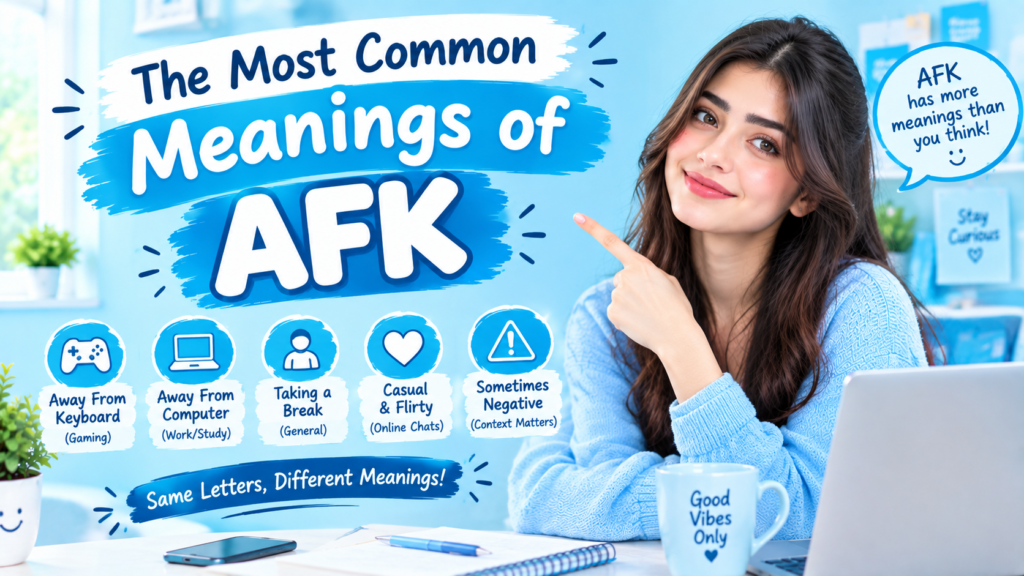
While the literal meaning stays the same, the intent behind AFK can shift slightly depending on context. Some people use it strictly, while others use it more loosely. Here are the four most common meanings people use it for.
Away From Keyboard
This is the original and most literal meaning. Someone is physically not at their device, maybe they stepped out of the room or their computer is unattended. This usage is most common in gaming and older chat platforms.
Temporarily Busy
Sometimes AFK just means “I’m doing something else right now.” It could be a phone call, a chore, or a meeting that’s pulling their attention away from the chat. In this case, it’s less about location and more about attention.
Taking a Quick Break
In gaming especially, AFK often signals a short pause, grabbing a snack, using the bathroom, or resting for a few minutes before jumping back in. Teammates use this signal to plan around the missing player temporarily.
Not Available Emotionally or Mentally
Less commonly, people use AFK loosely to mean they need a mental break from a conversation, even if they’re technically still online. It’s a soft way of saying “I need a moment” without sounding harsh or dramatic.
| Meaning | What It Usually Signals | Common Context |
| Away From Keyboard | Physically stepped away | Gaming, texting |
| Temporarily Busy | Doing something else briefly | Work chats, group texts |
| Taking a Quick Break | Short pause, will return | Gaming, live streams |
| Mentally Stepping Back | Needs a breather | Casual or emotional chats |
How AFK Is Used in Real Conversations
AFK shows up differently depending on the platform and the relationship between the people chatting. The tone can shift from playful to purely functional depending on where it’s used.
Friends & Casual Texting
Between friends, AFK is casual and low-stakes. It’s often paired with other slang or a quick explanation. Example:
“Gonna be AFK for like 10 mins, brb.” “AFK mom’s calling me.”
These messages are short, friendly, and require no further explanation between close friends.
Instagram & Snapchat
On social apps, AFK is often used in stories, bios, or DMs to explain a delay in replying. For example, someone might write “AFK for a bit, will reply later” in their Instagram story so followers don’t think they’re being ignored. This helps manage expectations without needing a long caption.
Dating Apps
On dating apps, AFK is usually harmless; it just means the person needs a short break from the conversation. It’s rarely a sign of disinterest unless it’s paired with a long silence afterward. Most people on dating apps understand this term well since it’s common across messaging platforms.
Gaming & Online Communities
This is where AFK originated and where it’s used most heavily. Players type AFK in chat before stepping away so teammates know not to expect input from them for a few minutes. In competitive games, this small heads-up can prevent confusion or unnecessary blame.
Work or Professional Chat
In tools like Slack or Teams, AFK is sometimes used informally between coworkers, though it’s generally avoided in formal or client-facing conversations. It works fine in casual internal chats but should be replaced with clearer language in official communication.
Is AFK Rude, Flirty, or Offensive?

Short answer: no, not usually. Most people use AFK for practical reasons rather than emotional ones. Here’s a quick breakdown of how it’s typically perceived.
Usually Not Rude
AFK is actually a courtesy. Instead of leaving someone on read with no explanation, the person is letting you know they’re stepping away which is more considerate than silence. It shows a small amount of effort to keep communication clear.
Sometimes It Can Feel Dismissive
If someone types AFK right after an important or emotional message, it can feel abrupt, even if that wasn’t the intention. Tone and timing matter more than the word itself. Context plays a huge role in how the message lands.
AFK Is Rarely Flirty
AFK is purely functional. It’s not a romantic or teasing language, it’s simply a status update, similar to saying “brb” or “one sec.” No one should read deeper meaning into it unless other cues suggest otherwise.
It Is Not Offensive
There’s nothing inherently negative or inappropriate about the term. It’s a neutral internet shorthand used across ages and platforms. It carries no cultural or political weight and is considered completely harmless.
Also Read This Meaning “HYD” Mean in Text
How to Respond When Someone Says AFK
You don’t need to overthink your reply. A short, natural response is usually enough. Here are a few options depending on the vibe of the conversation.
Casual Replies
“Okay, no rush!” “Got it, ping me when you’re back.”
These work well for friends or relaxed group chats where formality isn’t needed.
Funny Replies
“AFK? More like AFC (Away From Chat) lol.” “Take your time, I’ll be here judging your gameplay.”
Humor works especially well in gaming groups or close friendships where teasing is normal.
Neutral Replies
“Sounds good.” “No worries, take your time.”
These are safe defaults for almost any relationship or platform.
Professional Replies
“Understood, I’ll follow up shortly.” “No problem, let me know when you’re free.”
These maintain professionalism while still acknowledging the short break.
Common Misunderstandings About AFK
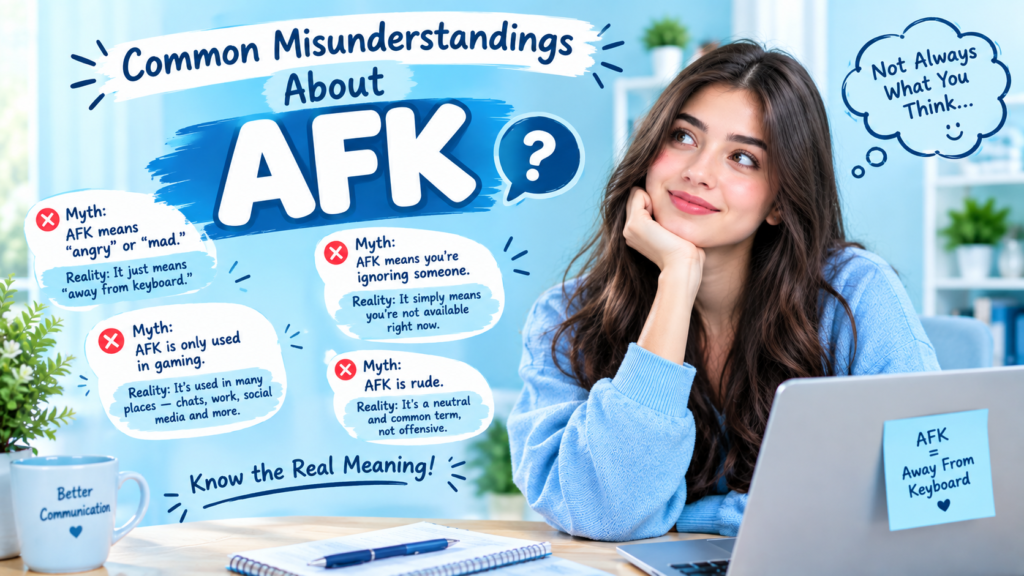
A lot of confusion around AFK comes from people reading too much into it. Since text lacks tone, misunderstandings are common even with simple phrases. Here are the most frequent misunderstandings.
Thinking AFK Means Ignoring You
AFK is the opposite of being ignored. It’s an active heads-up that someone will be right back. People sometimes assume silence equals disinterest, but AFK actually prevents that assumption.
Confusing AFK With Ghosting
Ghosting means someone disappears with no explanation. AFK is the exact opposite: it’s a clear, intentional signal. Mixing the two up can create unnecessary anxiety in conversations.
Assuming It Always Means Computer Use
Even though the term technically references a “keyboard,” most people today use it on phones too; it’s less literal and more about general availability. The word has evolved beyond its original hardware-based meaning.
Misreading Tone
Text lacks vocal tone, so a simple “AFK” can sometimes come across as cold even when the person didn’t mean it that way. Context and prior conversation tone usually clear this up quickly.
Similar Slang Terms You Should Know
AFK belongs to a larger family of texting abbreviations. Learning these terms together makes online conversations much easier to follow. Here’s a quick reference table.
| Term | Meaning |
| BRB | Be Right Back |
| GTG | Got To Go |
| TBH | To Be Honest |
| IMO | In My Opinion |
| NVM | Never Mind |
| IRL | In Real Life |
| DM | Direct Message |
| NPC | Non-Playable Character (used jokingly for people) |
| Lowkey | Subtly or quietly |
| Highkey | Openly or obviously |
| Sus | Suspicious |
| Ghosted | Suddenly cut off contact with no explanation |
Knowing these terms makes it much easier to follow fast-paced group chats, gaming lobbies, and social media comments without feeling lost. Many of these abbreviations overlap in casual conversations, so recognizing them together builds stronger digital literacy overall.
When You Should Avoid Using AFK
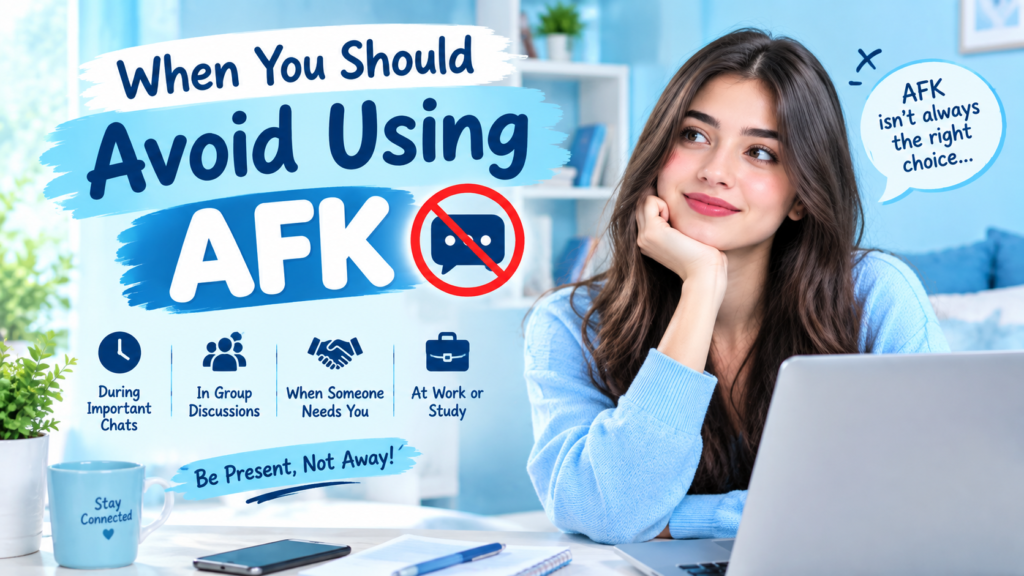
While AFK is widely accepted casually, there are a few situations where it’s better to skip it. Using it in the wrong setting can send the wrong impression, even if unintentionally.
Professional Settings In client emails, formal reports, or important business communication, spell things out fully instead of using abbreviations. Clarity always matters more than convenience in formal writing.
Cross-Cultural Conversations Not everyone globally is familiar with internet slang, so clarity matters more than brevity. Some cultures may not recognize the term at all, leading to confusion.
Serious Emotional Conversations If someone is sharing something important or vulnerable, typing AFK can feel dismissive even if that’s not the intent. In these moments, a short explanation works better than shorthand.
During arguments, stepping away mid-conflict without explanation can escalate tension, so it’s better to explain briefly why you need space. A clear reason reduces the chance of misinterpretation.
Final Thoughts
AFK might look like just another random internet abbreviation, but it plays a small yet meaningful role in digital communication. It replaces silence with a quick, respectful heads-up, which matters in a world where ghosting and unexplained delays are common. Understanding this small term helps make everyday conversations smoother.
Whether you’re gaming with friends, chatting on social media, or messaging coworkers, knowing how to use and respond to AFK adds a layer of clarity to your interactions. It shows consideration without requiring long explanations, which fits naturally into fast modern conversations.
At the end of the day, AFK is simple, harmless, and genuinely useful. Learning its meaning, along with similar slang terms, helps you communicate more clearly across every platform you use. Small terms like this one continue to shape how people talk to each other online.

Hi, I’m Munaza, the creator of RTMeaning.com. I’m passionate about explaining internet slang, abbreviations, texting terms, and modern language in a simple and easy-to-understand way. Through this website, I help readers discover the meanings behind trending words, social media expressions, and online communication. My goal is to make learning new terms quick, clear, and enjoyable for everyone.