

You are chatting with a friend, and the message reads: “It was a long day, yk.” You understand the general idea, but you wonder if there is something more behind those two letters. That is a fair thing to wonder about, because tiny abbreviations often carry more feeling than they seem to.
The YK meaning in text is simple, but the tone behind it can change from chat to chat. A message that feels warm in one conversation can feel cold in another. This guide explains what YK means, how people use it, and when it is better to skip it.
What Does “YK” Mean in Text?
YK stands for “you know.” It is a casual shorthand used in texts, DMs, and comments. People use it to check that the other person understands, or simply to add a relaxed, conversational feel to a sentence.
Quick example:
“I’m just tired, yk?”
Here, the sender is not asking a real question. They are saying, “You get what I mean, right?” It is a gentle way of inviting the reader to nod along and share the feeling, without needing a long explanation.
The phrase comes straight from spoken English. People have used “you know” as a filler for a very long time. Texting simply shortened it to two letters, in the same way that “idk” and “tbh” came about. Fast typing rewards short forms, so the habit spreads quickly.
Another reason for its popularity is rhythm. When you speak, you pause and glance at the listener. In text, YK does a similar job by adding a tiny pause. It helps a written message sound more like a real voice and less like a formal note.
The Most Common Meanings of “YK”
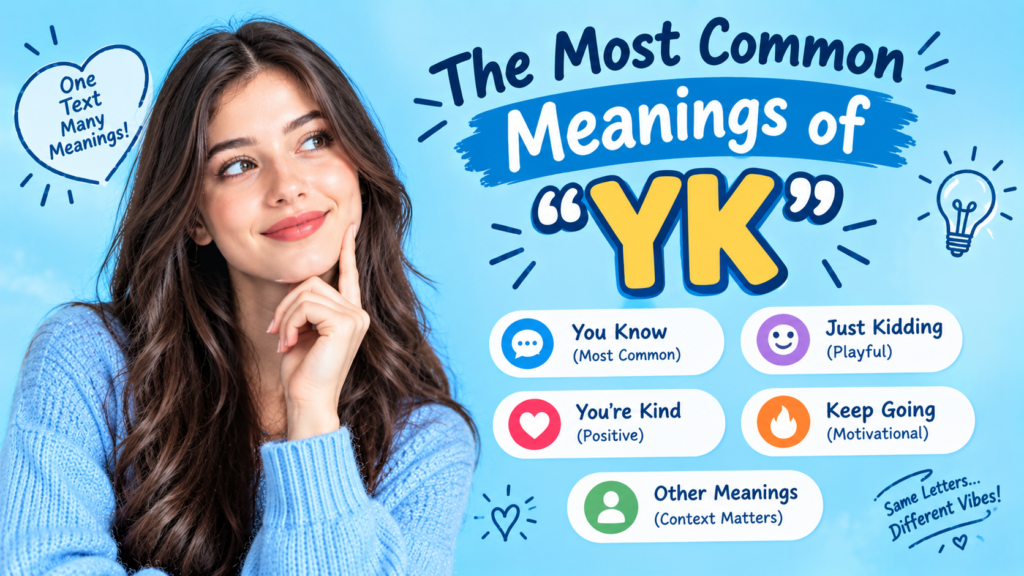
The meaning stays the same, but the purpose changes with context. Here are the four main ways people use it in daily conversations. Knowing these four uses makes it much easier to read the mood of a message.
1. “You Know”
This is the default meaning. If you see YK and nothing else fits, it means “you know.” It works as a filler, a bridge between two thoughts, or a soft way to end a sentence.
- “We were supposed to leave at 8, yk.”
- “yk that place near the park?”
In these cases, YK carries very little emotion. It simply keeps the sentence flowing. If you removed it, the meaning would not change at all. Most everyday uses of YK fall into this simple and harmless category.
2. Adding Emotion or Emphasis
Sometimes YK makes me feel stronger. It signals that the sender wants you to feel what they feel. It works like a small nudge that says, “Please understand how much this matters to me.”
- “That concert was unreal, yk!”
- “I’ve been stressed all week, yk.”
The message is the same with or without YK. The extra two letters just add warmth and a personal touch. They turn a plain statement into something that feels shared between two people who understand each other.
3. Flirty or Soft Communication
In a crush or dating context, YK can sound gentle and a bit teasing. It lowers the pressure of a message and makes a personal comment feel lighter. That is why many people use it when they are testing the waters.
- “I kinda like talking to you, yk.”
- “You’re different from everyone else, yk?”
The flirtiness comes from the surrounding words, not from YK itself. The abbreviation only softens the line and makes it feel less serious. It gives the sender a way to be honest without sounding too intense.
4. PassiveAggressive Tone
YK can also carry an edge. After an argument or a missed plan, it can sound like “you should already know this.” In that moment, the two letters feel less like a friendly filler and more like a quiet complaint.
- “I told you this would happen, yk.”
- “Never mind, yk how I feel about it.”
When the tone is cold, YK usually shows up with short replies, no emojis, and a full stop at the end. The sender may also take longer to reply. Together, these signs suggest frustration rather than friendliness.
Also Read This Meaning AFK Mean in Text
How “YK” Is Used in Real Conversations

YK travels well across apps, but the vibe changes by platform. A message that feels natural in a group chat may feel odd in a work thread. The table below gives a quick overview.
| Platform | Typical Use | Example |
| Friends’ group chats | Filler, casual emphasis | “Same old plans, yk” |
| Instagram & Snapchat | Captions, DMs, story replies | “Weekend mood, yk 😌” |
| Dating apps | Soft, flirty tone | “I’m not great at small talk, yk” |
| Gaming chats | Quick shared understanding | “He always rushes mid, yk” |
| Work chat | Rare, best avoided | “Following up on the file, yk” (not recommended) |
Friends & Casual Texting
This is where YK feels most at home. Friends use it the way they would in a real conversation, to fill a pause or to check that both people are on the same page.
Example: “Brunch was fine, yk, nothing special.”
Because friends already know each other’s style, there is little risk of confusion. A short YK can make a quick chat feel warm and easy. It also saves time when you are typing fast and do not want to explain every detail.
Instagram & Snapchat
On Instagram and Snapchat, YK often appears in DMs, captions, and story replies. It keeps the tone light and short, which suits fast, informal chatting. Users often pair it with an emoji to set the mood.
Since these apps move quickly, people rarely stop to write full phrases. A story reply such as “Same here, yk” feels natural and friendly. The emoji or the photo usually tells you how the sender really feels.
Dating Apps
On Hinge, Tinder, or Bumble, YK can make a message feel relaxed instead of stiff. It works best when both people already have a friendly rhythm going. In the early stage of a match, though, it is wise to keep the message clear.
Gaming & Online Communities
In Discord servers and game chat, YK saves keystrokes when typing mismatch. Players use it to assume shared knowledge, as in “yk how he plays.” It signals that everyone in the lobby already understands the situation.
Work or Professional Chat
Some teams are casual on Slack or Teams, but YK still looks out of place there. Full phrases read as clearer and more polite. A manager or client may also see the shorthand as too relaxed for a work setting.
Is “YK” Rude, Flirty, or Offensive?
It is almost never offensive. The abbreviation itself is neutral, and it carries no hidden insult. What matters is the words, the timing, and the mood that surrounds it.
When “YK” Feels Positive
Friendly messages, emojis, and a warm topic make YK feel easygoing. In these chats, it sounds like a smile in written form. Nobody reads any hidden meaning into it.
“Best day ever, yk 😂”
When “YK” Sounds Flirty
Compliments, late night chats, and a playful rhythm push it toward flirting. The more personal the topic, the more likely the message is romantic. Look for warm words instead of blaming the abbreviation.
“You always make me smile, yk”
When “YK” Feels Rude or Annoyed
Short replies, no emojis, and a tense topic can make YK feel sharp. In this case, the sender may be hinting that you should have understood already. The cold tone comes from the situation, not from the letters.
“yk what I meant.”
Quick tone checklist:
- Emojis and exclamation marks usually mean friendly.
- Lowercase, no punctuation, and long pauses between replies often mean casual or flat.
- Periods after short sentences can signal irritation.
Context Changes Everything
The same two letters can be sweet, neutral, or cold. Look at the relationship, the last few messages, and how the person normally texts. That tells you far more than the abbreviation does.
A friend who always writes in lowercase and sends emojis is probably being casual. A friend who suddenly writes in short, formal lines is probably upset. The change from their usual style is the real clue.
How to Respond When Someone Says “YK”
You usually do not need to reply to YK itself. Just respond to the message. The right reply depends on your mood and your relationship with the sender.
Casual Replies
- “Yeah, I get you.”
- “Ik, right?”
- “For sure.”
Funny Replies
- “I know things. Continue.”
- “Do I? Tell me more 😄”
Neutral Replies
- “Got it.”
- “Makes sense.”
- “Tell me more.”
Professional Replies
If a colleague uses YK at work, answer in normal words. This keeps the chat polite and clear without making anyone feel corrected.
- “Understood, thanks for clarifying.”
- “Yes, that works for me.”
Common Misunderstandings About “YK”
A few myths keep circulating about this small abbreviation. Here is what is actually true.
Thinking It Has a Secret Meaning
In everyday texting, it does not. YK is almost always “you know.” A few pages list other meanings, such as “you’re kidding,” but you would only see those in chats where the context makes it obvious.
Outside texting, YK can also be a place code, such as Yukon or Yellowknife, or the name of the rapper YK Osiris.
Confusing It With “YKYK”
YK is a filler phrase. IYKYK (“if you know, you know”) points to an inside joke or shared experience. They are not interchangeable, so avoid mixing them up.
Assuming It Is Always Flirty
Most of the time it is just casual. Read flirtiness from compliments and personal comments, not from the abbreviation. Otherwise, you may see romance in a simple chat.
Misreading Tone in Text
Text strips out voice, facial expression, and timing. If YK feels odd, ask a quick followup instead of guessing. One short question can prevent a long misunderstanding.
Thinking Older People Never Use It
Plenty of adults use texting shorthand. It is not limited to Gen Z, though teens and young adults use it most often.
Similar Slang Terms You Should Know
These terms sit in the same family as YK, so they are easy to mix up.
| Slang | Meaning | Tone / Use |
| YK | You know | Casual filler |
| IK | I know | Agreement, reply to YK |
| YKW | You know what | Adds emphasis |
| YKWIM | You know what I mean | Seeks confirmation |
| IYKYK | If you know, you know | Inside joke |
| IDK | I don’t know | Uncertainty |
| TBH | To be honest | Frank opinion |
| NGL | Not gonna lie | Casual honesty |
| FR | For real | Agreement or emphasis |
YK vs IDK: One assumes shared understanding. The other admits you don’t have it.
YK vs YKWIM: YKWIM is the longer, more direct form of asking “does that make sense?”
When You Should Avoid Using “YK”
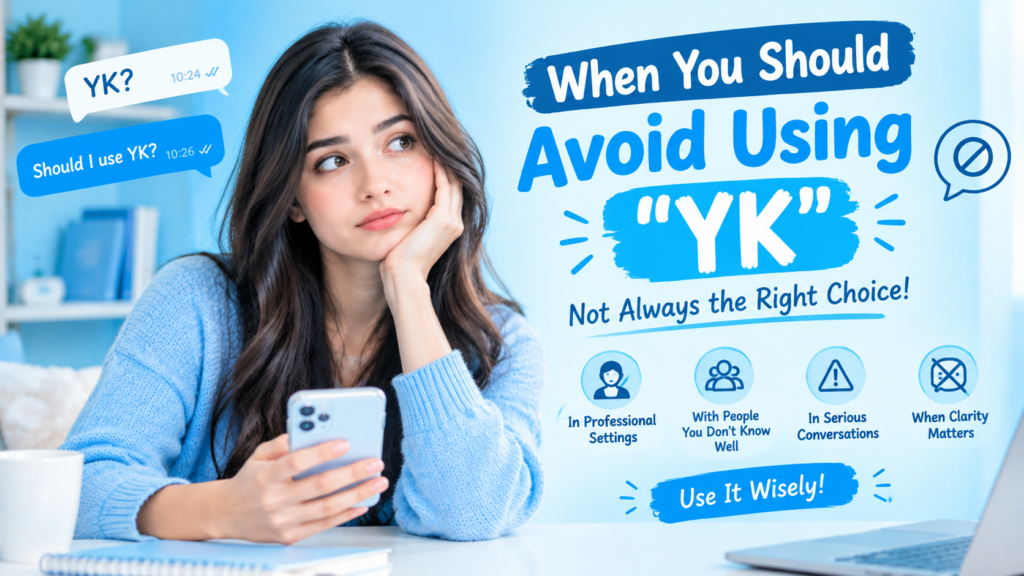
Texting slang is fine among friends. In some settings, though, it can cause confusion or come across as careless.
Professional Settings
Emails, client chats, and messages to managers should use full sentences. It looks more polished and avoids any hint of sloppiness.
Cross Cultural Conversations
Non native English speakers may not recognize the abbreviation. Writing “you know” in full avoids confusion.
Serious or Sensitive Situations
If someone is upset, grieving, or talking about something heavy, skip the shorthand. A clear, warm sentence shows more care.
Talking to Older Audiences
Some older relatives or colleagues may not know texting slang. When in doubt, spell it out.
Conclusion
YK is two letters standing for “you know.” It works as a filler, a friendly nudge, or a quick way to check that someone gets your point. The meaning is simple, but the tone depends on the person.
The platform and the conversation matter just as much. Use it freely with friends, and keep it out of professional messages. Full phrases are always safer and clearer at work.
If you are unsure what someone meant, do not overthink it. Read the context, notice their usual style, and ask a simple question. A clear answer is always better than a wrong guess.

Hi, I’m Munaza, the creator of RTMeaning.com. I’m passionate about explaining internet slang, abbreviations, texting terms, and modern language in a simple and easy-to-understand way. Through this website, I help readers discover the meanings behind trending words, social media expressions, and online communication. My goal is to make learning new terms quick, clear, and enjoyable for everyone.