

If you have come across “dwbi” in a text message, a comment, or a private message and had no idea what it meant, you are certainly not alone. This short combination of letters shows up all the time in casual conversations, and it can feel a little confusing the first time you encounter it. The good news is that once the context becomes clear, it turns out to be one of the simplest slang terms to pick up.
This guide walks through exactly what “dwbi” means, how people use it in everyday conversations, and when it makes sense to use it yourself.
What Does “dwbi” Mean in Text?
“dwbi” is a texting shorthand that stands for “Don’t Worry ‘Bout It.” It is a relaxed, easygoing way of letting someone know they do not need to stress over something small, whether that is a minor mistake, an awkward moment, or a slight inconvenience.
The phrase works almost exactly like saying “no big deal” or “it’s fine” in a face-to-face conversation, just condensed into a quick, typable form. People choose it because it saves time compared to writing a full sentence, while still carrying the same reassuring tone.
It has become especially common among younger texters and social media users who prefer short, efficient replies over longer explanations. The abbreviation fits naturally into fast-moving chats where speed matters just as much as meaning.
What Does “DWBI” Mean From a Crush?
When someone you are romantically interested in sends “DWBI,” the core meaning stays the same, but the emotional weight behind it often shifts. Coming from a crush, it can feel sweet, laid-back, or even a little flirty, particularly if it follows an apology or a nervous message.
Context plays a huge role in how the message is received. If the overall conversation already has a playful, light tone, then “dwbi” tends to feel warm and comforting rather than dismissive or cold.
It is also worth noticing the timing of the reply. A quick “dwbi” sent right after your message often signals genuine ease and comfort, while a delayed one might simply reflect a busy schedule rather than a lack of interest.
DWBI vs. DW: What’s the Difference?
Both abbreviations share the same underlying idea, but they are not quite identical in tone or usage.
| Term | Full Meaning | Tone | Common Use |
| DW | Don’t Worry | Short, neutral | Quick reassurance |
| DWBI | Don’t Worry ‘Bout It | Slightly more casual and expressive | Friendly, relaxed reassurance |
“DW” feels more clipped and universal, almost like a reflex response. “dwbi,” on the other hand, feels a bit more personal and conversational, closer to something you would actually say out loud to a close friend.
Many people use both interchangeably without thinking twice, but choosing “dwbi” over “DW” often signals a slightly closer or more familiar relationship between the two people texting.
The Most Common Meanings of “dwbi”
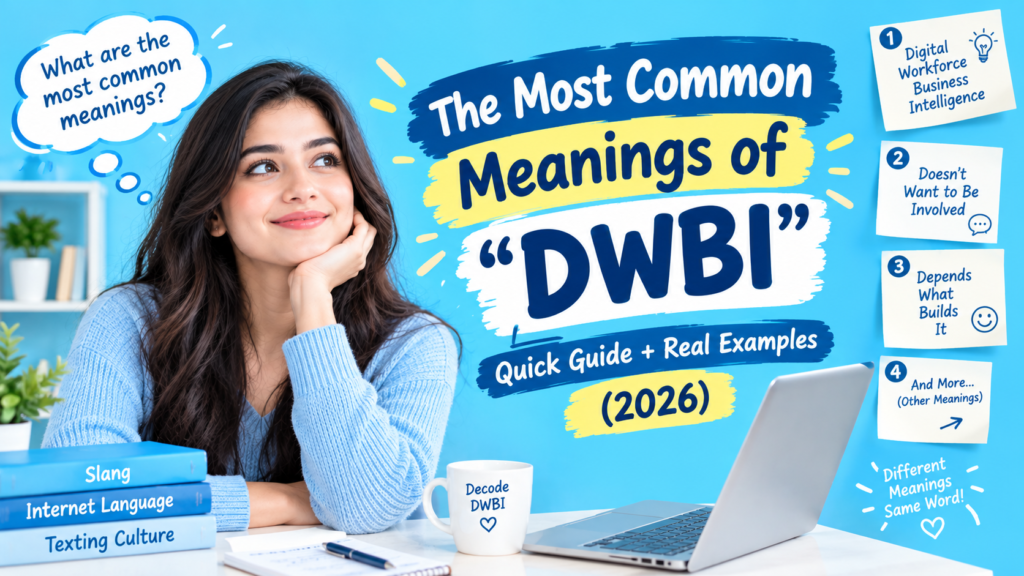
While the central idea behind “dwbi” stays fairly consistent, the exact shade of meaning can shift depending on the situation it appears in.
1. Don’t Worry ‘Bout It (Most Common)
This is the standard, default meaning across almost every platform where the term appears. It is used to brush off a small issue and reassure the other person that everything is genuinely fine.
This version shows up most often after apologies, small delays, or minor mix-ups in plans. It is the safest and most widely understood interpretation of the phrase.
2. Don’t Worry About It
A slightly more formal-sounding variation of the same core phrase, often used interchangeably with the first meaning. The difference is subtle and rarely changes how the message is understood.
Some people prefer this fuller phrasing when they want the reply to feel a touch more sincere, even while keeping the same relaxed intention behind it.
3. I’ve Got It Covered
Sometimes “dwbi” is used to signal that the sender has already taken care of something, meaning there is no need for the other person to worry or step in themselves.
This usage often appears in group chats or planning conversations, where one person wants to reassure others that a task or responsibility has already been handled.
4. Relax, It’s Not Serious
In certain contexts, “dwbi” is used purely to calm someone down, letting them know that the situation is not nearly as big a deal as they might be assuming.
This meaning leans more toward emotional reassurance than practical help, and it often appears when someone seems anxious or overly apologetic about something minor.
Also Read This Meaning “Emphasize” Mean in Text
How “dwbi” Is Used in Real Conversations
The tone and underlying intent behind “dwbi” can shift quite a bit depending on the platform or setting where it is used.
Friends & Casual Texting
Among close friends, “dwbi” is usually a fast way to shrug off an apology or a small scheduling mix-up. It keeps the mood light and avoids making a minor issue feel bigger than it is.
Friend: “Sorry I’m running 10 minutes late!”
You: “Dwbi, take your time”
Instagram & Snapchat
On social platforms, “dwbi” often shows up in comments or direct messages as a breezy, low-pressure response to something small. It fits naturally into the fast, casual rhythm of social media conversations.
Dating Apps
In dating conversations, “dwbi” tends to smooth over tension, especially after an awkward message or a delayed reply. It signals that the other person is not holding a grudge over small social slip-ups.
Gaming & Online Communities
Gamers frequently use “dwbi” to reassure teammates after an in-game mistake, keeping the overall mood light instead of frustrated. It helps maintain team morale during competitive or fast-paced sessions.
Work or Professional Chat
This usage is far less common and is generally best avoided in professional settings. More detail on why is covered further below.
Is “dwbi” Rude, Flirty, or Offensive?
By default, “dwbi” is not offensive in any way. That said, tone and context can shift how the message actually lands with the recipient.
Positive Tone
When used after an apology or a small mistake, “dwbi” comes across as warm, kind, and reassuring. It tells the other person their concern has been noticed and accepted without judgment.
Neutral Tone
In everyday casual chats, it simply functions as a quick, low-effort way to keep the conversation moving forward without dwelling on something minor.
Slightly Dismissive Tone
If someone is genuinely upset and receives a quick “dwbi” in response, it can feel like their concern is being brushed aside, even when that was never the sender’s intention. Reading the emotional state of the other person before replying this briefly is always a good idea.
How to Respond When Someone Says “dwbi”
The best way to reply usually depends on the overall vibe of the conversation you are already having.
Casual Replies
- “okay cool 😊”
- “gotchu”
Funny Replies
- “was already not worried lol”
- “too late, I panicked already”
Neutral Replies
- “alright, thanks”
- “noted”
Professional Replies
- “Understood, thank you.”
- “Appreciate the update.”
Matching your reply’s tone to the situation helps keep the conversation flowing naturally, whether it stays lighthearted or shifts toward something more serious.
Common Misunderstandings About “dwbi”
A handful of mix-ups happen regularly with this particular term, especially among people who are less familiar with texting slang.
Thinking It Is an Insult
Some readers unfamiliar with texting abbreviations mistake “dwbi” for something negative, when in reality it is meant to be reassuring and kind.
Confusing It With Random Letters
Because “dwbi” is not as widely recognized as simpler terms like “DW,” people sometimes assume it is a typo rather than an intentional, meaningful abbreviation.
Misreading the Tone
Text messages naturally lack vocal tone and facial expression, so “dwbi” can occasionally come across as more dismissive than the sender ever intended it to be.
Thinking It Means “Don’t Bother”
This is a fairly common mix-up, but “dwbi” is fundamentally about offering reassurance, not about discouraging someone from doing something.
Similar Slang Terms You Should Know
“dwbi” belongs to a much larger family of texting shortcuts that are worth becoming familiar with.
| Abbreviation | Meaning |
| NVM | Never mind |
| IDC | I don’t care |
| BRB | Be right back |
| TBH | To be honest |
| IDK | I don’t know |
| IMO | In my opinion |
| SMH | Shaking my head |
| FYI | For your information |
| LMK | Let me know |
| NP | No problem |
| DW | Don’t worry |
| NBD | No big deal |
Learning these common abbreviations makes it much easier to follow fast-paced conversations across texting apps and social media without constantly pausing to look things up.
When You Should Avoid Using “dwbi”
While “dwbi” works well in casual, relaxed settings, there are several situations where it is better to leave it out entirely.
Professional Settings: It can come across as too informal or even dismissive in work emails or messages sent to colleagues and clients.
Cross-Cultural Conversations: Not everyone is familiar with this particular abbreviation, and using it can lead to genuine confusion for the other person.
Serious Conversations: If someone is dealing with something significant or is genuinely upset, writing out a full, thoughtful sentence shows far more care and consideration.
When Tone Matters: In situations where clarity is essential, spelling things out fully helps avoid any risk of misinterpretation.
Final Thoughts
“dwbi” is a simple, friendly piece of texting slang that means “don’t worry ’bout it.” It shows up most often among friends, in casual direct messages, and across social platforms, offering a fast way to reassure someone without needing a full sentence.
Like most slang terms, its true meaning depends heavily on the context and the relationship between the people involved. Used at the right moment, it feels warm and effortless; used at the wrong one, it can come across as a little dismissive.
Knowing the difference between these two outcomes is really what separates casual familiarity from true fluency in modern texting culture.

Hi, I’m Munaza, the creator of RTMeaning.com. I’m passionate about explaining internet slang, abbreviations, texting terms, and modern language in a simple and easy-to-understand way. Through this website, I help readers discover the meanings behind trending words, social media expressions, and online communication. My goal is to make learning new terms quick, clear, and enjoyable for everyone.