

You open a chat, and the last message reads: “LYT.” Three letters. No punctuation. No emoji. Is it sweet? Is it cold? Did they mean it?
Short answer: LYT means “love you too.” People send it as a quick reply after someone says “love you” or “ily.” It’s small, but the feeling behind it can change a lot depending on who sends it and how.
This guide covers the meaning of LYT in text, where it comes from, how people use it across apps and cultures, and how to reply without overthinking it. You’ll also see real chat examples, a comparison table, and a few traps to avoid.
LYT Meaning in Text – Quick Meaning
LYT = Love You Too.
It is a texting abbreviation used to return affection. Someone says “love you,” and you answer “lyt.” That’s the whole job of this slang term.
Here is the fast breakdown:
| Detail | Answer |
| Full form | Love You Too |
| Type | Texting abbreviation / internet slang |
| Tone | Warm, casual, quick |
| Usually sent after | “ly,” “ily,” “love you,” “luv u” |
| Common apps | WhatsApp, iMessage, Instagram, Snapchat, TikTok comments |
| Safe for family and friends? | Yes |
| Safe for work chats? | Rarely. Skip it. |
In one line: LYT is a shortcut reply that says “I feel the same way” without typing the whole sentence.
Simple Examples
Short examples make the meaning stick. Here are a few you might see in daily chats.
- “Night! Love you ❤️” → “lyt, sleep well”
- “ily bestie” → “lyt!!”
- “Proud of you today.” → “Thanks mom, lyt.”
- “ly 😘” → “lyt 😘”
- “Miss you already” → “miss u too, lyt”
Notice the pattern. LYT almost always comes as an answer, not an opener. You rarely start a chat with it, because “too” needs something to point back to.
Origin & Background
Texting abbreviations grew out of limits. Early SMS messages had tight character counts. Chat rooms in the 1990s and 2000s moved fast. People wanted to type less and say more.
That’s how we got LOL, BRB, and TTYL. Affection got its own shorthand too:
- ly → love you
- ily → I love you
- luv u → love you
- lyt → love you too
LYT sits in the same family. It likely spread as people already knew “ly” and “ily.” Adding a “t” for “too” was a natural next step. No single person invented it. Like most slang, it grew from habit and repetition.
Today, speed still matters, but the bigger reason is tone. Typing “lyt” feels lighter than typing “I love you too.” It keeps things easy and relaxed, which is how many people prefer to talk in chat.
A quick note on other meanings. Some abbreviation sites list LYT with unrelated meanings from fields like lumber, lighting, or airport codes. Those don’t show up in normal texting. If a friend, partner, or family member sends it in a chat, love you too is the answer in nearly every case. If the context feels odd, just ask.
Real-Life Conversations
Let’s look at how LYT sounds in actual chats. Each app has its own rhythm.
1. WhatsApp Chat
WhatsApp chats are often with family and close friends, so LYT fits right in.
Ayesha: Reached home safe. Love you.
Sara: Good. lyt, text me tomorrow.
Dad: Eat properly, ok? Love you beta.
You: lyt baba 🤍
Here, LYT feels like a warm closing line. It ends the message with care, not drama.
2. Instagram DM
On Instagram, replies tend to be short and playful. Reels, memes, and voice notes fill the chat, so LYT often rides along with an emoji.
Friend: That reel you sent made my day. ily!!
You: lyt 😂❤️
Partner: Good luck with your exam. ly 💪
You: lyt!! see you after
3. Text Message
Regular SMS or iMessage chats are where LYT feels most natural. It shows up at the end of calls, goodnights, and goodbyes.
Partner: Heading into a meeting. Love you.
You: lyt. Call me after.
Sibling: Don’t forget to eat 😭 love you
You: lyt idiot
That last one shows something important. LYT can sit next to teasing and still stay affectionate.
Emotional & Psychological Meaning
What does LYT really say about how someone feels? It depends. Words on a screen lose tone of voice, so people read meaning into small details.
What LYT usually signals:
- Reciprocation: The person feels the same way.
- Comfort: They don’t need a long reply to show care.
- Ease: The bond is relaxed enough for shorthand.
What LYT can also signal, depending on context:
- Habit: Some people say “love you” so often that “lyt” becomes automatic, like saying “bye.”
- Busy mode: They’re at work, in class, or on the move.
- Low energy: They care, but they’re tired.
Psychologists who study digital communication often point out that people fill gaps in text with their own mood. If you feel insecure, “lyt” might read as cold. If you feel secure, it reads as sweet. The message didn’t change. Your lens did.
So before you decide how deep it goes, look at the whole picture: the sender’s usual style, the time of day, and what was said before.
Also Read This Meaning: WYF Mean
Usage in Different Contexts
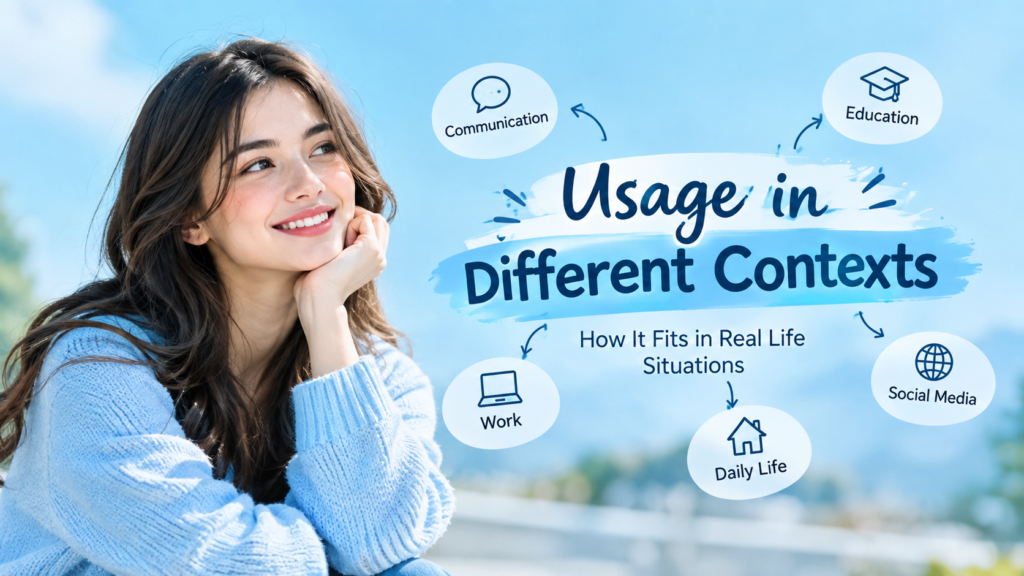
LYT shifts slightly from one setting to another. Here’s how.
1. Social Media
On public platforms, LYT shows up in:
- Comment replies (“ily queen” → “lyt”)
- Story replies and DMs
- Captions under couple or friend photos
- Fan interactions, where creators answer supportive comments
It’s casual and short, which suits fast-scrolling feeds. Because social media is public, people use it for light affection, not deep emotional talks.
2. Friends & Relationships
This is where LYT lives.
- Best friends: playful and frequent, often with emojis
- Family: simple and warm, a quick sign of care
- Couples: a daily habit, usually after “goodnight” or “see you soon”
- New relationships: can feel like a big step, especially after the first “love you”
If a partner says “ily” for the first time and you reply “lyt,” some people may feel it’s a bit brief for such a big moment. In that case, a fuller reply tends to land better.
3. Work or Professional Settings
Keep LYT out of work chats. It’s too personal and too casual for coworkers, clients, or managers.
Even in friendly offices, “love you too” can cross a line when typed in slang form. If a colleague says “love you guys” in a team chat after a big win, a safer reply is:
- “Appreciate you all!”
- “Great teamwork, everyone.”
4. Casual vs Serious Tone
LYT belongs to casual talk. It works well for everyday affection. It works poorly when emotions run high.
| Situation | Is LYT a good fit? |
| Goodnight text | ✅ Yes |
| Ending a phone call | ✅ Yes |
| Replying to a friend’s compliment | ✅ Yes |
| First “I love you” in a relationship | ⚠️ Maybe too short |
| Apology or argument | ❌ Not ideal |
| Condolence or hard news | ❌ No |
| Work email or Slack | ❌ No |
Common Misunderstandings
A tiny abbreviation can cause big confusion. Here are the most common mix-ups.
1. Assuming It’s Deeply Emotional
Many people treat “lyt” as a heavy confession. Most of the time, it’s not. It’s a small, everyday habit, like ending a call with “bye.”
If your mom, cousin, or best friend sends it, they likely mean it kindly but casually. Reading too much into it can create worry for no reason.
2. Thinking It’s Rude
Some people feel that typing “lyt” instead of the full phrase shows less effort. That’s not usually true. Abbreviations are normal in chat, and short replies often show comfort, not coldness.
That said, context matters. If your partner always writes long, loving messages and suddenly switches to “lyt,” it may be worth a gentle check-in. The shift is the clue, not the word itself.
3. Using It in Serious Moments
LYT can feel flat during emotional moments. Imagine someone sends a long, heartfelt message about how much you mean to them, and you answer “lyt.” It might hurt, even if you didn’t intend it.
For big, vulnerable messages, take a minute and write something real.
Comparison Table
LYT often gets mixed up with similar abbreviations. This table helps tell them apart.
| Abbreviation | Meaning | Usually Used When | Feeling Level |
| LYT | Love you too | Replying to “love you” | Warm, casual |
| LY | Love you | Starting or ending a chat | Warm, casual |
| ILY | I love you | Expressing affection first | Warm to strong |
| ILYT | I love you too | Replying with a bit more emphasis | Warm to strong |
| ILY2 | I love you too | Replying (the “2” means “too”) | Warm, playful |
| LYSM | Love you so much | Showing strong affection | Strong |
| LYM | Love you more | Friendly or romantic one-upping | Playful, warm |
| ILU | I love you | Casual affection | Warm |
| XOXO | Hugs and kisses | Sweet sign-offs | Light, sweet |
The main difference: LY starts the affection. LYT answers it.
Variations / Types of LYT
People tweak LYT to match their mood. Here are common forms you may see.
Style Variations
- lyt – the standard lowercase version, relaxed and easy
- LYT – all caps, which can feel more excited
- lyt!! – extra energy, usually from close friends
- lyt 😘 / lyt ❤️ – softer and more affectionate with emojis
- lyt… – can feel unsure, tired, or distracted (context decides)
- ly2 / lyt2 – playful spin, mostly among teens and younger users
Tone Variations
| Version | Likely Tone |
| lyt | Neutral, warm |
| LYT!!! | Excited, enthusiastic |
| lyt 🙄 | Teasing, sarcastic |
| lyt, bye | Quick, busy |
| lyt babe | Romantic |
| lyt bro / lyt sis | Friendly, platonic |
Emojis and punctuation do most of the emotional work. The same three letters can sound sweet, silly, or sarcastic depending on what’s around them.
How to Respond When Someone Uses “LYT”
Sometimes LYT ends the conversation. Sometimes you want to keep it going. Here are reply ideas for different moods.
Casual Replies
Use these with friends, siblings, and everyday chats.
- “Aww 🥰”
- “❤️”
- “Talk soon!”
- “Sleep well!”
- “Catch you later.”
Funny Replies
Good for playful friendships.
- “Wow, three letters? I feel so special 😂”
- “Okay, LYT is my love language now.”
- “Careful, I might frame this message.”
- “Was that so hard? 😄”
- “Save some feelings for the group chat.”
Mature / Confident Replies
These suit adult relationships, where you want to be warm but clear.
- “That means a lot. Hearing it from you always helps.”
- “Glad we feel the same way.”
- “Right back at you.”
- “I’m lucky to have you.”
Private or Respectful Replies
Use these when the topic is sensitive, you’re not ready to say more, or the other person is not very close.
- “Thank you. I appreciate you.”
- “That’s kind of you.”
- “I’d like to talk about this properly later.”
- “Thanks for being so thoughtful.”
Tip: You don’t have to answer every LYT. If it closes the chat, a heart emoji is enough. If it feels strange, ask a simple question like, “Everything okay?” That beats guessing.
Regional & Cultural Usage
Texting slang travels fast, but meaning and comfort levels shift by culture.
Western Culture
In the US, UK, Canada, and Australia, saying “love you” is common among friends, family, and partners. People say it at the end of calls and texts without much ceremony. LYT fits that rhythm, and it’s widely understood among younger users and frequent texters.
Asian Culture
In many Asian countries, families often show love through actions more than words.
Saying “love you” in text may feel more personal, even rare. Still, younger people on WhatsApp, Instagram, and Snapchat use English slang like LYT freely, often mixing it with local languages (“lyt jaan,” “lyt oppa,” or similar blends). In some families or relationships, however, a short reply to a rare “love you” may feel too light.
Middle Eastern Culture
Affection is usually expressed warmly in speech, but written declarations can feel more private.
Among younger, English-speaking users, LYT appears between close friends and couples. In more traditional settings, people may prefer softer phrases in their own language, or keep romantic expressions out of public posts and comments. Reading the setting matters.
Global Internet Usage
Online, LYT has no borders. Gaming chats, Discord servers, TikTok comments, and Instagram DMs all carry it. Because people from many backgrounds meet there, meaning stays mostly the same: love you too. The difference is in how serious people treat it.
| Region | Comfort With Affection in Text | LYT Usage |
| Western countries | High | Very common |
| South and East Asia | Medium (varies by family) | Common among youth |
| Middle East | Medium to private | Mostly among close circles |
| Global online spaces | Mixed | Common and casual |
Tips for Using LYT the Right Way
Want to use it without any awkward moments? Keep these in mind.
- Match the energy: If someone sends a long message, give more than three letters.
- Know your audience: Close friends and family get LYT. Coworkers do not.
- Add a touch of warmth: An emoji or short follow-up softens it.
- Skip it in serious moments: Apologies, grief, and deep talks need real words.
- Be genuine: Only say it when you mean it, even in shorthand.
- Check understanding: If you’re texting someone older or less online, spell it out once.
NFSS Meaning on Instagram
NFSS commonly means “Not For Sale Stuff” or “Not For Sharing Stuff,” depending on context. On Instagram, people use it in bios or captions to say their posts or items aren’t for sale or sharing. It isn’t a very standard abbreviation, so check the surrounding text for the exact meaning.
What Does Ft. Mean?
Ft. is short for “featuring.” It’s used in music and videos to show a guest artist appearing on a track, like “Song Name ft. Artist.” It can also mean “feet” as a unit of length, depending on context.
Conclusion
LYT means “love you too.” It’s a short, friendly reply used to return affection in texts, DMs, and comments. Most of the time, it signals warmth, comfort, and ease, not coldness or secret meaning.
The word itself is simple. The tone is what matters: who sent it, when, and with what emojis or punctuation. Use it with people you’re close to, give more when the moment calls for it, and keep it out of work chats.
Next time you see “lyt” pop up, you’ll know what it says, and how to answer it with confidence.

Hi, I’m Munaza, the creator of RTMeaning.com. I’m passionate about explaining internet slang, abbreviations, texting terms, and modern language in a simple and easy-to-understand way. Through this website, I help readers discover the meanings behind trending words, social media expressions, and online communication. My goal is to make learning new terms quick, clear, and enjoyable for everyone.