
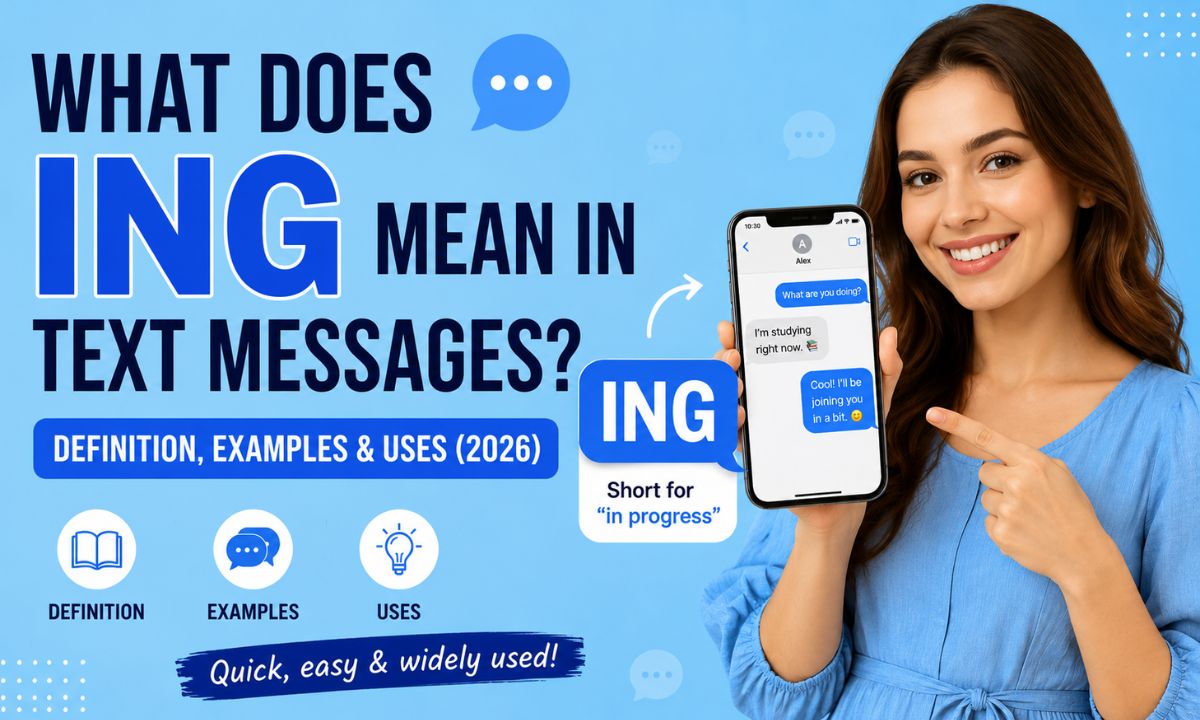

Ever seen a friend text “ing” and had no clue what they meant? You’re definitely not alone. This tiny three letter combo has quietly become one of the more confusing pieces of internet slang floating around TikTok comments, Snapchat streaks, and group chats. Some people use it as plain grammar. Others use it as a full blown meme. And a smaller crowd uses it as shorthand for something else entirely.
This guide breaks down every version of “ing” you’ll actually run into online, why it caught on, and how to use it (or avoid it) depending on the situation. By the end, you’ll never have to pause midconversation wondering what someone actually meant.
🧠 What Does ING Mean in Text?
At its core, “ing” has two very different lives.
The first is boring but useful: it’s just the standard “ing” verb ending that shows an action happening right now, like running, eating, or scrolling. Nothing slangy about that it’s basic English grammar that existed long before texting culture ever picked it up.
The second life is the one that actually gets people searching Google. Online, “ing” is sometimes used as a standalone reaction or filler word, almost detached from any real verb.
It gets tacked onto sentences to add emphasis, humor, or a vague sense of “this is a whole mood.” In some corners of texting culture, it’s also loosely tied to phrases like “it’s not good,” used as a quick way to react to something disappointing without spelling out the full sentence.
The honest answer? Meaning depends entirely on context. Same three letters, completely different vibe depending on who’s typing, what platform they’re on, and what came before it in the conversation.
📱 Where Is ING Commonly Used?
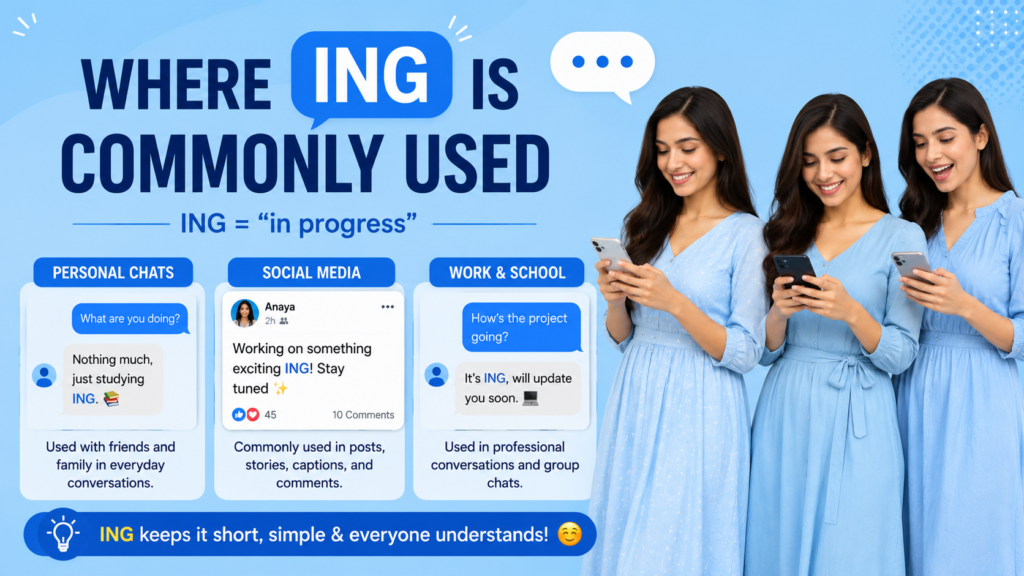
“Ing” shows up almost exclusively in casual digital spaces. You won’t find it in emails, reports, or anything remotely formal, and using it in the wrong setting can come across as confusing or even unprofessional.
📍 Popular Platforms:
- TikTok comments often used as a reaction to relatable or chaotic content
- Snapchat chats quick, loweffort replies between friends
- Discord servers especially in gaming or memeheavy communities
- Instagram DMs and comments casual banter and inside jokes
- Group texts shorthand between people who already share context
🧩 Tone & Style:
- Playful and lighthearted
- Often paired with emojis (💀😩😭)
- Rarely meant to be taken too seriously
- Works best between people who already text casually
- Tends to spread fastest among teens and young adults who are active on shortform video apps
💬 Examples of ING in Conversation
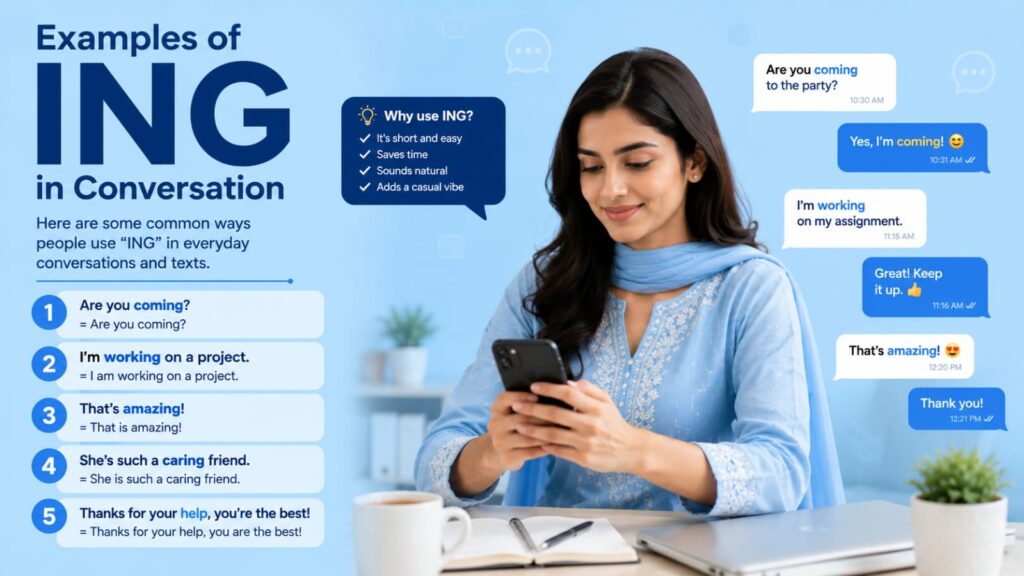
Seeing it in action makes the meaning click faster than any definition. Here are seven real world style examples that cover the range of ways “ing” gets used.
1. Normal Grammar Usage
A: What are you up to? B: Just studying for finals. Here, “studying” is standard grammar with no slang involved. This is the version most people already understand without thinking twice.
2. Funny Internet Slang
A: Bro I forgot my own birthday plans. B: That’s so ing 💀 Used as a reaction to something mildly disastrous, almost like saying “that’s rough” but funnier.
3. Casual Chat
A: What’s going on? B: Nothing much, just ing. A vague, low effort way to say “not doing much” without committing to any real detail.
4. Meme Style
A: Rewatching the same show for the 5th time. B: The ing is real 😭 Used to exaggerate a relatable, slightly ridiculous habit in a way that feels selfaware and funny.
5. Gaming Conversation
A: Are you still queuing? B: Yeah, ing through ranked right now. A quick, efficient way to describe an ongoing activity midgame without breaking focus to type a full sentence.
6. Social Media Comment
Comment: “This whole video is ing.” A reaction comment implying the content is chaotic, overwhelming, or hard to explain in a funny way.
7. Playful Reply
A: Are you coming tonight? B: Ing about it lol, maybe. A noncommittal, joking response that avoids giving a direct yes or no.
Also Read This Meaning WH Meaning in Text Messages
🕓 When to Use and When Not to Use ING
Like most internet slang, timing and audience matter a lot. What lands perfectly in a group chat with friends might completely confuse a coworker or family member.
| Situation | Recommended? |
| Texting close friends | ✅ Yes |
| Commenting on memes/TikToks | ✅ Yes |
| Gaming chats | ✅ Yes |
| Work emails | ❌ No |
| Academic writing | ❌ No |
| Talking to someone unfamiliar with slang | ❌ Risky |
✅ When to Use ING
- Casual texting between friends
- Reacting to funny or relatable content
- Keeping a message short and low effort
- Chatting in spaces where slang is already common, like gaming servers
❌ When Not to Use ING
- Professional or formal communication
- Talking to someone older or unfamiliar with slang
- Situations where clarity matters more than tone
- First time conversations where the other person might misread your intent
🔄 Other Meanings of ING in Text
While the slang usage gets most of the attention, “ing” can pop up in a few other ways too, depending on who’s using it and where.
- Standard grammar suffix the classic verb ending, no slang attached
- Casual shorthand for disapproval a quick, informal way some people express “not great” without spelling it out
- Placeholder filler used when someone doesn’t want to fully explain what they’re doing
- Insidejoke shorthand some friend groups assign their own private meaning to it over time
Context clues, like tone, emojis, and the rest of the sentence, usually make it obvious which meaning applies.
😂 Why People Use ING as Slang
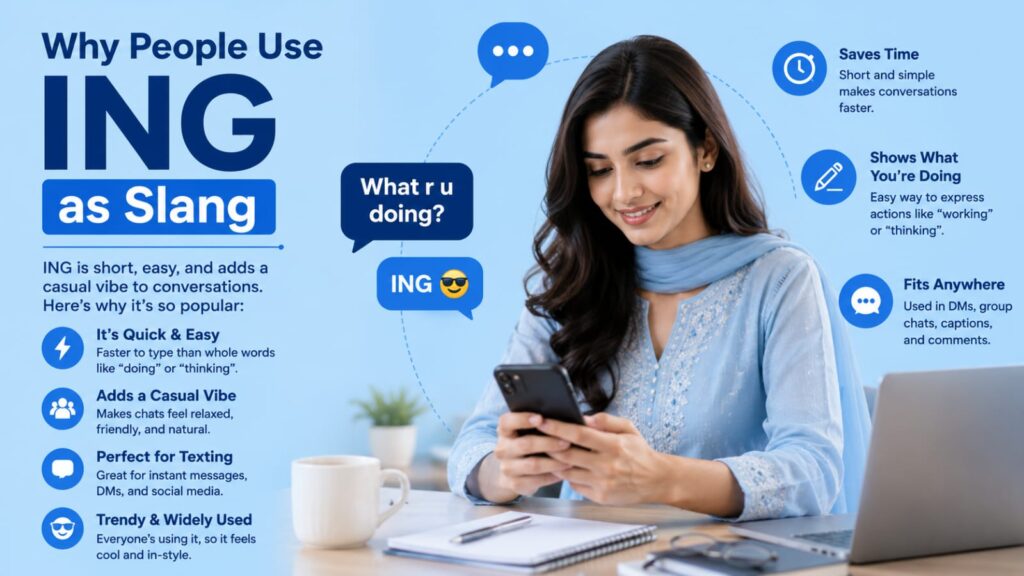
Slang doesn’t spread randomly; there’s usually a reason it sticks around long enough to become part of everyday texting. Here’s why “ing” caught on so widely.
⚡ 1. It Sounds Funny
Something about a bare, incomplete word feels inherently comedic online. It reads like an inside joke even to strangers scrolling through comments.
📱 2. Fast Typing Culture
Texting culture rewards short, quick replies. Dropping a single word instead of a full sentence fits that pace perfectly, especially in fastmoving group chats.
😭 3. Meme Language
Internet humor thrives on vague, exaggerated expressions. “Ing” fits right into that meme speak tradition alongside phrases like “it’s giving” or “the audacity.”
🎮 4. Relatable Online Behavior
People love labeling everyday chaos with a single catchy word. “Ing” became a stand in for “I’m doing a whole thing right now and it’s a lot,” which resonates with anyone who’s ever overreacted to something small.
🔄 Similar Slang Words or Alternatives
If “ing” feels confusing, these related slang terms carry a similar casual energy and often show up in the same conversations.
| Slang | Rough Meaning |
| “Lowkey” | Subtly, kind of |
| “Rn” | Right now |
| “It’s giving…” | Describes a vibe or feeling |
| “Fr fr” | For real, emphasis |
| “No cap” | No lie, being honest |
These words often appear in the same sentences as “ing,” reinforcing the same laid back, meme driven texting style that’s become common among younger users.
🧠 Is ING Formal or Casual?
Short answer: it’s casual, full stop. There’s really no gray area here.
😊 Casual Use
“Ing” thrives in texts, comments, and DMs between people who already share a relaxed tone. It works well with emojis and abbreviated grammar, and it’s rarely, if ever, misunderstood in that setting.
📘 Formal Use
There’s no place for “ing” in emails, essays, resumes, or professional messaging. Its meaning is too ambiguous and its tone too casual for anything official, so it’s best left out of any communication where clarity and professionalism matter.
Frequently Asked Questions
What does ING mean in text?
It usually means an ongoing action, but online it’s also used as playful slang or a vague reaction.
Is ING an actual abbreviation?
Not officially it’s mostly the verb ending “ing” reused as slang rather than a fixed acronym.
Where is ING most commonly used?
Mainly on TikTok, Snapchat, Discord, and casual group texts.
Is ING appropriate for professional messages?
No, it’s strictly casual and should be avoided in formal or work communication.
Can ING be sarcastic?
Yes, tone and emojis often shift its meaning toward sarcasm or humor.
Does ING have a negative meaning?
Sometimes in certain casual circles it’s used to express mild disapproval or disappointment.
Conclusion
So, what does ING mean in text? Most of the time, it’s simply the standard “ing” verb ending doing its normal grammatical job. But online, it’s also grown into a flexible piece of internet slang, sometimes a meme reaction, sometimes a vague filler word, and occasionally shorthand tied to disapproval. The real meaning always comes down to context, tone, and who’s on the other end of the conversation.
Next time “ing” pops up in your texts, you won’t have to guess. Just check the vibe of the conversation, and you’ll know exactly what’s going on.

Hi, I’m Munaza, the creator of RTMeaning.com. I’m passionate about explaining internet slang, abbreviations, texting terms, and modern language in a simple and easy-to-understand way. Through this website, I help readers discover the meanings behind trending words, social media expressions, and online communication. My goal is to make learning new terms quick, clear, and enjoyable for everyone.