
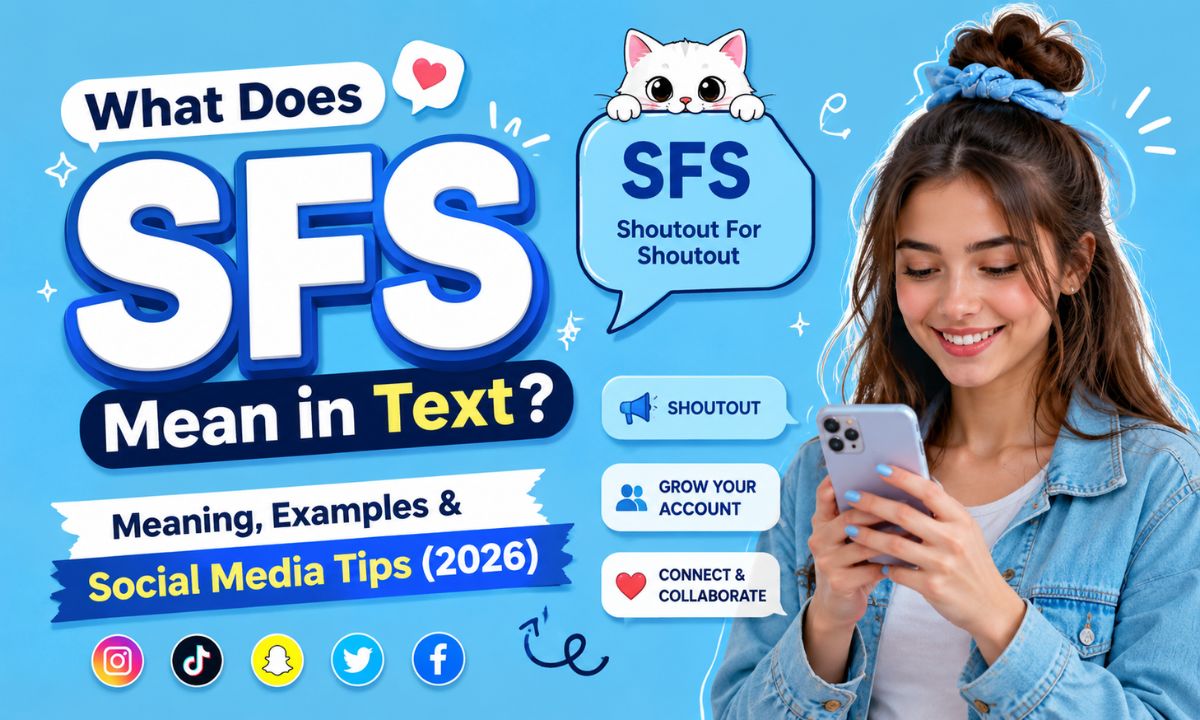

Scrolling through Instagram or Snapchat and suddenly spotted “SFS” in a caption or DM? You’re definitely not the only one confused. This little three-letter acronym pops up constantly in captions, comments, and chats, and if you’re not chronically online, it can feel like a secret code that everyone else somehow already understands.
The good news is that it’s not complicated at all once someone breaks it down for you. In this guide, you’ll learn exactly what SFS means, where it’s commonly used, real examples pulled from everyday conversations, when you should and shouldn’t use it yourself, and how it stacks up against similar pieces of internet slang that often get mixed up with it.
By the end, you won’t just recognize the letters, you’ll understand the culture behind them, the etiquette that surrounds them, and how to use the term naturally without sounding like you just googled it five minutes ago.
What Does SFS Mean in Text?
SFS most commonly stands for “Shoutout for Shoutout.” It’s a mutual promotion arrangement between two social media users, where one person shares or mentions the other’s account in their own content, and in return, they receive the same favor back from that person.
Think of it as a trade of visibility instead of a trade of money. Instead of paying for advertising space or boosting a post, users simply agree to promote each other’s pages, which helps both sides reach a slightly wider audience without spending a single dollar.
This kind of informal barter system has existed on social media for years, but it became especially popular among smaller creators and everyday users who wanted to grow their following organically. It’s essentially grassroots marketing between peers rather than a professional campaign.
Here’s a quick snapshot of the possible meanings, since SFS isn’t always strictly about shoutouts in the traditional sense:
| Meaning | Common Context | Popularity |
| Shoutout for Shoutout | Instagram, TikTok captions | Most common |
| Snap for Snap | Snapchat streaks/stories | Common |
| Spam for Spam | Instagram/TikTok engagement pods | Somewhat common |
| Sorry for Spam | Group chats, forums | Occasional |
| So [Freaking] Stressed | Casual personal texting | Rare |
In almost every social media context, though, “Shoutout for Shoutout” is the answer people are actually looking for when they type the acronym into a search bar. The other meanings exist, but they tend to be niche or situational rather than the default interpretation.
Where Is SFS Commonly Used?
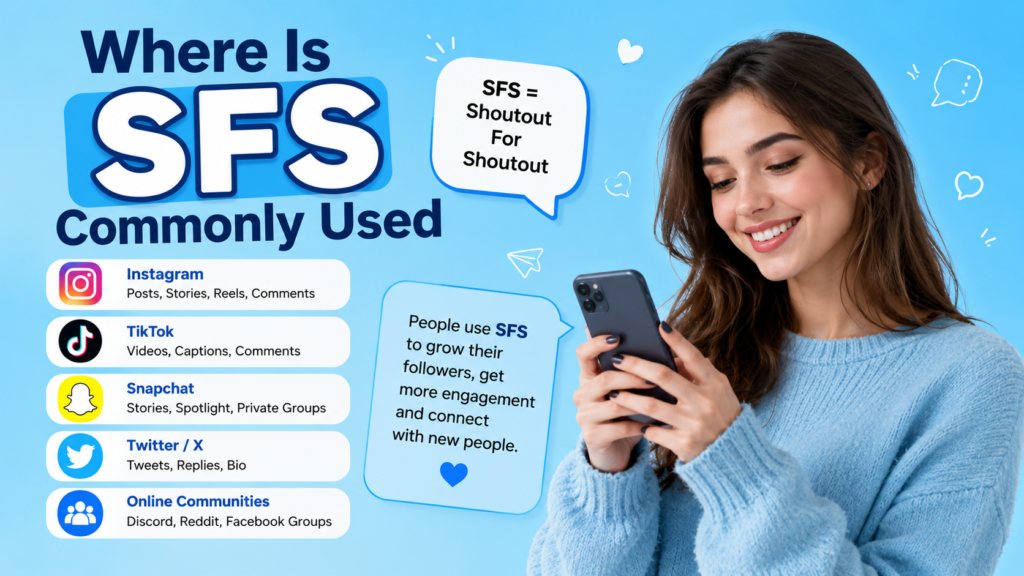
SFS shows up most on platforms built around followers, visibility, and engagement metrics, since those are the exact things a shoutout exchange is designed to boost. The term thrives wherever growing an audience matters more than the content itself.
Instagram is arguably the birthplace of the modern SFS trend, appearing constantly in captions, Stories, and comment sections where users openly ask for mutual shoutouts. Smaller accounts especially rely on this tactic to get discovered by people outside their existing follower base.
Snapchat shifts the meaning slightly, where SFS often becomes shorthand for “Snap for Snap,” a practice tied closely to maintaining streaks and swapping stories with mutual friends or followers. The competitive, gamified nature of Snapchat streaks makes this version of SFS especially popular among younger users.
TikTok comments frequently feature SFS as smaller creators trade promotion with one another, hoping that a shared audience translates into new followers for both parties. Because TikTok’s algorithm already rewards engagement, some creators use SFS as a supplementary boost alongside organic reach.
Discord and gaming chats also use the term for mutual shoutouts between clans, servers, or content creators who want to cross promote their communities. In gaming spaces, this can extend beyond individuals to entire servers agreeing to advertise each other.
WhatsApp and group texts see SFS far less often, but it sometimes appears loosely to mean sharing or reposting content within a smaller, more private circle. The core idea stays remarkably consistent across every platform: two users help each other gain visibility they might not have earned alone.
Examples of SFS in Conversation
Seeing SFS used in real conversations makes the meaning click much faster than any dictionary style definition ever could. Here are a few common examples pulled from the kinds of exchanges you’ll see daily.
An Instagram caption might read: “Doing SFS for the next hour, drop your handle below! 🔥
” This kind of post invites strangers and followers alike to jump into a temporary promotion exchange.
A direct message request often sounds like: “Hey, want to do an SFS?
I’ll post your page on my story if you do mine.” This is usually the opening line between two users who don’t know each other well but share a similar niche.
A Snapchat story caption might simply say: “SFS anyone? Just screenshot and tag me!”
This version is quick, casual, and designed to get as many responses as possible in a short window.
A TikTok comment could read: “SFS 🙋♀️ I’ll follow back and share your latest video.”
This shows the mutual nature of the arrangement being spelled out in the same breath as the request itself.
A typical reply when accepting looks like: “Sure, SFS!
Send me your @ and I’ll post you now.”
Notice how casual and short these exchanges usually are, and that brevity is exactly why the abbreviation exists in the first place. It saves time while still getting the message across clearly to anyone familiar with the term.
When to Use and When Not to Use SFS
SFS is generally harmless and friendly, but like any piece of slang, it fits some situations far better than others. Knowing the difference can save you from looking either spammy or out of touch.
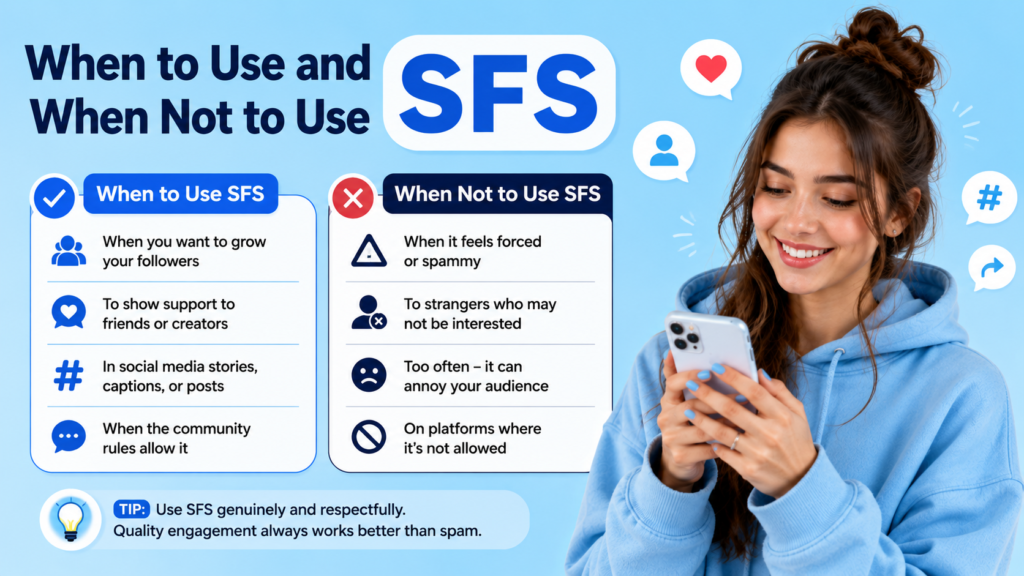
✅ When to Use SFS
It works well when you and another creator have a similar niche or audience size, since the exchange feels balanced rather than one sided. A tiny account trying to shout out a massive influencer, for example, rarely results in a fair trade.
It’s also appropriate when you genuinely want to support someone’s content rather than just farm followers for the sake of a bigger number. Authentic enthusiasm tends to read differently than a purely transactional request.
SFS fits naturally into casual social media captions, comments, or direct messages where the tone is already relaxed and informal. And it works best when both people clearly agree to the exchange beforehand, so nobody feels blindsided or obligated.
❌ When Not to Use SFS
Avoid it in professional or formal conversations, like work emails or job-related chats, where the casual tone simply doesn’t belong. It can come across as unprofessional or confusing to someone outside of social media culture entirely.
Steer clear of messaging strangers repeatedly without context, since this pattern can come across as spammy or even harassing over time. Sending the same copy-pasted SFS request to dozens of accounts rarely earns goodwill.
It’s also best avoided on platforms or communities where self-promotion isn’t allowed, since breaking those rules can get you flagged or banned. And never send unsolicited SFS requests when someone hasn’t agreed to the exchange, because it can feel pushy or presumptuous.
A simple rule of thumb: SFS works great between people who are both actively trying to grow, but it can feel out of place anywhere professionalism or trust matters more than follower counts.
Also Read This Meaning FRL Mean in Texting
Similar Slang Words or Alternatives
SFS isn’t the only mutual-promotion term floating around social media, and it’s easy to confuse it with a few close cousins. Here’s how it compares to some of the most common alternatives.
| Term | Full Meaning | How It Differs from SFS |
| F4F | Follow for Follow | Focused only on following, not posting/sharing |
| SO | Shoutout (no return expected) | One-directional, not mutual |
| Collab | Collaboration | Involves creating content together, not just promoting |
| L4L | Like for Like | Focused on likes/engagement, not visibility swaps |
F4F, or Follow for Follow, is narrower than SFS because it only concerns the act of following an account rather than actively promoting it to an audience. It’s often used by accounts trying to inflate their follower count quickly rather than genuinely grow an engaged community.
SO, simply meaning “shoutout,” implies a one-way gesture where no return favor is expected or requested. Someone might give an SO to a friend they admire without asking for anything back in return.
Collab, short for collaboration, goes a step further than any of these terms because it involves two people actually creating content together rather than just cross promoting existing posts. A collaboration might be a joint video, a duet, or a shared project rather than a simple mention.
L4L, or Like for Like, narrows the exchange down to engagement metrics like likes rather than visibility or follower growth. While these terms all overlap in spirit, SFS specifically implies a two-way shoutout arrangement focused on visibility, not just following, liking, or building content together.
SFS in Different Contexts
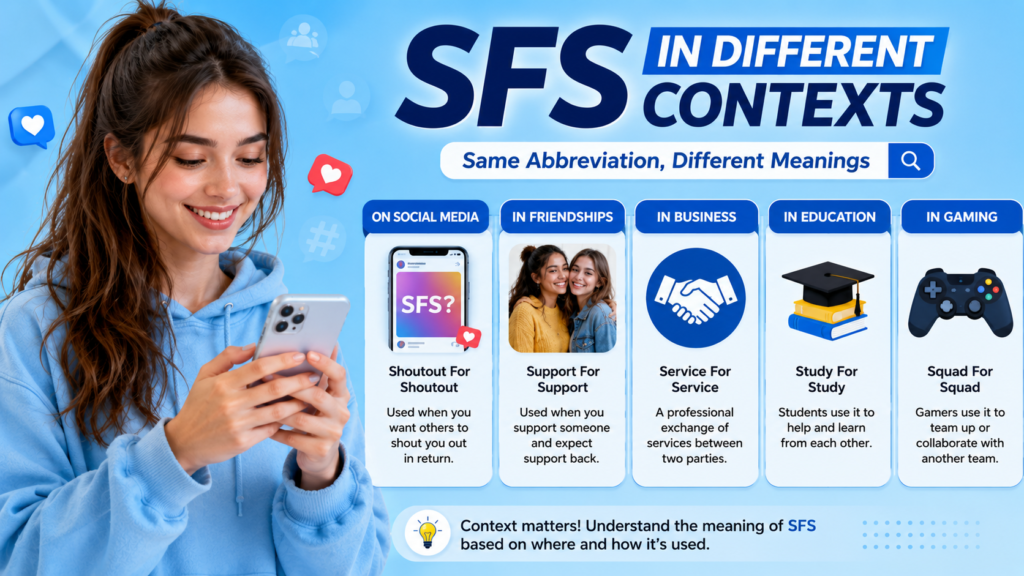
Since SFS shows up across very different types of conversations, its tone and implication can shift slightly depending on who is saying it and where the conversation is taking place.
What Does SFS Mean From a Girl
From a girl, SFS almost always keeps its standard meaning, functioning as a request to exchange shoutouts or promote each other’s social media pages. It’s not typically flirtatious unless it’s paired with other clearly romantic language elsewhere in the conversation, so context still matters more than the acronym itself.
SFS Meaning in a Relationship
In a relationship context, SFS still usually refers to social media promotion rather than anything emotional or romantic in nature. Partners might use it playfully to support each other’s pages or content, but the abbreviation itself carries no inherent romantic meaning on its own, regardless of who sends it.
SFS Meaning in Text From a Guy
When a guy texts SFS, it almost always means the exact same thing as it would from anyone else: he’s asking to trade shoutouts or promotion with another account. Context matters far more than gender here, since the underlying meaning barely changes from person to person or platform to platform.
SFS Meaning in Business
In a business or marketing setting, SFS refers to cross-promotion between brands or creators who share a similar target audience. It’s essentially a smaller, more casual version of influencer marketing, done in exchange for reach and exposure rather than any actual payment changing hands.
Final Thoughts
At its core, SFS is simply short for “Shoutout for Shoutout,” a friendly, mutual way for social media users to help each other grow their audiences without spending any money. Whether you’re scrolling Instagram, chatting on Snapchat, or commenting on TikTok, the meaning stays fairly consistent, even if the platform specific twist, like “Snap for Snap,” occasionally changes the details slightly.
Once you understand the context surrounding it, SFS stops being confusing internet slang and becomes just another normal part of how people support each other online. It reflects a broader culture of small creators helping one another rather than competing purely for algorithmic attention.
Next time someone sends you “SFS?”, you’ll know exactly what they mean, exactly how the etiquette around it works, and exactly how to respond with confidence instead of confusion.

Hi, I’m Munaza, the creator of RTMeaning.com. I’m passionate about explaining internet slang, abbreviations, texting terms, and modern language in a simple and easy-to-understand way. Through this website, I help readers discover the meanings behind trending words, social media expressions, and online communication. My goal is to make learning new terms quick, clear, and enjoyable for everyone.