

If you’ve ever texted someone and typed a word in ALL CAPS, added extra letters like “sooo,” or dropped a string of exclamation points, you’ve already used emphasis in text even if you didn’t call it that. In digital conversations, “emphasize” simply means making a word, phrase, or feeling stand out more than the rest of your message.
In 2026, with texting, DMs, and social captions making up most of our daily communication, knowing how to emphasize text and how to read someone else’s emphasis is a genuine communication skill. Misreading a single capitalized word can turn a harmless message into an argument, while a well-placed emoji can turn a flat sentence into something warm and personal.
This guide breaks down what emphasis really means in texting, how it shows up across different platforms, and how to respond when someone uses it on you. By the end, you’ll have a clearer sense of why people emphasize the way they do, and how to use it yourself without sending the wrong signal.
What Does “Emphasize” Mean in Text?
At its core, to emphasize something in text means to give it extra weight so it stands out from the rest of the sentence. In spoken conversation, people emphasize words through tone of voice, volume, or pauses. Since text has no sound, people rely on formatting and style tricks instead of caps lock, punctuation, repeated letters, emojis, bold text, or even spacing.
So when someone texts “I really need this today,” the bold or capitalized word isn’t random, it’s a signal. It tells the reader: pay closer attention to this part. The rest of the sentence might carry ordinary information, but the emphasized word is where the real message lives.
This is also why emphasis is so easy to get wrong. A reader has to guess the intended tone purely from visual cues, without hearing pitch or pauses. Two people can look at the exact same capitalized word and walk away with completely different interpretations.
In short: emphasis in text = visual or stylistic cues used to highlight importance, emotion, or intent. It’s a substitute for the vocal tools we lose the moment a conversation moves from speech to screen.
The Most Common Meanings of “Emphasize” in Text
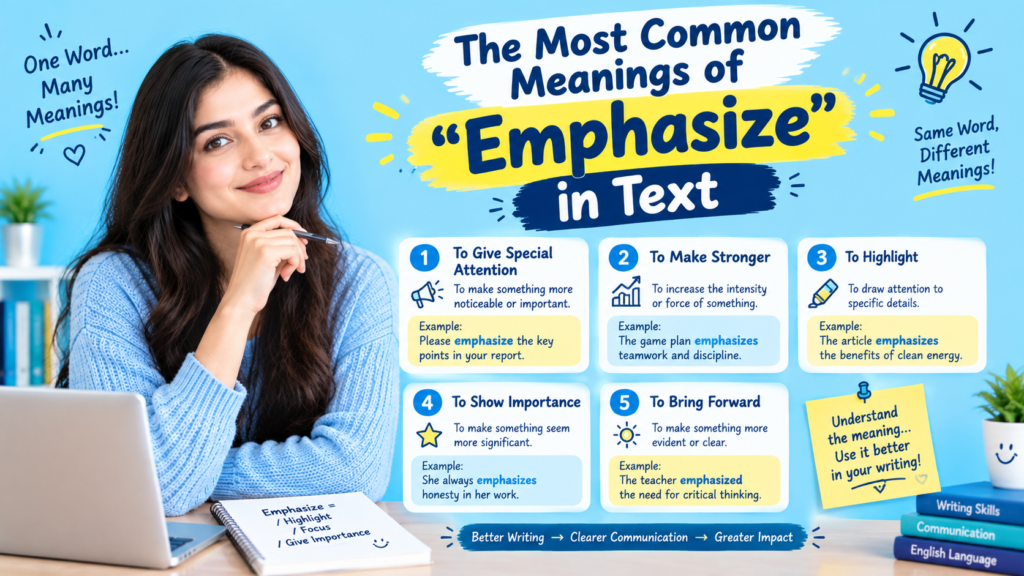
Emphasis isn’t one-size-fits-all. The same technique like caps or extra punctuation can mean different things depending on context. Here are the most common reasons people emphasize text.
Showing Importance
This is the most literal use. Someone highlights a word or phrase because it’s the key point of the message. It works almost like underlining a sentence in a textbook; it tells the reader exactly where to focus.
“Don’t forget the meeting is at 9, not 10.”
“This is IMPORTANT.”
Expressing Strong Emotion
Emphasis often carries feeling excitement, love, sadness, or stress that plain text can’t show on its own. Without it, many messages would read as flat or emotionless, even when the sender feels the opposite.
“I miss you sooooo much”
“That was AMAZING”
Creating Urgency
When time matters, emphasis pushes the reader to act fast. It compresses the sense of “please respond now” into a few visual cues, saving the sender from having to write out a longer explanation.
“Call me NOW”
“We need this ASAP!!”
Adding Excitement
Caps, emojis, and repeated letters are common ways to show hype or enthusiasm. This kind of emphasis is less about information and more about energy; it mimics the volume and pitch of an excited voice.
“WE WON!! 🎉🎉”
“omgggg yesss”
Showing Frustration
The same tools used for excitement can also signal irritation, depending on tone and context. A capitalized word in an argument carries a very different weight than the same word in a celebratory message.
“I already told you THIS.”
“Why does this keep happening??”
Making a Joke More Obvious
Emphasis can flag sarcasm or humor that might otherwise be missed in plain text. Since sarcasm relies heavily on tone in speech, texters use stylistic cues to recreate that same wink-wink effect.
“Oh sure, THAT’S totally going to work 🙃”
Clarifying Meaning
Sometimes emphasis exists purely to avoid confusion, pointing to exactly which word matters most in a sentence. This use is more functional than emotional; it’s about precision, not feeling.
“I said I’d call her, not him.”
Also Read This Meaning Habibi Meaning
How “Emphasize” Is Used in Real Conversations
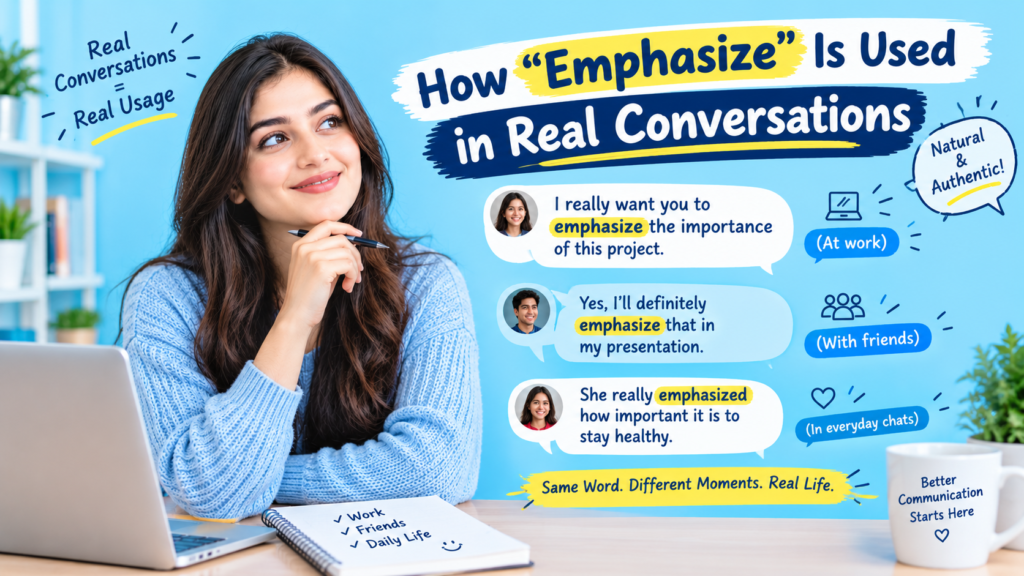
Emphasis looks different depending on who you’re talking to and where. Here’s how it typically plays out across common platforms and settings.
| Setting | Common Emphasis Style | Typical Meaning |
| Friends & Casual Texting | Caps, repeated letters, emojis | Excitement, humor, emotion |
| Instagram & Snapchat | Bold captions, caps, emoji stacking | Hype, reactions, personality |
| Dating Apps | Playful caps, teasing punctuation | Flirting, interest, banter |
| Gaming & Online Communities | Caps, exclamation marks, memes | Hype, competitiveness, reactions |
| Work or Professional Chat | Bold text, italics, clear wording | Priority, deadlines, clarity |
Friends & Casual Texting
Between friends, emphasis is loose and expressive. Caps lock, extra vowels, and emoji spam are all normal and rarely mean anger. Close friends usually already know each other’s texting habits, so the same style that might alarm a stranger reads as completely ordinary between them.
Instagram & Snapchat
On visual platforms, emphasis shows up in captions and story text; bold fonts, stretched words, and all-caps hooks are used to grab attention fast. Because these platforms are scroll-heavy, emphasis also functions as a kind of headline, designed to stop a thumb mid-scroll.
Dating Apps
Here, emphasis often carries a flirty undertone. A well-placed “you’re SO funny” can feel like playful interest rather than plain praise. On dating apps, emphasis is frequently doing double duty; it’s both a compliment and a subtle invitation to keep the conversation going.
Gaming & Online Communities
In gaming chats and forums, emphasis usually reflects hype, reaction, or competitive energy, think “CLUTCH!!” or “no way that just happened.” Because these spaces move fast, emphasis also helps a message stand out in a chat log that’s scrolling by quickly.
Work or Professional Chat
Professional emphasis is more restrained. Bold or italics are preferred over all caps, since caps can come across as shouting in formal settings. In work chat, emphasis is usually reserved for deadlines, action items, or anything that genuinely needs a colleague’s immediate attention.
Is “Emphasize” Rude, Flirty, or Offensive?
This is where things get tricky; emphasis is highly context-dependent, and the same style can be read very differently by different people. There’s no universal rulebook, which is exactly why misunderstandings happen so often.
When It Feels Positive
Used with friends or in casual settings, emphasis usually reads as enthusiasm, support, or excitement. It tends to feel positive when it’s paired with warm language or celebratory context, rather than criticism or blame.
When It Feels Flirty
A well-timed caps word or playful punctuation in a dating context often signals interest or teasing energy. This kind of emphasis usually pairs with lighthearted teasing rather than direct statements, which softens it and keeps the tone playful.
When It Feels Negative
Repeated caps in an argument, or emphasis on blame-heavy words (“You ALWAYS do this”), can come across as accusatory. Emphasis placed on absolute words like “always” or “never” tends to escalate tension rather than ease it.
When It Feels Offensive
Emphasis paired with insults, sarcasm aimed at someone’s expense, or all-caps messages sent during a disagreement can easily be read as aggressive or disrespectful even if that wasn’t the intent. Without a tone of voice to soften it, the words alone are left to carry the full emotional weight.
How to Respond When Someone Says “Emphasize” (Uses Emphasis on You)
If someone sends you an emphasized message, your reply should match the tone they were going for. Mirroring their energy usually keeps the conversation feeling natural. Here are some options by situation.
Casual Replies
“Lol I know right”
“SAME”
Funny Replies
“Okay we get it, you’re excited 😂”
“Caps lock really said what it said”
Neutral Replies
“Got it, noted.”
“Understood, I’ll take care of it.”
Professional Replies
“Thanks for flagging, I’ll prioritize this.”
“Noted as urgent, will follow up shortly.”
Common Misunderstandings About “Emphasize” in Text
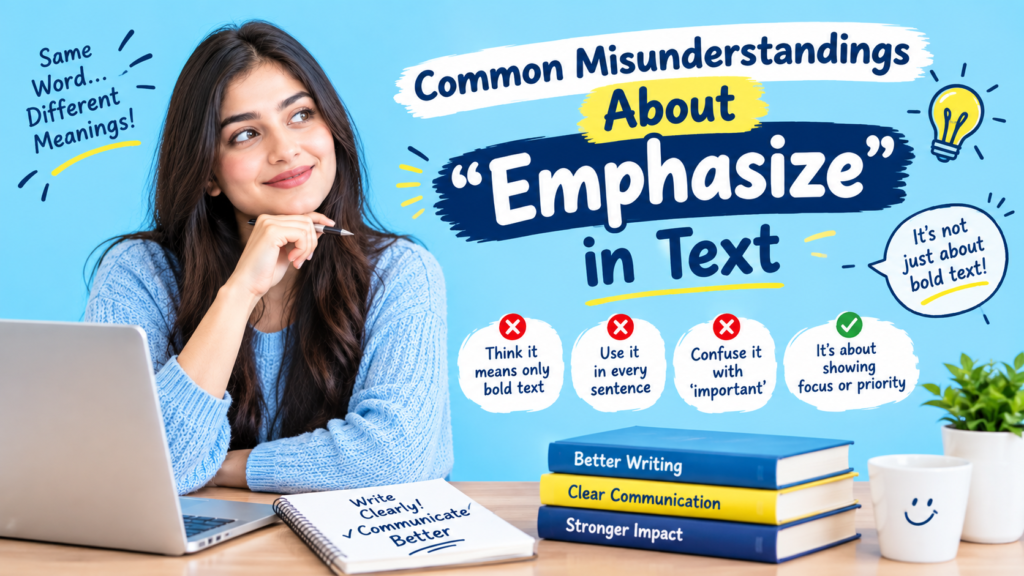
Text-based emphasis is easy to misread, especially between people who don’t know each other well. Watch out for these common mix-ups, since each one can quietly derail an otherwise normal conversation.
Assuming All Caps Always Means Anger Caps are often used for excitement or urgency, not just shouting. Context and relationship history usually matter more than the formatting itself.
Confusing Emphasis With Aggression A strongly worded message isn’t always hostile; it may just be direct. Some people simply write in a blunt style without meaning any harm.
Missing Sarcasm Without tone of voice, sarcastic emphasis can be mistaken for a genuine statement. This is one of the most common sources of texting misunderstandings overall.
Misreading Urgency Not every emphasized word means something is an emergency. Some people use urgency-style emphasis as a habit, not a literal signal.
Assuming Everyone Uses Emphasis the Same Way Age, culture, and personal texting habits all shape how emphasis is used and interpreted. What feels normal to one generation or region can feel excessive to another.
Similar Slang Terms You Should Know
Emphasis often travels alongside other slang used to intensify meaning in casual text. Here’s a quick reference table.
| Term | Meaning |
| No Cap | Not lying, being serious |
| Lowkey | Somewhat, subtly |
| Highkey | Openly, very much |
| Fr | “For real” agreement or emphasis |
| Deadass | Seriously, genuinely |
| Bet | Agreement, confirmation |
| Period | Emphasizing finality, “end of discussion” |
| Facts | Agreement, “that’s true” |
| Literally | Used to stress something is exactly as described |
| Valid | Acknowledging something as reasonable |
| Say Less | Understood without further explanation |
These terms often stack together in real conversations a message like “no cap this is highkey the best thing I’ve ever eaten fr” combines several emphasis-slang words at once. Recognizing them individually makes it much easier to read the overall tone of a message.
When You Should Avoid Using “Emphasize” Heavily
Emphasis is powerful, but overusing it or using the wrong type can backfire in certain situations. Knowing when to dial it back is just as important as knowing how to use it.
Professional Settings Excess caps or exclamation points can look unprofessional or aggressive. Colleagues and clients may read heavy emphasis as a lack of composure, even when that isn’t the intention.
Cross-Cultural Chats Emphasis norms vary widely; what reads as playful in one culture may seem intense in another. It’s often safer to ask directly rather than assume shared texting habits.
Sensitive Situations During serious or emotional conversations, heavy emphasis can feel dismissive or overwhelming. Plain, calm wording usually communicates care more effectively than stylized text.
Formal Documents, Emails, reports, and official messages should rely on clear wording rather than stylistic emphasis. Bold or italics used sparingly is usually the safest formal-writing choice.
Conversations With New People Until you know someone’s texting style, it’s safer to keep emphasis minimal to avoid being misread. A little restraint early on gives both people time to learn each other’s tone.
Conclusion
Emphasis in text is really just digital body language, a way to add tone, feeling, and priority to words that would otherwise sit flat on a screen. Whether it’s a capitalized word, a stretched out “sooo,” or a well-placed emoji, emphasis helps bridge the gap between what we type and what we actually mean.
The key is context. The same emphasis that reads as playful between close friends can feel aggressive at work or confusing to someone you just met. Paying attention to who you’re texting, and how well they know your style, goes a long way toward avoiding mixed signals.
Once you understand the different purposes behind emphasizing importance, emotion, urgency, and humor you’ll get much better at both using it and reading it correctly in 2026’s fast-moving text culture.

Hi, I’m Munaza, the creator of RTMeaning.com. I’m passionate about explaining internet slang, abbreviations, texting terms, and modern language in a simple and easy-to-understand way. Through this website, I help readers discover the meanings behind trending words, social media expressions, and online communication. My goal is to make learning new terms quick, clear, and enjoyable for everyone.