

If you’ve ever gotten a text, DM, or comment that ended with “habibi,” you’re not alone in wondering what it actually means. This one word shows up everywhere now WhatsApp chats, Instagram comments, TikTok captions, gaming lobbies and it doesn’t always mean the same thing twice.
Because the word travels across so many different apps and communities, it has picked up new shades of meaning that go far beyond its original use.This guide breaks down exactly what habibi means in 2026, how it’s used across different platforms and relationships, and how to reply when someone drops it on you. By the end, you’ll be able to read the tone behind the word instead of guessing at it.
What Does “Habibi” Mean in Text?
In texting, habibi is an Arabic word that usually translates to “my dear,” “my love,” or “my beloved.” It comes from the Arabic root hubb, meaning love, and the base word habib, meaning a beloved or dear person. Linguistically, it’s one of the warmest words in the Arabic language, built specifically to express closeness.
But here’s the catch: in everyday texting, habibi rarely carries its literal, poetic weight. Most of the time it’s used casually closer to “buddy,” “friend,” or “babe” depending on who’s saying it and the tone of the conversation. The internet has softened its intensity while keeping its warmth.
There’s no single fixed definition. The real meaning depends on several overlapping factors, and reading just one of them in isolation can lead you to the wrong conclusion.
The real meaning depends on:
- Who is sending it
- The relationship between the two people
- The platform it’s used on
- The tone of the rest of the message
The Most Common Meanings of “Habibi”
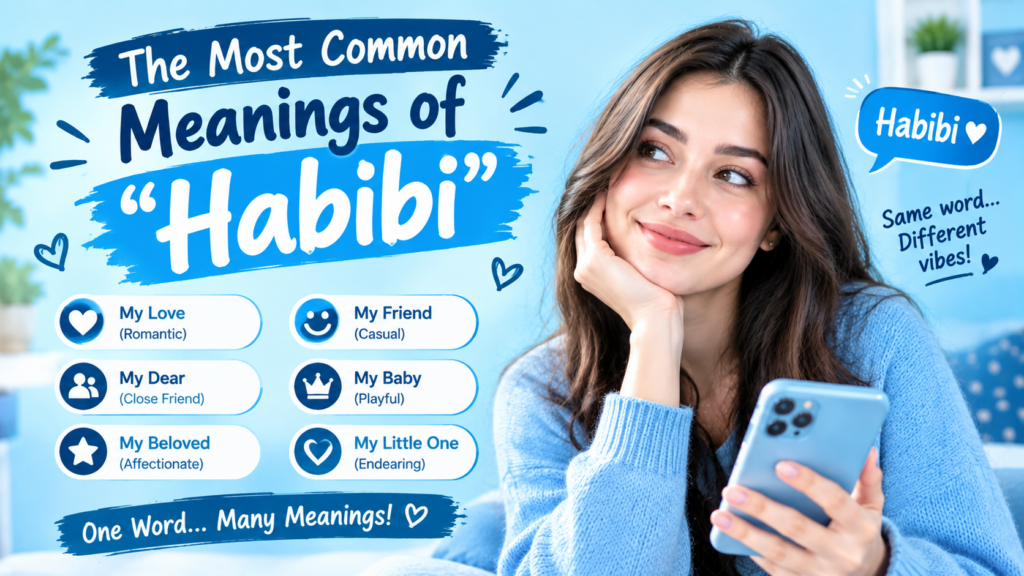
Habibi isn’t a word with one job. It shifts shape depending on the situation, and recognizing which version you’re seeing is the key to understanding the message.
1. Friendly Nickname
Between friends, habibi often just means “buddy” or “bestie.” It’s a warm, casual way to address someone you’re close to, with zero romantic intent. You’ll see this version constantly in group chats and casual banter.
This use case has become so common that many people forget the word has romantic origins at all. It’s simply become a marker of friendship.
2. Romantic or Flirty
Between couples or people who are interested in each other, habibi can mean “babe,” “love,” or “darling.” Context and emojis usually make this version obvious, especially when paired with heart emojis or affectionate phrasing.
This is closest to the word’s traditional meaning, and it’s still very much alive in romantic texting, especially in Middle Eastern and diaspora communities.
3. Playful Internet Slang
On TikTok, memes, and reaction videos, habibi is often used for comedic effect dramatic, exaggerated, or ironic, with no real emotional meaning behind it. It’s become a meme staple, often stretched out or repeated for humor.
In this context, the word is detached almost entirely from its original meaning. It functions more like a punchline than an expression of affection.
4. A Way to Get Attention
Some people use habibi as a conversation opener, almost like saying “hey” a friendly, disarming way to start chatting with someone new. It softens the first message and signals a relaxed, non-threatening tone.
This usage is especially common in DMs from strangers or acquaintances trying to break the ice without sounding too formal or too forward.
5. Sarcastic Tone
Occasionally, habibi is used sarcastically, especially when someone is being playfully annoyed, mocking, or teasing a friend. Think of it as the verbal equivalent of an eye-roll wrapped in affection.
This version relies heavily on the surrounding conversation to land correctly, since the word alone doesn’t signal sarcasm.
Also Read This Meaning ILY Meaning in Text
How “Habibi” Is Used in Real Conversations

Different platforms carry different expectations, and habibi adapts accordingly. The table below breaks down the general pattern, though individual usage always varies.
| Platform / Setting | Typical Meaning | Common Tone |
| Friends & Casual Texting | Buddy, bestie | Warm, casual |
| Instagram & Snapchat | Friendly or flirty | Playful, affectionate |
| Dating Apps | Romantic, flirty | Charming, intimate |
| Gaming & Online Communities | Team nickname | Fun, joking |
| Work or Professional Chat | Rarely used | Informal (if at all) |
Friends & Casual Texting
Among friends, habibi is a go-to term of endearment similar to calling someone “bro” or “bestie.” It signals closeness, not romance. It often shows up at the start or end of a message as a friendly flourish.
This kind of usage is so normalized that it rarely draws attention or requires explanation among close friend groups.
Instagram & Snapchat
On these platforms, habibi appears often in comments and captions. It’s a quick way to show appreciation or affection for a friend, follower, or crush. A single-word comment like “habibi 🔥” under a photo is extremely common.
Because these platforms are visual and fast-paced, the word functions almost like a stamp of approval rather than a full sentence.
Dating Apps
Here, habibi tends to lean towards romance. It can be an early flirty signal or a pet name once a connection develops. Using it early in a conversation often signals genuine interest rather than casual friendliness.
As the relationship progresses, the word can become a consistent nickname, replacing the person’s actual name in everyday messages.
Gaming & Online Communities
In voice chat and gaming Discords, habibi is usually a lighthearted team nickname. It’s rarely romantic in this setting; it’s more about camaraderie. Teammates often adopt it as an inside joke or squad-wide greeting.
This usage tends to spread quickly within gaming groups, becoming a shared identity marker rather than a personal term of affection.
Work or Professional Chat
Habibi is uncommon in workplace messaging. Some close coworkers might use it jokingly, but it’s generally best avoided in formal or professional communication. Clients and managers, in particular, are unlikely to interpret it the way a close friend would.
Even in workplaces with a casual culture, it’s safer to reserve the word for private, non-work conversations to avoid any confusion.
Is “Habibi” Rude, Flirty, or Offensive?
Habibi itself isn’t rude. But like most affectionate words, tone, timing, and relationship context can completely change how it lands. The word carries no inherent negativity, but context can shift it dramatically.
When It Feels Positive
Used between friends or family, habibi usually feels warm, kind, and welcoming. It reinforces an existing bond rather than creating discomfort.
When It Feels Flirty
Paired with emojis, compliments, or a romantic context, habibi clearly signals interest or affection. In these cases, the intent is usually unmistakable to both parties.
When It Feels Annoying
Overused or said by someone you barely know, habibi can start to feel repetitive or try hard. Repeating it in every single message can dilute its warmth and make it feel performative.
When It Could Feel Offensive
If used by a stranger in a pushy or overly familiar way especially toward someone who hasn’t invited that closeness it can feel intrusive or disrespectful. This is especially true in unsolicited messages from strangers online.
How to Respond When Someone Says “Habibi”
You don’t need an elaborate reply. Matching the tone of the message usually works best. The goal is to mirror the energy of the sender rather than overanalyzing the word itself.
Casual Replies
- “Haha, hey habibi 😄”
- “What’s up, habibi?”
These work well in relaxed, friendly conversations where the word is clearly platonic.
Funny Replies
- “Okay habibi, calm down 😂”
- “Habibi, you’re too much”
These replies keep the tone light while gently acknowledging the playful or exaggerated use of the word.
Neutral Replies
- “Hey! What’s going on?”
- Simply continuing the conversation without repeating the word
This approach works well when you’re unsure of the sender’s intent and want to keep things low-key until the tone becomes clearer.
Professional Replies
- Politely redirect the conversation
- Keep your response formal and topic-focused
In work settings, it’s usually best not to mirror the word at all, and instead steer the conversation back to the task at hand.
Common Misunderstandings About “Habibi”
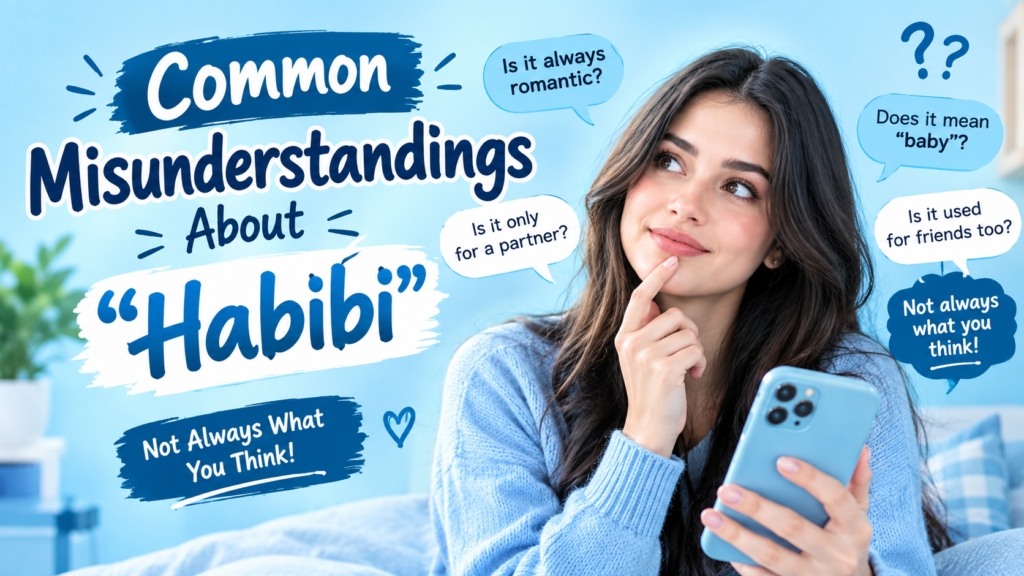
Because the word is used so widely, a few myths tend to stick around. Clearing these up can help you interpret messages more accurately.
Thinking It Always Means “Love”
Habibi is often used platonically. It doesn’t automatically imply romantic interest, even though that’s its literal translation.
Thinking It’s Only for Couples
Friends, family members, coworkers, and even strangers online use it casually, not just romantic partners. Its use has expanded well beyond romantic relationships.
Confusing Tone
The same word can feel sweet or awkward depending purely on delivery, punctuation, and emojis. Two nearly identical messages can land completely differently based on small stylistic choices.
Assuming It’s Always Cultural
While it originates from Arabic, it’s now widely used online by people from many different backgrounds, often without deep cultural intent. For many younger internet users, it’s simply absorbed as general slang.
Similar Slang Terms You Should Know
Habibi belongs to a small family of Arabic terms of endearment that have also found their way into casual online use. Knowing these can help you understand the fuller picture.
| Term | Meaning | Common Use |
| Habibti | Feminine form of habibi | Used when addressing a female |
| Yalla | “Let’s go” / “come on” | Casual urgency or encouragement |
| Habib albi | “Love of my heart” | Deeply romantic, intimate |
| Ya rohi | “My soul” | Romantic, poetic |
| Sadiqi | “My friend” (more formal) | Platonic, respectful |
Each of these terms carries its own intensity level, ranging from casual encouragement to deeply romantic expression. Learning the differences can help you use or interpret them more accurately.
When You Should Avoid Using “Habibi”
While habibi is generally a safe and friendly word, there are a few situations where it’s better left out of the conversation entirely.
Professional Settings
Formal emails, workplace chats, and client communication aren’t the place for casual pet names like habibi. Sticking to standard, neutral language keeps things clear and appropriate.
Cross-Cultural Conversations
With someone unfamiliar with the term, it can come across as confusing or overly familiar, so gauge the relationship first. When in doubt, a simple explanation can prevent misunderstanding.
Sensitive Situations
In serious, formal, or emotionally sensitive conversations, playful nicknames can feel out of place or dismissive. It’s usually better to keep the tone measured in these moments.
Conclusion
Habibi has grown from a traditional Arabic term of affection into one of the internet’s most versatile slang words. It can mean “friend,” “love,” “babe,” or simply be a warm way to say hello. The meaning shifts entirely based on context, platform, and relationship.
Understanding this word means paying attention to the small details around it: who sent it, what platform it’s on, and what tone the rest of the message carries. Once you factor those in, the meaning usually becomes clear pretty quickly.
The next time someone calls you habibi, don’t overthink it. Look at the tone, the platform, and who’s sending it and you’ll know exactly how to take it.

Hi, I’m Munaza, the creator of RTMeaning.com. I’m passionate about explaining internet slang, abbreviations, texting terms, and modern language in a simple and easy-to-understand way. Through this website, I help readers discover the meanings behind trending words, social media expressions, and online communication. My goal is to make learning new terms quick, clear, and enjoyable for everyone.