

If you’ve spotted “POS” in a text message, group chat, or comment section and felt totally lost, you’re not alone. This three letter acronym is one of the most confusing pieces of internet slang out there. It carries two almost completely opposite meanings depending on who is typing it and where the conversation is happening.
In this guide, you’ll learn exactly what POS means in texting, how to tell the two meanings apart, real examples from actual conversations, and when you should or shouldn’t use it yourself. By the end, decoding this tricky acronym will feel second nature.
Quick Answer
POS most commonly means one of two things in texting and online chat:
- Parent Over Shoulder a warning that a parent is nearby and might see the screen
- Piece of Shit an insult used to describe a bad person, product, or situation
The correct meaning almost always depends on context, who sent it, and where the conversation is happening. There is rarely a universal rule, so reading the surrounding message matters more than the acronym itself.
What Does POS Mean in Slang?
POS is an initialism, meaning each letter is pronounced separately rather than forming a new word, similar to acronyms like “LOL” or “BRB.” Unlike most modern internet slang, it didn’t actually start online. It was borrowed from older abbreviations used in retail and business settings long before texting existed.
Once it moved into casual online conversation, POS picked up two very different meanings among younger and older internet users alike. Understanding both is the only way to avoid an awkward misunderstanding.
Parent Over Shoulder
Among teens and younger texters, POS functions as a privacy warning. It tells the other person to stop talking about something private, change the subject immediately, or slow down because a parent or guardian can suddenly see the screen.
This version of POS is typically sent in a hurry, often mid sentence, and is rarely explained further because doing so would defeat the purpose of the warning in the first place.
Piece of Shit
Among a much wider range of users, teens, adults, gamers, and online reviewers alike, POS is a blunt insult. It’s used to call out a person’s bad behavior or to describe something, such as a product, app, or entire situation, as low quality or deeply frustrating.
This meaning tends to show up more often in comment sections, reviews, and casual venting between friends, and it carries a noticeably sharper, more emotional tone than the privacy-warning version.
Full Definition of POS Slang
| Meaning | Type | Common Users | Tone |
| Parent Over Shoulder | Warning/code phrase | Teens, younger texters | Cautious, urgent |
| Piece of Shit | Insult/complaint | Teens & adults | Angry, frustrated, dismissive |
POS as “Parent Over Shoulder”
This version works like a secret code between friends. It’s short, quick to type under pressure, and doesn’t look obviously suspicious if a parent happens to glance at the screen for a second.
It’s most common inside texting apps and group chats among younger users who want to protect their privacy in real time without drawing extra attention to what they were just discussing.
POS as “Piece of Shit”
This is the more widely recognized meaning across the broader internet. It’s used to express strong dissatisfaction, whether about a malfunctioning device, poor customer service, or someone’s disappointing actions.
It can function as a noun on its own (“he’s a pos”) or as a standalone reaction typed by itself, often in all lowercase for extra emphasis and a more casual, dismissive tone.
Context and Usage of POS
Because POS carries two conflicting meanings, context is genuinely everything. The safest way to interpret it is to look closely at three things: who sent the message, what was being discussed right before it, and how abruptly the conversation changed direction afterward.
Rushing to a conclusion based on the letters alone is where most misunderstandings happen, especially between people from different age groups or online communities.
How to Determine the Meaning
- Check the conversation flow Did the topic suddenly shift or stop without explanation? That points toward “Parent Over Shoulder.”
- Look at the tone: Is the message angry, sarcastic, or clearly venting? That usually signals “Piece of Shit.”
- Consider the sender’s age: Younger texters lean toward the privacy warning far more often than older users.
- Notice what it’s describing: A person or object actively being criticized signals the insult meaning almost every time.
When to Use POS

Use POS (Parent Over Shoulder) when:
- You need to quickly warn a friend that a parent can see your screen
- You want to pause a private or sensitive conversation without stopping to explain why
- You’re in a fast-moving group chat and don’t have time to type out a full sentence
Use POS (Piece of Shit) when:
- You’re venting about a broken device, bad service, or an annoying situation
- You’re describing someone’s disappointing behavior in a casual, informal setting
- You’re writing an informal online review or leaving a blunt comment
Avoid POS when:
- You’re texting someone who might not know either meaning, since confusion is likely
- You’re in a professional or otherwise formal setting
- The surrounding context doesn’t make the intended meaning obvious on its own
Real-Life Examples of POS in Conversations
1: Parent Over Shoulder (Teen Texting)
“So then he said wait, POS. talk later”
The sudden cutoff mid-sentence signals that the conversation needs to pause immediately, without any further explanation needed between the two friends.
2: Piece of Shit (Frustration with a Device)
“This POS laptop keeps freezing every five minutes.”
Here, POS clearly describes a malfunctioning object rather than warning anyone about a nearby parent, and the frustration is obvious from the surrounding sentence.
3: Piece of Shit (Insulting a Person)
“He canceled on me again. Total pos.”
Used as a blunt personal insult after being let down by someone, this example shows how the word “total” intensifies the criticism even further.
4: Parent Over Shoulder (Group Chat Warning)
“POS everyone, be normal lol”
A group wide heads up that an adult is nearby, sent so that everyone in the chat can quickly adjust what they’re saying before it’s too late.
5: Piece of Shit (Product Review)
“Don’t buy this. Absolute pos, broke in two days.”
A common phrasing style in informal online reviews, where the acronym replaces a fuller, more detailed complaint about product quality.
Also Read This Meaning ISO Meaning in Text
Platform-Specific Meaning of POS
| Platform | Typical Meaning | Notes |
| Parent Over Shoulder | Common in family and friend group chats | |
| Snapchat | Both, context-dependent | Fast, disappearing messages favor quick codes |
| TikTok | Piece of Shit (comments) | Often used to criticize content or people |
| Both | DMs lean toward privacy warning; comments lean toward insult | |
| Gaming Chats | Piece of Shit | Used to criticize gameplay, teammates, or gear |
| Text Messages | Parent Over Shoulder | Most traditional use among teens |
Each platform tends to develop its own dominant meaning over time simply because of who uses it most and what kind of conversations typically happen there.
Alternative Meanings of POS
Outside of slang, POS has several long-standing, non-slang meanings depending on the industry or context in which it appears.
- Point of Sale: the location or system where a retail transaction is completed
- Point of Service: a type of health insurance plan
- Positive: shorthand used in medical or testing contexts
- Position: used in job listings, gaming, or logistics
- Part of Speech: a grammar term used in linguistics and language learning
These formal meanings are far more common in professional or academic writing, and they rarely overlap with the slang usage discussed throughout this guide.
Related Terms and NLP Variations

Privacy Warning Acronyms
Similar codes teens use to warn about parents nearby include PIR (parent in room), PAW (parents are watching), and CD9 (code 9, meaning parents nearby). These acronyms all serve the same basic purpose as POS in its warning form.
Insult Synonyms
Casual alternatives to the insult meaning include POS cousins like “trash,” “garbage,” or simply typing “smh” alongside it for extra emphasis. Combining several of these terms in one message is common when someone wants to sound especially frustrated.
Tone Modifiers
Words like “literally,” “actual,” or “total” are often added before POS to intensify the insult, as seen in phrases like “total pos” or “actual pos.” These modifiers help clarify that the sender means the harsher meaning rather than the warning.
How to Respond When Someone Says POS
Responding to “Parent Over Shoulder”
Simply switch topics or reply with something neutral like “ok talk later” to avoid drawing any extra attention to the conversation. Overreacting or asking follow-up questions right away can actually make the situation more obvious.
Responding to “Piece of Shit”
Acknowledge the frustration behind the message: a short “that sucks” or a quick question about what happened usually works perfectly fine. There’s rarely a need to overanalyze this version of the message.
Responding to Uncertainty
If you’re not sure which meaning was intended, a quick “wait what do you mean?” clears it up instantly. It’s always better to ask directly than to guess and respond in a way that doesn’t match the sender’s intent.
Misinterpretations of POS
The Parent Trap
Assuming POS always means “Parent Over Shoulder” can make you miss when someone is genuinely venting or insulting something entirely unrelated to their family situation.
The Insult Mistake
Assuming POS is always an insult might cause you to misread a legitimate privacy warning as random rudeness, which can confuse or even upset the person who sent it.
The Professional Confusion
In work emails or formal settings, POS almost always refers to “Point of Sale,” not slang at all, so bringing casual assumptions into a professional context can lead to real miscommunication.
How to Avoid Misinterpretation
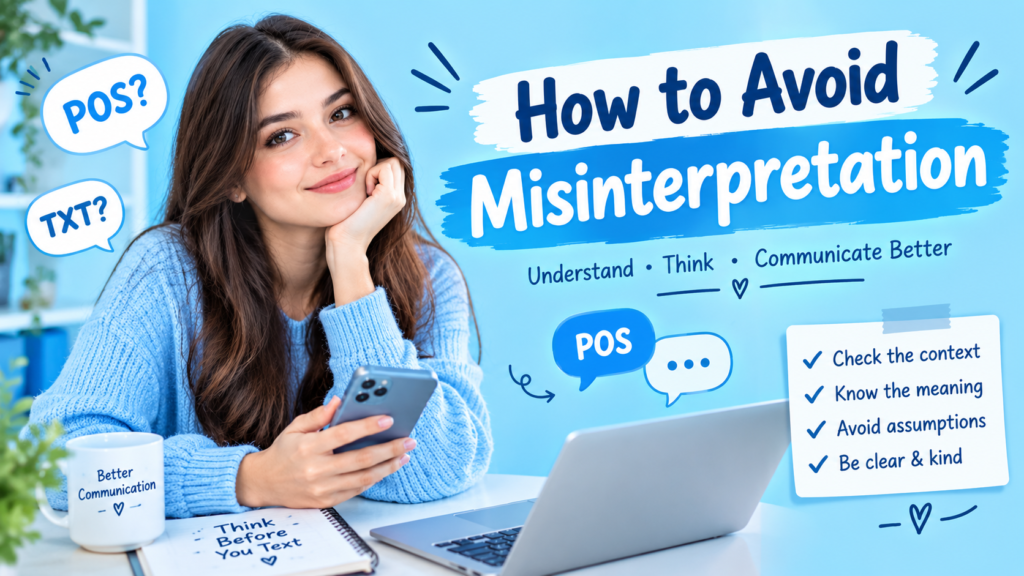
- Read the full sentence, not just the acronym on its own
- Ask directly if the meaning still isn’t clear after reading the context
- Consider the platform and your relationship with the sender before responding
When NOT to Use POS
Professional Settings
Slang meanings don’t belong in workplace communication. Stick to formal language or the retail and business definition only when writing anything work-related.
Around Children
Using the insult version of POS around kids could normalize inappropriate language without them fully understanding what they’re repeating.
With Strangers
New contacts may not know either slang meaning, which can easily lead to confusion, awkwardness, or an unintended offense in the conversation.
In Sensitive Conversations
The insult meaning can escalate tension in already emotional discussions, making a difficult moment even harder to navigate for both people involved.
On Public Platforms
Public comments are more likely to be seen out of context by strangers, so clarity matters far more than shorthand when posting somewhere everyone can see it.
Usage Tips for POS
1: Know Your Audience
Younger texters are more likely to understand “Parent Over Shoulder,” while general internet users default to the insult meaning almost automatically.
2: Provide Context
A short follow-up sentence removes any ambiguity about which meaning you intend, especially when texting someone outside your usual friend group.
3: Use Tone Indicators
Adding emojis or punctuation, like “lol” or “😤”, helps clarify whether you’re joking or genuinely frustrated when you send the acronym.
4: Be Aware of Platform Norms
Gaming chats and product reviews lean toward the insult meaning, while family texting apps lean far more toward the privacy warning version.
5: Use Sparingly
Overusing slang acronyms can make messages harder to read for people outside your immediate circle, so save it for moments when it’s genuinely useful.
Conclusion
POS is a small acronym with a surprisingly wide range of meanings, from a teen’s quick privacy signal to a blunt insult, and even standard business terms like Point of Sale. What makes it tricky isn’t the letters themselves but the sheer gap between its friendliest and harshest possible interpretations.
The key to understanding it is always context: who sent it, what platform it’s on, and what was happening in the conversation just before it appeared. Tone, timing, and the relationship between sender and reader will almost always point you toward the right meaning.
Once you know what to look for, decoding POS becomes second nature. The next time it shows up in your messages, you’ll be able to read between the lines instead of feeling lost.

Hi, I’m Munaza, the creator of RTMeaning.com. I’m passionate about explaining internet slang, abbreviations, texting terms, and modern language in a simple and easy-to-understand way. Through this website, I help readers discover the meanings behind trending words, social media expressions, and online communication. My goal is to make learning new terms quick, clear, and enjoyable for everyone.