
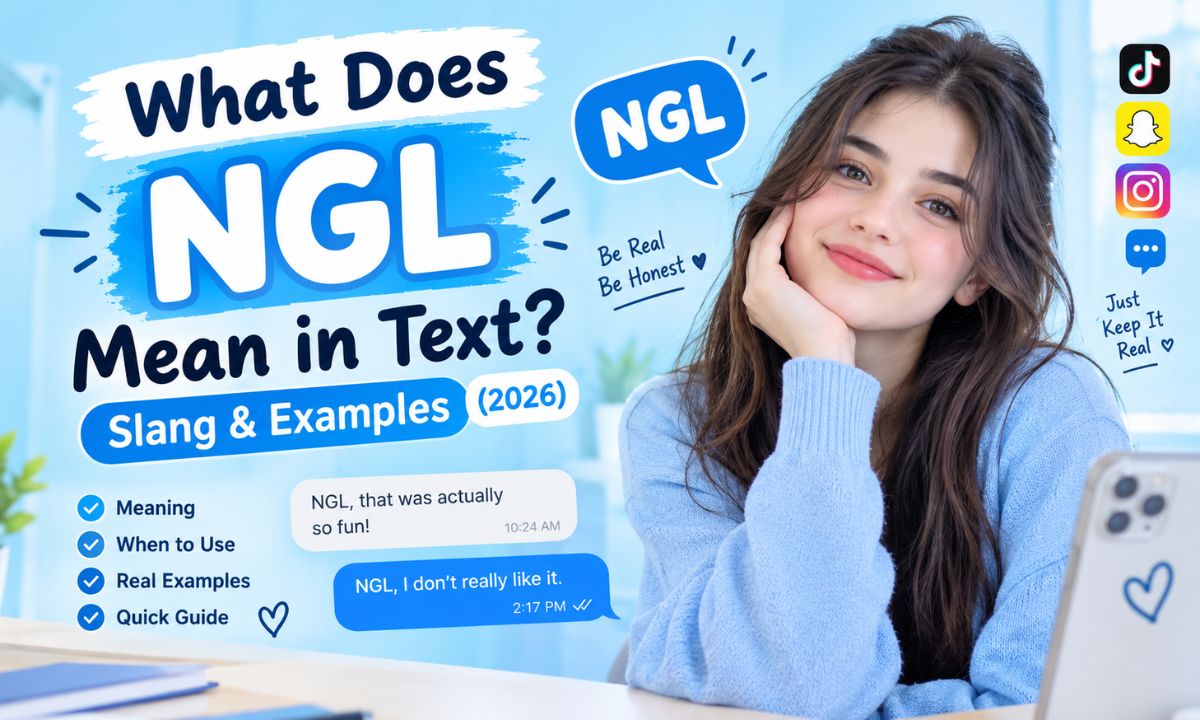

You see it in DMs, comments, and group chats every day. “Ngl, that was good.” “Ngl, I miss you.” It looks tiny, but it carries a lot of tone.
So what does NGL really mean? Does it change when a boy, a girl, or a partner says it? And is it okay to use it on Instagram, WhatsApp, or at work?
This guide answers all of that in plain English. You will find the full meaning, real examples, replies you can copy, and common mistakes to avoid. Let’s start with the basics.
Ngl Full Meaning
The full form of NGL is “not gonna lie.” Some people write it as “not going to lie.” Both mean the same thing.
It is a short way to say, “I am about to be honest with you.” People type it before an opinion, a confession, or a small truth.
The phrase works like a soft warning. It tells the reader that the next part is real and unfiltered. It also makes the message feel friendly instead of harsh.
Here is a quick look at the idea:
| Slang | Full Form | Simple Meaning |
| NGL | Not gonna lie | I am being honest |
| Ngl, I’m tired | Not gonna lie, I’m tired | I am really tired |
| Ngl, you look great | Not gonna lie, you look great | You truly look great |
Ngl Meaning in Relationship
In a relationship, NGL usually comes before something personal. It can sound sweet, nervous, or serious. The words after it decide the mood.
“Ngl, I get shy around you” is a cute example. “Ngl, that message hurt me” is a more serious one. In both cases, the person is trying to open up without making the moment too heavy.
Couples use NGL to share feelings in a low-pressure way. It helps them say real things without a big speech. It also shows trust, because honesty takes a little courage.
If your partner uses it, read the full sentence before you react. Do not panic at the first two words. Most of the time, NGL is just a gentle start.
Here are some common relationship uses:
- Sweet: “Ngl, I love how you laugh.”
- Honest: “Ngl, I wish we spent more time together.”
- Playful: “Ngl, you are my favorite person to text.”
- Serious: “Ngl, I felt left out last night.”
Ngl Meaning from a Boy
When a boy uses NGL, he is often trying to sound honest and relaxed at the same time. It lets him share a feeling without sounding too intense.
For example: “Ngl, you looked really good today.” That is a compliment, but it is said in a low-key way. If the reaction is awkward, he can pretend it was no big deal.
Some boys use NGL to test the waters. They say something real, then watch your reply. So it can be a small sign of interest, but it is not proof.
To understand his meaning, look at the bigger picture:
- How often does he text you first?
- Does he make plans with you?
- Does he act the same way in person?
If the answers are yes, the NGL message likely carries real feeling. If not, it may be just friendly talk.
Ngl Mean in Text from a Boy
In a text from a boy, NGL works as a soft opener. It lowers the pressure of the message. “Ngl, I was thinking about you” feels warmer and less direct than “I was thinking about you.”
The topic matters a lot. If he is talking about a game, a movie, or food, it is probably just casual. If he is talking about you, your looks, or your time together, there may be more behind it.
Here is a simple guide:
| What He Says | Likely Meaning |
| “Ngl, that game was wild.” | Just casual talk |
| “Ngl, I missed talking to you.” | Real interest or care |
| “Ngl, you are kind of cute.” | Light flirting |
| “Ngl, I am busy this week.” | Honest update, not flirty |
When you reply, match his energy. A friendly, relaxed answer is almost always safe. If you like him, you can answer with a small honest line of your own.
NGL Meaning in Instagram
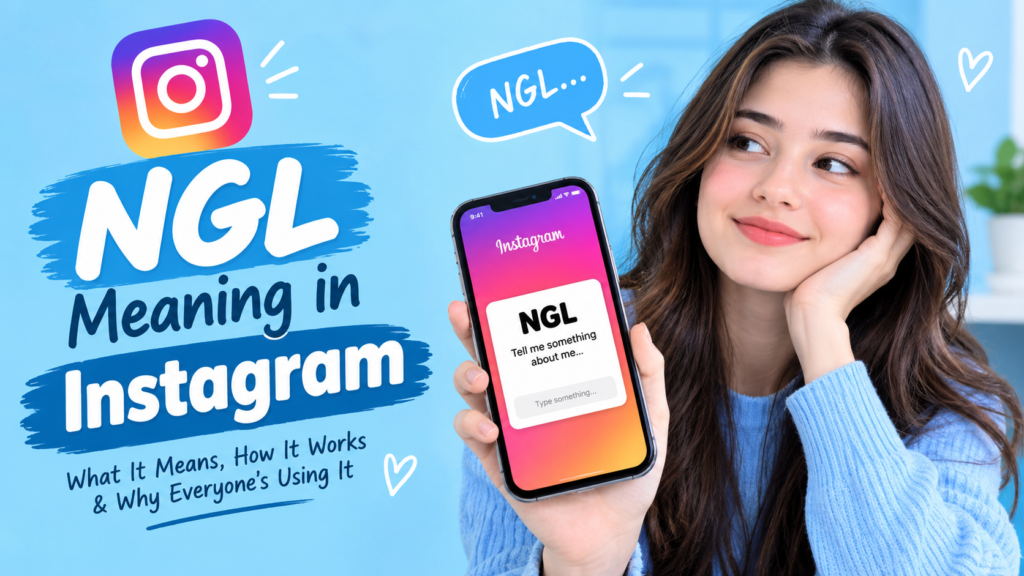
On Instagram, NGL shows up in DMs, story replies, comments, and captions. It is a favorite because the app is fast, visual, and casual.
A friend might reply to your story with, “Ngl, this fit is fire.” A caption might say, “Ngl, I did not expect this trip to be so good.” In both cases, the phrase adds a real, personal voice.
It also makes comments feel less polite and more like a genuine reaction. That is why creators and everyday users both use it.
You may also notice that NGL is common in Reels comments. Short, honest reactions get attention. They feel human, and people tend to respond to them.
A quick tip: keep it short. Instagram talk moves quickly, so a single honest line works better than a long paragraph.
Ngl Meaning from a Girl
When a girl says NGL, the meaning is much the same. She is about to be open about something. It can be a compliment, a confession, or a small complaint.
“Ngl, I love your music taste” is a friendly example. “Ngl, I think the second outfit looks better” is a softer way to give an opinion.
Many people use NGL to add warmth to honest feedback. It makes the message sound kind instead of blunt. That helps keep the peace while still being truthful.
As with boys, the tone depends on the rest of the message and your relationship. A friend saying it is likely being casual. Someone you are dating may be sharing a deeper feeling.
Do not assume that gender changes the word. People of every gender use NGL for the same reasons: honesty, comfort, and a relaxed tone.
Also Read This Meaning: RSVP Meaning
Meaning of Ngl in WhatsApp
On WhatsApp, NGL appears in private chats and group chats. It is used for quick, honest remarks. “Ngl, I forgot about the meeting” is a very common example.
WhatsApp is built for fast back-and-forth talk. Short slang fits perfectly. People often pair NGL with emojis like a laughing face, a shrug, or a pleading face.
It also works well in voice notes. Many people simply say “not gonna lie” out loud, then share their thoughts.
One thing to keep in mind is your audience. In a family group, older relatives may not know what NGL means. If you want to be clear, write “not gonna lie” or “honestly” instead.
Here are a few ways it appears on WhatsApp:
- “Ngl, I am running late.”
- “Ngl, that plan sounds fun.”
- “Ngl, I did not read the whole message.”
NGL Mean in Text
In any text message, NGL means “to be honest.” It is a small phrase that gives your words a human tone. It tells the other person you are being straight with them.
You can place it at the start, in the middle, or at the end of a sentence. Most people put it at the start. For example: “Ngl, I am kind of tired today.”
You can also tuck it into the middle: “I think, ngl, we should leave early.” It works at the end too: “That movie was too long, ngl.”
Use lowercase or uppercase. Both are fine. “ngl” looks more relaxed, and “NGL” looks a little louder. The meaning stays the same.
What Is NGL
NGL is internet slang that is short for “not gonna lie.” It began in online chats and then spread to texting and social media. Today, it is part of daily talk for teens and young adults across the United States.
It is not a formal word. It is a casual tool for honest, friendly conversation. Think of it as a small signal that says, “Listen, this is real.”
People of many ages now use it. You may hear it from college students, young professionals, and even parents who pick up slang from their kids.
Remember that NGL is also the name of an anonymous Q&A app that became popular for a short time. But the slang is older and far more widely used than the app. When someone texts “ngl,” they mean “not gonna lie,” not the app.
NGL Meaning in Text – Quick Meaning
Here is the fast version. NGL means “not gonna lie.” People use it to introduce an honest opinion, feeling, or fact. It is casual, friendly, and common.
If you only need one line to remember, use this: NGL means “I’m being honest.”
Simple Definition
NGL is a slang phrase used to say, “I am being honest with you.” It can introduce praise, a confession, or a mild complaint.
It is not a command, and it is not a warning. It is just a friendly lead-in. The message that follows is where the real meaning lives.
Quick Examples
- “Ngl, this pizza is the best I have had.”
- “Ngl, I did not study at all.”
- “Ngl, I am a little nervous about tomorrow.”
- “Ngl, you are really funny.”
- “Ngl, I forgot to text you back.”
Origin and Background of NGL
The phrase “not gonna lie” has been spoken in English for many years. People said it out loud long before smartphones existed. It was a natural way to introduce a frank comment.
When chat rooms and text messages grew in the 2000s, users shortened it to NGL. Typing was slower back then, so short forms saved time. Many other abbreviations were born the same way.
Social media gave it a big boost. Twitter, Tumblr, Instagram, and TikTok pushed short slang into the mainstream. By the late 2010s, NGL was a normal part of teen language in the US.
In 2026, NGL is still going strong. Many slang words come and go within a year. NGL has stayed because it is useful. It solves a real need, which is to be honest in a gentle way.
Here is a simple timeline:
| Period | What Happened |
| Before 2000 | “Not gonna lie” is spoken in everyday English |
| 2000s | Chat rooms and texting shorten it to NGL |
| 2010s | Social media makes it popular with teens |
| 2020s | It becomes common across all age groups |
Real-Life Conversations
Examples make slang easier to understand. Below are four common places where you will see NGL, with short sample chats.
Notice how the phrase changes the feel of each message. It adds honesty, warmth, or humor.
WhatsApp Conversation
Aisha: Did you watch the new episode?
Sam: Yes. Ngl, I cried a little.
Aisha: Same. I did not expect that ending.
Here, NGL helps Sam admit something a bit embarrassing. It feels safe and friendly.
Instagram DM
Jake: Saw your story. Where is that cafe?
Mia: It is downtown. Ngl, the coffee is overpriced but the view is worth it.
Jake: Ha, good to know.
NGL adds honesty without sounding rude or negative.
TikTok Comments
- “Ngl, I watched this five times.”
- “Ngl, the ending got me.”
- “Ngl, I thought it was a joke at first.”
Comments on TikTok are short and fast. NGL gives them a personal, real feel.
Text Message
Chris: Are you coming tonight?
Dana: Ngl, I am too tired. What can we do tomorrow?
Chris: No problem. Rest up.
Here, NGL makes the decline sound gentle, not cold.
Emotional and Psychological Meaning

Behind this small phrase is a real human need. People want to be honest, but they also want to avoid conflict. NGL helps with both.
It works like a cushion before a truth. The speaker is saying, “This may be a little direct, but I mean it kindly.”
Saying “ngl” can also show a bit of vulnerability. It tells the other person, “I trust you enough to say this.” That is why it often appears before confessions, compliments, and worries.
Why People Connect With It
People like NGL because it feels natural. It does not sound stiff or fake. Here are the main reasons it works so well:
- It feels relaxed and easy.
- It lowers the risk of sounding harsh.
- It signals trust and openness.
- It is quick to type and say.
- It makes small talk feel more real.
What It Reflects About Modern Communication
Online talk is fast and short. People do not have time for long, formal sentences. A slang term like NGL packs tone into three letters.
It also shows that younger people value honesty and a casual style. Many prefer a direct but friendly voice over formal speech. NGL sits right in the middle.
In a way, it shows how text-based talk has to work harder to sound human. Without a face or a voice, small words carry the emotion. NGL is one of those words.
Usage in Different Contexts
The meaning of NGL stays the same everywhere. What changes is whether it fits the setting. Here is how it works in different places.
Social Media
On social apps, NGL is everywhere. It shows up in captions, replies, comments, and stories. It adds a personal voice and helps posts feel less like ads.
Creators use it to build trust with viewers. A line like “Ngl, I did not expect this to work” feels honest and relatable.
Friends and Relationships
With friends and partners, NGL is a comfortable choice. It lets you share feelings and opinions in a light way. It works for jokes, praise, and gentle honesty.
It is also useful when you need to say something a little hard. “Ngl, I felt hurt” is easier to say than a long, tense message.
Work or Professional Settings
At work, use it with care. In a casual team chat, it may be fine, especially if everyone talks that way. In emails to managers, clients, or recruiters, skip it.
Better choices for work are “to be honest,” “honestly,” or “frankly.” They sound clear and polite without being too casual.
Casual vs. Serious Tone
NGL is casual by nature. It suits relaxed talk. In serious moments, such as a conflict, bad news, or a formal complaint, it can sound too light.
Choose a clearer phrase if the topic is heavy. For example, “I need to be honest with you” shows more respect than “ngl.”
| Setting | Is NGL Okay? | Better Option if Not |
| Group chat with friends | Yes | None needed |
| Instagram or TikTok comments | Yes | None needed |
| Dating chats | Yes | None needed |
| Team chat at work | Sometimes | “Honestly” |
| Email to a boss or client | No | “To be honest” |
| Serious or sad talks | Use with care | “I need to be honest” |
Common Misunderstandings
Because NGL is so short, people often read too much into it. Here are the most common mix-ups.
People Think NGL Means Someone Was Lying Before
Some people hear “not gonna lie” and wonder, “So were you lying before?” That is not the case. It is just a style of speech.
Most people who say it are not lying at any other time. It is a habit, like saying “you know” or “honestly.”
It Isn’t Always Negative
Many assume NGL leads to bad news. In truth, it often leads to a compliment. “Ngl, you are such a good friend” is a perfect example.
It can also introduce good news, a fun fact, or a happy surprise. The phrase itself is neutral.
It Can Sound Too Casual
In a serious chat, NGL may seem careless. For example, “Ngl, I am quitting” in a message to your boss can look unprofessional.
Always think about who is reading. If you are unsure, use the full phrase “to be honest.”
It Doesn’t Guarantee Absolute Truth
Using NGL does not prove a statement is true. A person can say it and still be wrong, or even exaggerate. It shows the wish to be honest, not a promise.
If something important depends on the message, check the facts. Do not rely on a slang phrase.
Comparison Table
| Common Belief | Reality |
| NGL means the person lied before | No, it is just a habit of speech |
| NGL always brings bad news | No, it often brings praise |
| NGL is fine everywhere | No, avoid it in formal settings |
| NGL proves honesty | No, it only signals the wish to be honest |
Key Insight
NGL is a tone marker, not a truth test. It tells you how a person wants to sound, which is open, relaxed, and friendly.
Judge the message by what it says, not by the slang that comes before it. The words after “ngl” always matter most.
Variations and Related Expressions
Many other phrases do a similar job. They are not all the same, but they overlap. Knowing them helps you read chats better and pick the right tone.
1. TBH
“TBH” means “to be honest.” It works almost exactly like NGL. Both open an honest remark. TBH can feel a little more neutral, while NGL feels a bit more personal.
2. No Cap
“No cap” means “no lie.” People say it after a statement to stress that it is true. Example: “That concert was amazing, no cap.”
3. Honestly
“Honestly” is the plain, full-word version. It works in casual and semi-formal talk. It is a safe pick for most settings, including work.
4. Real Talk
“Real talk” signals a serious or sincere moment. It often comes before advice or a firm opinion. It feels stronger than NGL.
5. Low-Key
“Low-key” means something is true in a quiet or subtle way. Example: “I low-key love this song.” It softens a feeling instead of announcing it.
6. High-Key
“High-key” is the opposite of low-key. It means you feel something openly and strongly. Example: “I high-key want that jacket.”
7. FR
“FR” means “for real.” It can agree with someone or stress a point. Example: “That was so good, fr.”
8. I Mean
“I mean” is a soft starter used in speech and texts. It often introduces a clarification or a mild opinion. It is less direct than NGL.
9. No Joke
“No joke” tells the listener you are serious. Example: “No joke, that was the scariest movie I have seen.”
10. Truthfully
“Truthfully” is a clear and formal choice. It fits emails and serious talk better than NGL does.
| Expression | Meaning | Tone |
| NGL | Not gonna lie | Casual, friendly |
| TBH | To be honest | Casual, neutral |
| No cap | No lie | Slangy, strong |
| Honestly | Frankly | Neutral |
| Real talk | Serious honesty | Serious |
| Low-key | Quietly, subtly | Soft, casual |
| High-key | Openly, strongly | Bold, casual |
| FR | For real | Casual |
| I mean | Clarifying | Soft |
| No joke | I am serious | Strong |
| Truthfully | In truth | Formal |
How to Respond When Someone Uses NGL
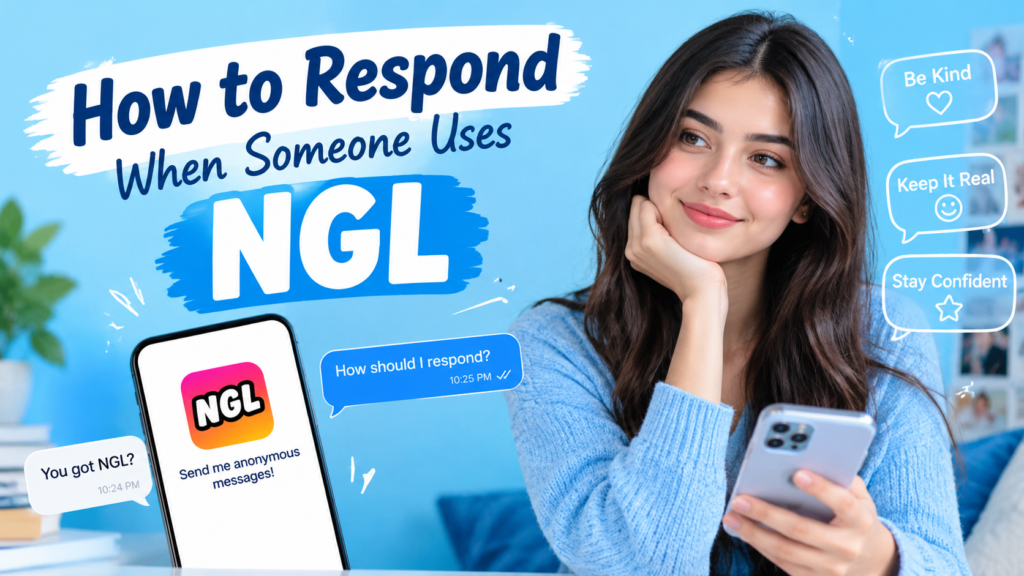
Your reply depends on the mood, the topic, and the person. Here are ideas for different tones. Pick the one that fits you.
Casual Replies
- “Thanks for being honest.”
- “Okay, I get that.”
- “I appreciate you saying that.”
- “Same here, to be honest.”
Funny Replies
- “Ngl, I was waiting for that.”
- “Wow, the truth hurts, but I like it.”
- “Honesty hour has begun, I see.”
- “Thanks, I think?”
Mature and Confident Replies
- “I value your honesty. Let’s talk about it.”
- “That is fair. I will think about it.”
- “Thank you for telling me. I understand your view.”
Private and Respectful Replies
Sometimes NGL comes before something personal or emotional. In that case, keep your reply kind and calm.
- “Thank you for trusting me with that.”
- “Can we talk about this on a call?”
- “I appreciate you sharing. I will keep it between us.”
Regional and Cultural Usage
NGL is used around the world, but each region adds its own flavor.
Western Culture
In the US, UK, and Canada, NGL is very common. Teens and young adults use it daily. It appears in texts, memes, and even spoken talk. Many people say the full “not gonna lie” out loud.
Asian Culture
In countries such as India, Pakistan, and the Philippines, English slang is popular online. Many young users type NGL in chats and comments. They often mix it with local languages, like “Ngl yaar, it was good.”
Middle Eastern Culture
In the Middle East, young people use NGL on social media, especially in English chats. It is often mixed with Arabic words. It spreads mostly through Instagram and Snapchat.
Global Internet Usage
The internet has turned NGL into a shared word. Gaming chats, streaming sites, and short video apps all help it spread. A teen in Texas and a teen in Dubai may use it in nearly the same way today.
Frequently Asked Questions
What does NGL mean in text?
NGL means “not gonna lie.” People use it to introduce an honest opinion, feeling, or fact in a casual way.
Is NGL rude?
No, NGL is not rude by itself. It usually softens an honest remark, though the words after it can still be blunt.
Can adults use NGL?
Yes, adults can use NGL in casual chats with friends, family, or coworkers who know the slang. It is not just for teens.
Is NGL professional?
Not really. NGL is casual slang, so avoid it in formal emails. Use “honestly” or “to be honest” instead.
Why do people say NGL?
People say NGL to sound honest and friendly at the same time. It softens the message and builds trust.
Final Thoughts
NGL is a small phrase with a big job. It means “not gonna lie,” and it helps people share honest thoughts in a soft, friendly way. It works in texts, DMs, comments, and group chats. It can sound sweet, funny, or serious.
The best way to use it is with care. Keep it for casual talk, read the full message before you react, and do not treat it as proof of truth. Use it with friends, avoid it in formal emails, and you will do just fine.

Hi, I’m Munaza, the creator of RTMeaning.com. I’m passionate about explaining internet slang, abbreviations, texting terms, and modern language in a simple and easy-to-understand way. Through this website, I help readers discover the meanings behind trending words, social media expressions, and online communication. My goal is to make learning new terms quick, clear, and enjoyable for everyone.