

If you’ve ever gotten a text that just says “tsk” or “tsk tsk” and had no idea how to take it, you’re not alone. It looks confusing at first almost like an acronym but it isn’t. TSK is the written version of a sound: the little tongueclick people make in real life when they’re mildly annoyed, disappointed, or amused.
It shows up in group chats, comment sections, and one on one conversations so often that most people just absorb its meaning over time without ever stopping to ask where it came from or why it works the way it does. This guide breaks down exactly what TSK means, where it came from, and how to use (or answer) it without misreading the tone, so you never have to guess again the next time it lands in your inbox.
What Does TSK Mean in Text & Chat?
In texting, TSK is a typed version of the tongueclicking sound people make when they react to something silly, careless, disappointing, or unbelievable. It isn’t spelled out to save letters, it’s spelled out to imitate a noise.
The moment you say it out loud, you’ll notice it’s the exact same click your grandmother might make when she catches you skipping vegetables, or the sound a friend makes when you tell them you procrastinated again.That’s what makes it different from slang like LOL or BRB. Those are shortcuts for actual words.
TSK doesn’t shorten anything. It’s an interjection, the same linguistic family as “hmm,” “ugh,” or “psh,”a sound turned into text so tone can survive in a typed conversation. Text messages strip away pitch, volume, and facial expression, so words like TSK exist to patch that gap and let a small verbal reaction travel through a screen exactly as it would in person.
Quick Examples
A: “I forgot to submit the form again.”
B: “tsk, seriously?”
A: “I ate the last slice without asking.”
B: “tsk tsk, unbelievable.”
A: “I overslept and missed the meeting.”
B: “tsk… classic you.”
Each of these reads as light criticism, not a real fight. That’s the everyday tone TSK usually carries. It’s rarely used to end a conversation on a sour note instead, it tends to open the door for more back and forth, almost like a nudge that says “I noticed, and I’m choosing to tease you about it instead of getting genuinely upset.”
Full Form, Stands For & Short Meaning of TSK
Short Meaning of TSK
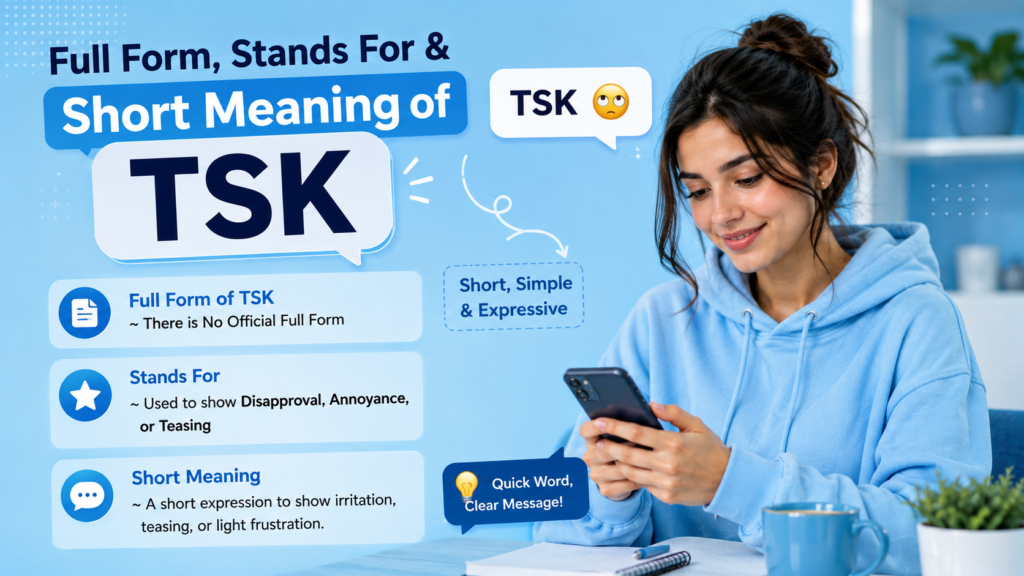
The short meaning: TSK = a tongueclick reaction showing mild disapproval, disappointment, or playful teasing. No expansion needed; the letters are the sound. If you try to say the word “tsk” out loud instead of clicking your tongue, you’ll notice it doesn’t quite work as a normal word, and that’s the biggest clue that it was never meant to be read as one.
Does TSK Stand for Anything?
No. In everyday texting, TSK is not an acronym and has no official full form its onomatopoeia, a written imitation of a real sound, not a standing for a phrase. People sometimes search for a “hidden meaning” behind it the same way they do with other short texting slang, but with TSK there’s genuinely nothing to decode. The letters exist purely to represent a click of the tongue against the roof of the mouth, and that’s the whole story.
Why People Like Using It
- Its first one word replaces a whole sentence of scolding.
- It adds an emotional tone that plain text usually lacks.
- It feels playful rather than confrontational.
- It works across almost any casual chat, from friends to fandom comments.
- It requires zero explanation, since most people already recognize the sound instinctively.
- It can soften criticism, making a mistake feel like a running joke instead of a real complaint.
TSK Meaning From a Girl in Text
When a girl sends “tsk” in a chat, it’s almost always about her reaction to something you said or did not have a hidden code. It can mean mild disappointment, a teasing “you should know better,” or amused disbelief.
Read the message before it: if the conversation is light, she’s probably just playscolding you. If it follows something you were genuinely supposed to remember, like a birthday or a promise, it might carry a slightly more serious undertone, though it’s still usually far from anger.
Context clues matter more than the word itself here. A “tsk 😂” after a joke is clearly harmless fun, while a plain “tsk” with no punctuation, sent after a real disagreement, might be worth a followup question rather than a joke back. Most of the time, though, it’s simply a lighthearted way of saying “you did it again,” without needing to spell out the whole sentence.
Origin, History & First Known Use of TSK
Historical Background
Tongueclicking to show disapproval is older than texting by centuries. Dictionaries have documented “tsktsk” as a written interjection since at least the 1930s, and the sound itself appears across many cultures as a natural, wordless reaction to something disappointing. Long before smartphones, people used this exact click in face to face conversation, and writers eventually needed a way to put that sound on paper for dialogue in books, comics, and scripts.
Internet & Texting Era
Once messaging apps took over daily communication, people needed a way to carry vocal tone into text. Typing “tsk” lets them import a familiar spoken sound directly into a chat window instead of writing out “I’m disappointed in you.” As texting replaced phone calls for most casual conversation, small vocal cues like this became essential shorthand for keeping personality alive in short, quick exchanges.
Why It Survived Online
Unlike a lot of slang that fades in a season, TSK has stuck around because it’s rooted in a real, universally recognized human sound rather than a trend based abbreviation. That gives it staying power most texting shorthand doesn’t have.
Words invented purely for texting can lose relevance once a platform or trend fades, but TSK doesn’t depend on any single app or account depending on a sound humans have made for generations, which means it isn’t going anywhere anytime soon.
How People Use TSK in Daily Conversations
Common Situations
TSK shows up constantly in casual texting because it fills a gap reacting with emotion, quickly, without typing a full sentence.
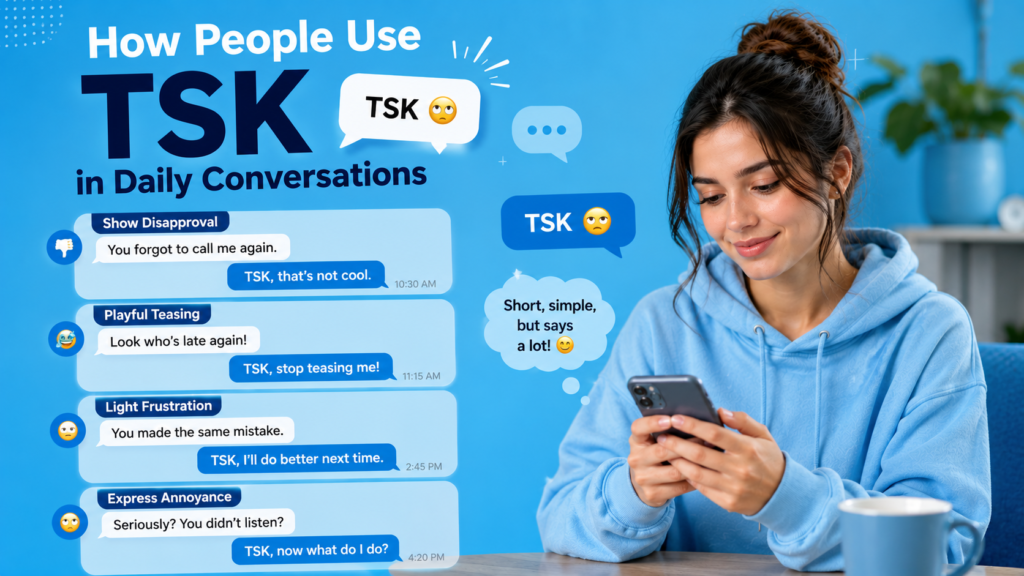
- When Someone Makes a Mistake: “You forgot your keys again? tsk.”
- When Someone Acts Silly: “tsk, only you would trip over nothing.”
- Friendly Teasing: “tsk tsk, look who’s finally texting back.”
- Light Disapproval: “tsk, you really ate the whole pizza alone?”
- Mock Judgment: “tsk, I can’t believe you actually said that out loud.”
- Reacting to News: “tsk, that’s rough, but also kind of your fault.”
Tone Matters
Because TSK has no fixed definition, punctuation, emojis, and the relationship between the people texting all shape how it lands. A “tsk 😂” reads as a joke; a flat “tsk.” from someone upset can feel colder.
Adding extra characters, like stretching it into “tsssk” or repeating it as “tsk tsk tsk,” usually amplifies the exaggerated, theatrical side of the reaction rather than making it feel more serious. The safest rule of thumb is to read the sentence right before it, since TSK almost always mirrors whatever emotional weight already exists in the conversation.
TSK Meaning Across WhatsApp, Instagram, TikTok & Snapchat
| Platform | Typical Use of TSK |
| Casual reactions in one on one or group chats, usually playful | |
| Comments on posts or reels, often mock judgment or disbelief | |
| TikTok | Comment sections reacting to funny or cringe clips |
| Snapchat | Quick replies to stories or snaps, almost always joking |
WhatsApp: Friends and family use it as a quick jab at a mistake or funny story, rarely as a serious complaint. It often shows up in group chats where someone shares an embarrassing update and the whole thread responds with the same tongueclick energy.
Instagram: Under posts or reels, “tsk” often signals amused disapproval reacting to a bold outfit or a risky decision caught on camera. It’s a quick way for commenters to react without writing a full sentence, especially on posts meant to be a little chaotic or dramatic.
TikTok: In comments, it adds a dramatic, judging flavor to reactions on relatable or chaotic videos. Because TikTok comment sections thrive on short, punchy reactions, TSK fits perfectly as a one word verdict on someone’s questionable choices in a clip.
Snapchat: Between friends, it’s almost always lighthearted a snappy response to a story rather than genuine criticism. Since Snapchat conversations tend to be quick and casual by design, TSK slots in naturally as a fast way to react without breaking the pace of the chat.
Different Meanings of TSK in Other Fields
Outside of texting, TSK has completely unrelated technical meanings depending on the industry.
| Field | Meaning of TSK |
| Medicine | Tampa Scale of Kinesiophobia, a clinical questionnaire |
| Technology | Takagi Sugeno Kang, a fuzzy logic model; also The Sleuth Kit, a forensics toolset |
| Gaming | “Three Shot Kill,” a term for eliminating an enemy with three shots |
| Entertainment | Used as a song title and referenced in various music and pop culture contexts |
In Medicine: TSK can refer to a scale used to measure fear of movement or reinjury in patients, commonly used by physiotherapists working with people recovering from chronic pain or physical trauma.
In Technology: It appears in fuzzy logic modeling systems used in engineering and control systems, and separately in open source digital forensics software used by investigators to examine disk images and file systems.
In Gaming: Players use TSK to brag about efficient kills, especially in shooter games, where landing an elimination in exactly three shots is seen as a mark of accuracy and skill.
In Entertainment: The letters occasionally show up as song titles or group names, unrelated to the texting meaning, which can sometimes cause confusion for anyone searching the term without context.
Also Read This Meaning YWW Meaning in Text
Common Confusions, Mistakes & Wrong Interpretations
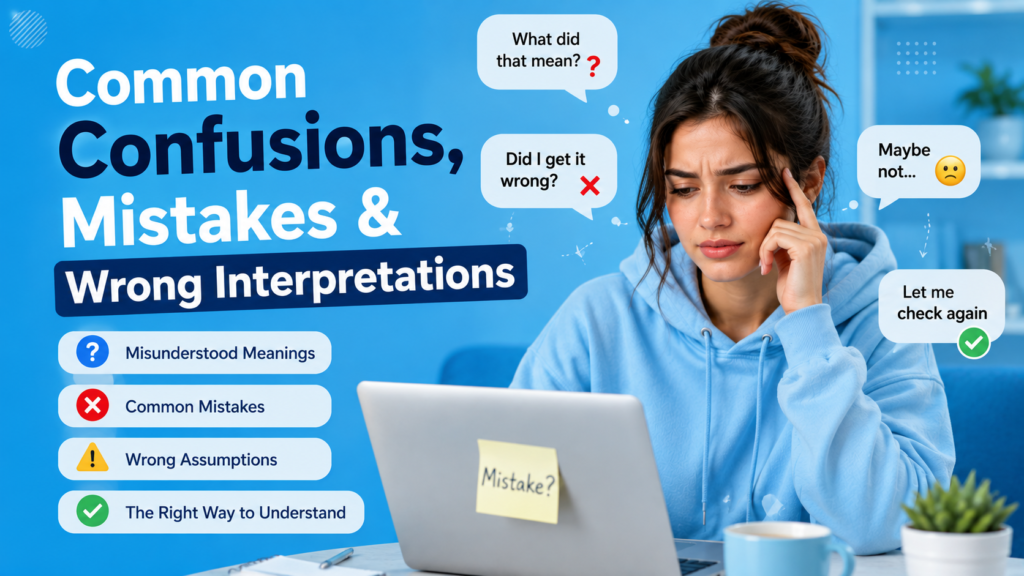
- Thinking It Is an Acronym: Many assume TSK stands for a phrase; it doesn’t’s a sound, not shorthand for words.
- Assuming It Is Always Rude: TSK is usually playful, not hostile, especially between friends.
- Confusing It With “TSM” or “TYSK”: These are different abbreviations entirely (“too much,” “thank you so much”) and shouldn’t be mixed up with the tongueclick TSK.
- Misreading Tone Without Emojis or Context: A “tsk” from a stranger or in a formal setting can come across harsher than intended.
- Overusing It: Repeating TSK constantly can make messages feel dramatic or sarcastic rather than genuine.
- Using It in Professional Settings: Because it’s so casual, dropping TSK into a work email or formal message can come across as unprofessional or oddly blunt.
Similar Terms, Alternatives & Related Slang
Similar Expressions
Words like “smh,” “sigh,” “ugh,” and “yikes” occupy similar emotional territory quickly, loweffort reactions to something disappointing or funny. Each one carries its own slightly different flavor, even though they all serve the same basic purpose of reacting fast without typing a full thought.
Differences Between Them
TSK vs SMH: TSK is a soft, almost affectionate reaction; SMH (“shaking my head”) usually signals stronger disbelief or frustration.
TSK vs Sigh: “Sigh” reads as tired resignation, while TSK feels sharper and more judgmental in a teasing way.
Related Slang Examples
- “smh, you never learn”
- “sigh, here we go again”
- “ugh, not this again”
- “tsk tsk, typical”
- “yikes, that’s rough”
TSK Meaning From a Guy in Text
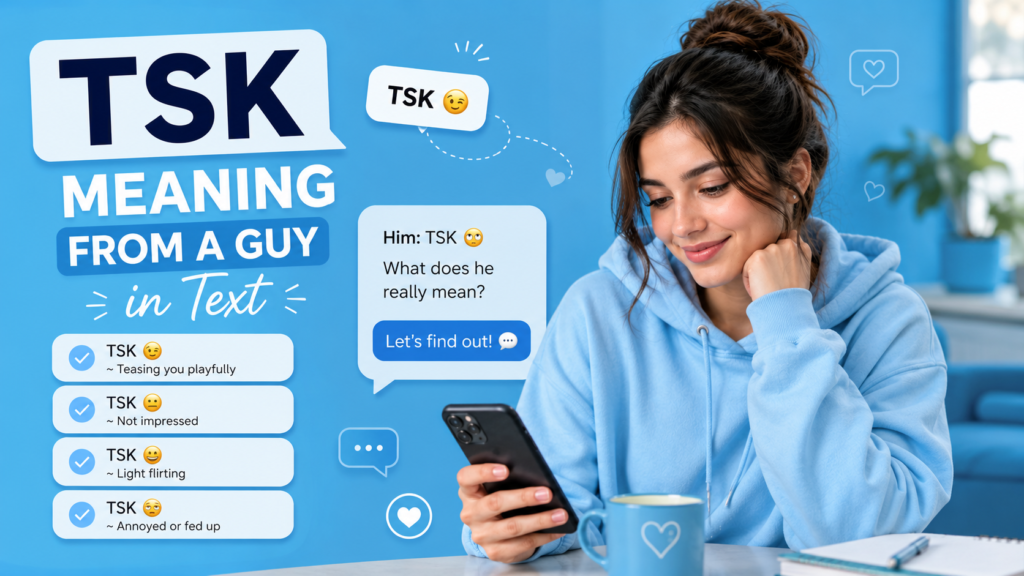
When a guy texts “tsk,” it usually works the same way: a quick, casual reaction to something disappointing, silly, or funny that just happened in the conversation. It’s rarely deep or loaded with hidden meaning; context and relationship closeness decide whether it’s teasing or mildly serious. Guys tend to use it the same way in friend groups and gaming chats, often pairing it with a joke or a followup roast rather than leaving it to stand alone.
Examples of TSK in Real Chat Situations
Friendly Chats:
“You lost the game again? tsk, embarrassing.”
Relationship Chats:
“tsk, you forgot our plans already?”
Gaming Chats:
“tsk, that was an easy kill you missed.”
Social Media Comments:
“tsk, why would you do that on camera 😂”
Funny Examples
“I spent my whole paycheck in one day.”
“tsk, how are you even surviving?”
“I lied to get out of it.” “tsk… bold move.”
How to Reply When Someone Says TSK
Funny Replies:
“tsk right back at you 😏”
Playful Replies:
“okay okay, I deserved that tsk”
Serious Replies:
“I know, my bad won’t happen again.”
Casual Responses:
“lol fair” or a simple laughing emoji.
There’s no single correct way to respond, since the right reply depends entirely on how the original TSK was meant. Matching the same playful energy usually keeps the conversation light, while owning the mistake works well if the TSK carries a bit more weight.
Is TSK Still Popular? Trends & Online Usage
Why It Remains Popular
TSK keeps showing up because it fits perfectly into minimalist texting culture one small sound replaces a full sentence of judgment or disappointment. As conversations move faster across more platforms, short reactions like this become even more valuable for keeping tone intact without slowing anyone down.
Popular Among Different Ages
It’s especially common with Gen Z and younger millennials, though the tongueclick itself has been recognized across generations for far longer. Older generations may not type it as often, but almost everyone recognizes the sound instantly when they read it.
Modern Internet Usage
In 2026, TSK continues appearing across comments, DMs, and captions, holding steady rather than fading like short lived trend slang. Its simplicity is exactly what keeps it relevant, since it doesn’t rely on any single platform, meme cycle, or generation to stay understood.
Conclusion
TSK isn’t complicated once you know what it’s doing: it’s a typed tongue click, not a hidden acronym. In most chats, it signals playful teasing or mild disappointment rather than real anger.
The real skill is reading who sent it, what came before it, and whether emojis softened the message. Context always matters more than the three letters themselves.
Once you get that, “tsk” stops being confusing and starts reading exactly the way it’s meant to: a tiny reaction packed with personality.

Hi, I’m Munaza, the creator of RTMeaning.com. I’m passionate about explaining internet slang, abbreviations, texting terms, and modern language in a simple and easy-to-understand way. Through this website, I help readers discover the meanings behind trending words, social media expressions, and online communication. My goal is to make learning new terms quick, clear, and enjoyable for everyone.