
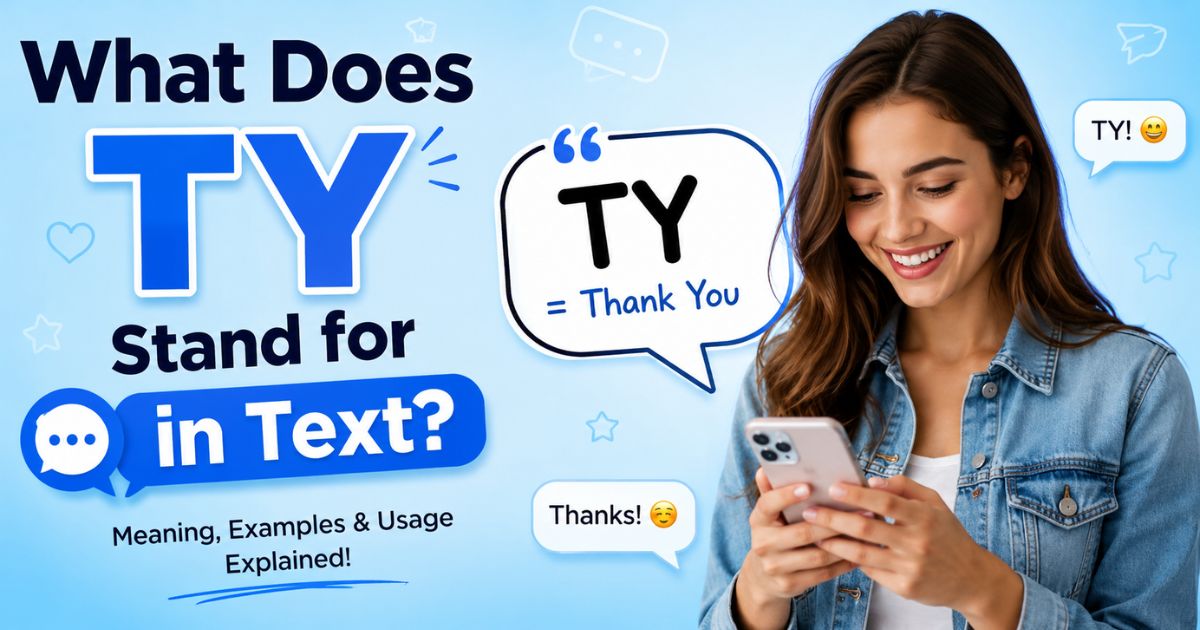

Scrolling through a chat and someone just replies “ty!” no punctuation, no explanation, just two letters. If you’ve ever paused for a second wondering what it means, you’re in good company. Texting slang moves fast, and abbreviations like TY are everywhere, from group chats to Instagram comments.
The good news? TY is one of the easiest and most positive texting terms to learn. This guide breaks down exactly what it means, how people use it, and when it fits so you never have to second guess it again.
🧠 What Does TY Mean in Text?
TY simply stands for “Thank You.” It’s a short, casual way to express gratitude without typing out the full phrase. Whether it’s lowercase “ty” or capitalized “TY,” the meaning stays the same across almost every platform and conversation.
People use TY when they want to sound polite and appreciative but keep the message quick. It works in nearly any casual setting texting, gaming, social media, or group chats and it’s understood by nearly everyone who uses digital communication.
📱 Where Is TY Commonly Used?
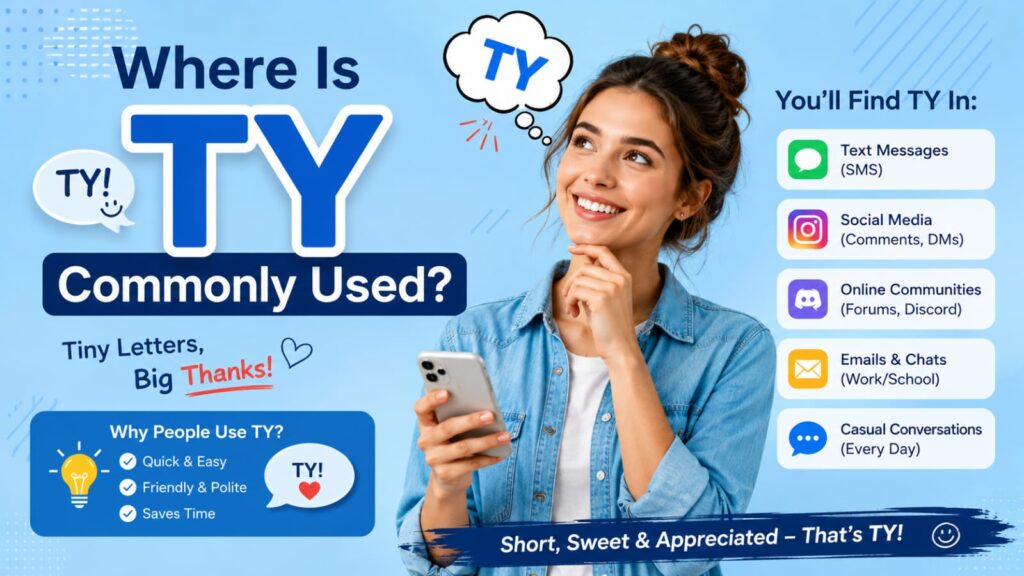
TY shows up across almost every messaging platform because it’s fast to type and universally understood.
📍 Popular platforms:
- Text messages (SMS and iMessage)
- WhatsApp and Telegram chats
- Instagram comments and DMs
- Snapchat conversations
- Discord and gaming chats
- TikTok comment sections
- Twitter/X replies
🧩 Tone & Style:
TY carries a light, friendly tone. It’s casual by nature, which makes it perfect for everyday conversations but not ideal for formal writing like work emails or professional messages.
💬 Examples of TY in Conversation
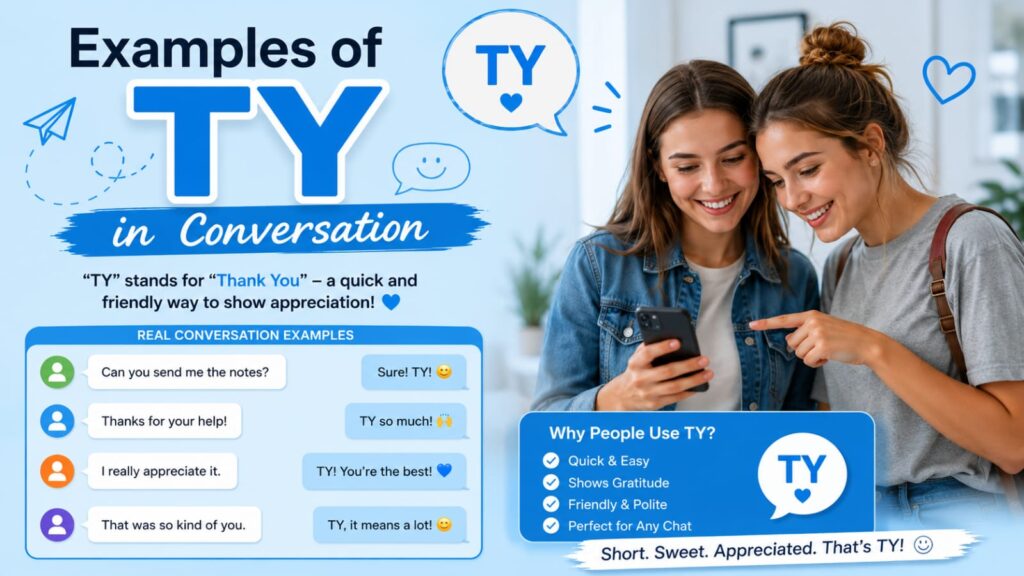
Seeing TY in context makes the meaning click instantly. Here are common ways it shows up in real chats.
1. Simple Thanks A: “Here’s the document you asked for.” B: “ty!”
2. Receiving Help A: “I fixed the issue for you.” B: “omg ty so much, you’re a lifesaver.”
3. Friendly Chat A: “Happy birthday! 🎉” B: “ty!! means a lot 🥹”
4. Quick Reply A: “I left the keys with the front desk.” B: “ty”
5. Social Media Comment Comment: “Love this outfit 😍” Reply: “ty ty!!”
6. Gaming Chat Teammate: “Nice save!” You: “ty, that was close”
7. Slightly Emotional Thanks A: “I’m really proud of you.” B: “ty, that means so much to me 🥺”
🕓 When to Use and When Not to Use TY
TY is flexible, but it’s not always the right fit. Here’s a quick breakdown.
| Situation | Use TY? | Why |
| Texting friends or family | ✅ Yes | Casual and quick |
| Gaming or Discord chats | ✅ Yes | Fits fast-paced conversation |
| Social media comments/DMs | ✅ Yes | Common and expected |
| Professional emails | ❌ No | Too informal |
| Formal thank you notes | ❌ No | Lacks warmth and detail |
| Talking to someone you don’t know well | ⚠️ Maybe | Depends on the relationship |
✅ When to Use TY
- In quick, casual replies to friends or family
- When responding fast in a group chat
- On social media captions, comments, or DMs
- During gaming sessions where speed matters
❌ When Not to Use TY
- In professional or work related emails
- When writing a formal thank you message
- In situations where a more heartfelt response is expected
🔄 Other Meanings of TY in Text
While “Thank You” is by far the most common meaning, TY can occasionally stand for something else depending on the context
- Target Year used in business planning and goal setting
- Total Yield used in medical or lab related fields
- Taiyo Yuden a Japanese electronics company, mostly seen in technical contexts
These alternate meanings are rare in everyday texting, so if you see TY in a casual chat, it almost always means “thank you.”
🔄 Similar Slang Words or Alternatives
If you want to mix things up from the standard “TY,” there are several similar abbreviations that express gratitude:
- TYSM Thank You So Much
- TYVM Thank You Very Much
- THX or TNX Thanks
- TA Thanks (common in British texting)
- TYT Thank You Too
- 10Q A playful, numeric way to say “Thank You”
🧠 Is TY Friendly or Rude?
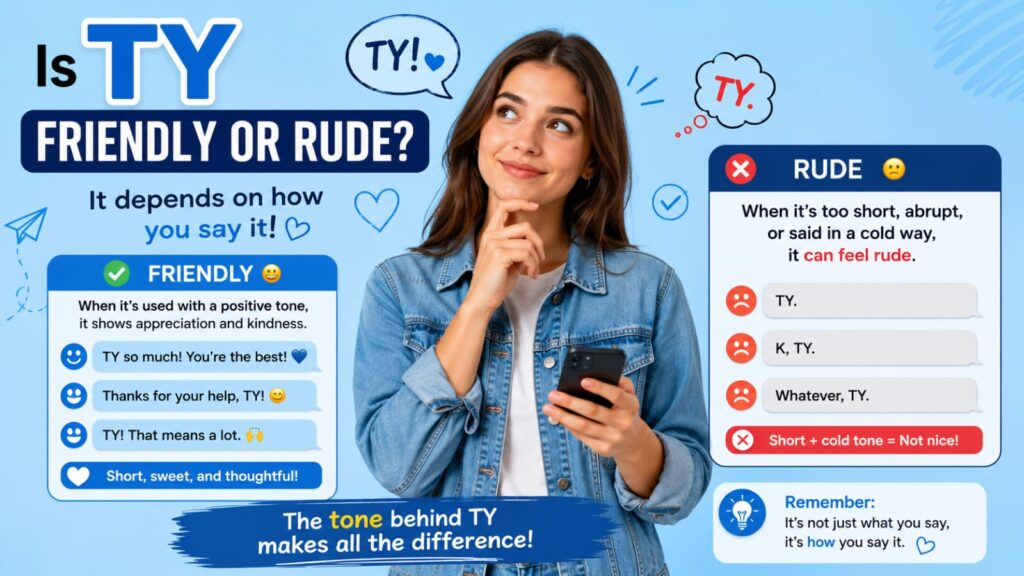
TY is almost always a positive, friendly term. However, tone can shift slightly depending on punctuation, emojis, and context.
😊 Friendly Use:
“ty” you’re the best 😊” warm and appreciative.
😐 Neutral Use:
“ty” polite but plain, common in fast-paced chats.
😶 Cold or Short Tone:
“ty” a period at the end can sometimes feel abrupt or short, depending on the relationship and prior conversation tone.
Also Read This Meaning OLS Meaning in Chat
📊 Why Do People Use TY in Texting?
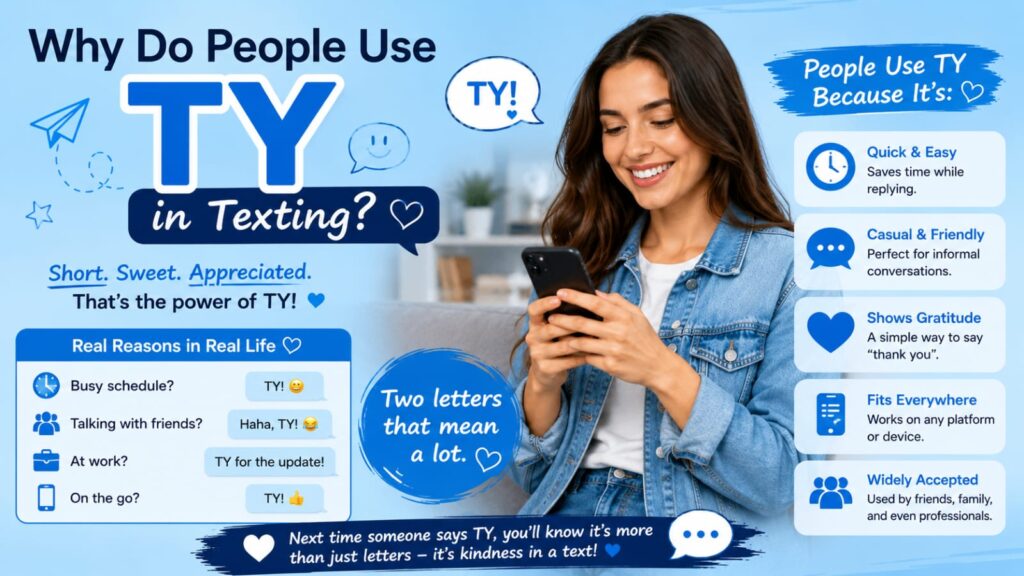
TY has become one of the most widely used texting abbreviations, and there are clear reasons behind its popularity.
⚡ 1. Faster Communication
Typing two letters is quicker than typing “thank you,” especially in fast moving conversations.
📱 2. Easy Typing
TY is simple to type on mobile keyboards, making it convenient during quick replies or multitasking.
💬 3. Casual Chat Style
It matches the relaxed, informal tone most people use in texting and social media.
🎮 4. Gaming Speed
In gaming chats, quick communication matters, and TY lets players express thanks without breaking focus.
🌐 5. Social Media Culture
Short form communication is the norm on platforms like Instagram and TikTok, and TY fits perfectly into that style.
Frequently Asked Questions
What does TY mean in a text message?
TY stands for “Thank You” and is used as a quick, casual way to express gratitude.
Is TY appropriate for professional messages?
No, TY is too casual for professional emails or formal communication.
What does TYSM mean compared to TY?
TYSM means “Thank You So Much,” expressing stronger gratitude than the simple “TY.”
Is TY used only by younger people?
No, TY is widely used across age groups, including teens, millennials, and even older adults who text regularly.
Can TY mean something other than “thank you”?
Yes, in rare cases it can mean “Target Year” or “Total Yield,” but these uses are uncommon in casual texting.
Is “ty” the same as “TY”?
Yes, both lowercase and uppercase versions mean the same thing only the tone or emphasis may differ slightly.
Final Thoughts
TY is one of the simplest and most positive abbreviations you’ll come across in texting. It’s short, friendly, and works almost everywhere from casual chats with friends to gaming sessions and social media comments. The only time to hold back is in formal or professional writing, where spelling out “thank you” is still the better choice.
Once you know the meaning and tone behind TY, using it (and understanding it) becomes second nature in any digital conversation.

Hi, I’m Munaza, the creator of RTMeaning.com. I’m passionate about explaining internet slang, abbreviations, texting terms, and modern language in a simple and easy-to-understand way. Through this website, I help readers discover the meanings behind trending words, social media expressions, and online communication. My goal is to make learning new terms quick, clear, and enjoyable for everyone.