

You open a comment section and see someone write “SSA” under a video. Nobody explains it. Everyone seems to get the joke except you.
That feeling is common, and it is exactly why people search for the SSA meaning in text every month. The short version: on social media, SSA is usually a reversed spelling of a mild swear word, used to slip past automated filters. Outside the internet, it can mean something very different, such as the Social Security Administration.
This guide covers the slang meaning, where it came from, real-life examples, how to reply, and when to avoid it. Everything is explained in plain language, so you can read a chat or comment and know what is going on.
SSA – Quick Meaning
Here is the fast answer.
| Question | Quick Answer |
| What does SSA mean in slang? | The word “ass” spelled backward (algospeak) |
| Where is it used most? | TikTok, Instagram, Snapchat, YouTube comments |
| Why do people use it? | To avoid filters that limit or remove posts with certain words |
| Is it offensive? | Mildly. It is a mild swear word in disguise |
| Is it the same as SA? | No. “SA” is a different abbreviation with a serious meaning (see below) |
| Other meanings? | Social Security Administration, same-sex aggression (animal behavior), and other field-specific uses |
In one sentence: SSA in text slang is a coded spelling used to say a mild swear word without triggering moderation tools.
What Does SSA Mean in Slang?
Most people who search ssa meaning, ssa meaning tiktok, or what does ssa mean tiktok want one thing: the internet-slang definition.
In that world, SSA works like a mirror. Take a short, mildly rude word, flip the letters, and you get “ssa.” Viewers who know the trick read it instantly. Automated systems that scan for exact words usually do not.
You may see it in lines like:
- “That outfit was ssa” (the outfit was bad)
- “Look at his ssa in that video” (referring to someone’s backside)
- “Don’t be an ssa” (don’t be a jerk)
The tone is almost always casual, teasing, or joking.
Why Does the Spelling Matter?
Short slang terms spread fast because they are easy to type and easy to remember. Three letters, one flip, done. That simplicity is a big reason the ssa slang meaning keeps showing up in comments and captions.
A Quick Word on “SA” vs. “SSA”
Do not mix these up.
“SA” (one S) is widely used online as shorthand for a very serious topic: sexual assault. Creators and survivors use it so they can talk about their experiences without having posts restricted. It is not a joke, and it should never be treated like one.
Some low-quality websites blur the two terms together and claim SSA carries that serious meaning. The better-supported explanation for SSA is the reversed-word one. Still, because “SA” and “SSA” look so similar, always read the full context before reacting.
Why Do People Use SSA in Online Conversations?
People rarely use SSA because they want to be mysterious. They use it for practical reasons.
1. To Avoid Filters
Platforms use automated tools to scan captions, comments, hashtags, and on-screen text. Posts with certain words can lose reach or get taken down. Writing “ssa” gives the writer a small buffer.
2. To Keep Things Light
A reversed word feels playful. It softens the edge of a swear word and makes the sentence sound more like a joke than an insult.
3. To Signal You Are “In the Know”
Slang works like a club handshake. Using it tells others you spend time in the same online spaces.
4. To Save Time
Typing three letters is quicker than spelling out a longer word, especially in fast-moving comment sections and group chats.
5. To Stay Creator-Friendly
Many creators want their content to stay eligible for recommendations and ads. Coded spellings help them stay inside the lines while still sounding natural.
Understanding the Rise of SSA Slang
SSA did not appear out of nowhere. It is part of a bigger trend called algospeak: language shaped by the algorithms that scan what we write.
Here is how the cycle usually goes:
- A word triggers moderation tools.
- Users swap in a code word, emoji, or altered spelling.
- The code spreads through comments and videos.
- Platforms notice and update their filters.
- Users invent a new code, and the cycle repeats.
Writers who study TikTok language describe this as a kind of “replacement vocabulary” that grows in response to opaque moderation. Journalists have also noted that many of these terms have leaked into everyday speech, even offline.
SSA is a small, simple example of that cycle. It spread because it is easy to copy and easy to decode once you know the rule.
Origin & Background
Pinpointing the first person who typed “ssa” is nearly impossible. Slang rarely has a clean birth certificate. But we can trace the logic behind it.
Reversed Spelling as a Trick
Spelling a word backward is one of the oldest tricks in informal language. Think of playground code names or backward-written secret notes. TikTok-era slang simply brought that habit into captions and comments.
Where It Gained Traction
Entertainment and news sites began explaining SSA around mid-2024, when more viewers noticed it in TikTok comments and asked what it meant. One widely read explainer described it as a way around one of the platform’s content filters, listing it next to other code words such as the grape emoji.
Why Confusion Followed
Three things made the meaning slippery:
- The letters match a well-known government agency.
- The letters resemble “SA,” which has a serious meaning.
- Copy-paste websites repeated each other’s claims without checking.
That is why you will see conflicting definitions online. When in doubt, trust the context of the actual conversation over a random definition page.
Also Read This Meaning: 304 Meaning in Slang
Real-Life Conversations
Examples make slang click faster than definitions do. Here are four everyday scenarios.
Example 1: WhatsApp Chat
Maya: Did you see what he wore to the party?
Zara: The shoes were fine but the jacket was ssa 😂
Maya: Stop, I’m crying
What it means: Zara is saying the jacket looked bad. The laughing emoji confirms the tone is playful.
Example 2: Instagram DM
Ali: Bro, my phone fell in the pool.
Danny: Ssa luck, man. Rice won’t save it.
Ali: Already tried 😭
What it means: Danny means “rotten luck.” Here SSA works as a mild, joking insult for the situation.
Example 3: TikTok Comment Section
Video: A creator trips over a cable while dancing.
Comment: ssa moment 💀
Reply: the cable did NOT deserve that
What it means: The commenter is teasing the clumsy fall. The skull emoji signals “I’m dead laughing.”
Example 4: Casual Text
Sam: How was the exam?
Jo: Don’t ask. Question 6 was ssa.
Sam: Same. Coffee after?
What it means: Jo is saying question 6 was terrible. It is blunt but friendly.
What These Examples Show
| Pattern | What to Look For |
| Playful tone | Laughing emojis, exaggerated reactions |
| Mild insult | Describing a thing, event, or outfit as bad |
| Casual setting | Friends, comments, group chats |
| Short sentences | SSA is rarely used in long, formal lines |
Why Is It Viral?
SSA is not a viral dance or a meme template. It spreads more quietly, through repetition.
Here is why it travels:
- It is a puzzle: People love solving a code, and sharing the answer feels rewarding.
- It is easy to use: No special emoji or setup. Just flip a word.
- It lives in comments: Comment sections are the fastest slang incubators online.
- It gets explained: Every “wait, what does ssa mean?” comment pulls more people into the loop.
- It fits the algorithm era: People already expect to use code words, so one more thing feels normal.
Slang goes viral when it is simple, shareable, and a little bit secret. SSA ticks all three boxes.
Emotional & Psychological Meaning
Even a tiny slang term carries feelings. Here is what SSA usually signals.
Humor and Teasing
Most of the time, SSA is comedic. It reads as “that was ridiculous” more than “I’m angry.”
Mild Frustration
People also use it to vent without sounding too harsh. Saying “this day was ssa” feels lighter than a full swear word, even though the meaning is the same.
Belonging
Using shared slang builds a quick sense of community. Psychologists who study language note that in-group words help people feel connected, especially online where tone is hard to read.
Self-Protection
Coded language can also be a shield. If a platform might penalize a word, a disguised version helps people speak freely without worrying about losing reach.
A Gentle Caution
Because SSA is a mask for a rude word, it can still hurt if aimed at a person. The reversed spelling changes how filters see it, not how it feels to the receiver.
Usage in Different Contexts

The same three letters can land very differently depending on where they appear.
Social Media
This is SSA’s home turf. On TikTok, Instagram, Snapchat, and YouTube, it shows up in captions, comments, and replies. It is most common in teasing, reactions, and jokes.
Tip: Look at the creator’s tone and the top comments. They usually reveal the meaning within seconds.
Friends & Relationships
Among close friends, SSA is playful. It might describe a bad movie, a silly mistake, or a rough day.
In romantic conversations, use more care. A partner may read the word differently than a friend would, and a joke can feel sharper than intended.
Work & Professional Settings
At work, SSA has two possible problems:
- If you mean the slang, it is too casual and could look unprofessional.
- If you mean the Social Security Administration, readers may be confused because you are using an acronym out of context.
If you work with US benefits or government services, write the full name the first time: “Social Security Administration (SSA).” After that, the abbreviation is fine.
Casual vs. Serious Tone
| Situation | Is SSA Appropriate? | Why |
| Group chat with friends | Usually yes | Casual, shared slang |
| Public comment on a meme | Usually yes | Normal comment-section language |
| Message to a teacher | No | Too informal |
| Email to a manager | No | Looks careless |
| Discussing a serious topic | No | Can come across as dismissive |
| Official paperwork about benefits | Only as “SSA” = agency | Different meaning entirely |
When NOT to Use It
Slang is fun until it lands in the wrong place. Skip SSA when:
- You are writing to someone older or less familiar with slang: They may misread it.
- The topic is serious: Grief, health scares, or hard personal stories deserve plain words.
- You are in a professional channel: Emails, job applications, and client chats call for clear language.
- You are talking to young children: Coded swear words are still swear words.
- You are insulting someone: A hidden spelling does not make an insult kind.
- You are unsure of the audience: If you are not certain people will understand, just say what you mean.
A good rule: if you would hesitate to say the original word out loud in that room, do not type the disguised version either.
Common Misunderstandings
SSA confuses people because the same letters mean different things in different worlds. Here are the most common mix-ups.
Misunderstanding 1: “It Always Means the Government Agency”
In the United States, SSA is the standard abbreviation for the Social Security Administration. That is the right reading for anything about retirement, disability, or benefits. It is not the right reading in a joking TikTok comment.
Misunderstanding 2: “It Is the Same as SA”
These are different. SA (one S) is a serious-topic abbreviation. SSA, in slang, is typically the lighter reversed-word code. Treating them as identical can lead to awkward or hurtful responses.
Misunderstanding 3: “It Is Only Used by Teenagers”
Younger users popularized it, but adults who spend time on social media also use it. Age matters less than where someone spends their online time.
Misunderstanding 4: “It Has Only One Meaning”
SSA also appears in other settings. In animal behavior research, for example, “same-sex aggression” is a recognized term. Different fields reuse the same letters.
Misunderstanding 5: “Every Website Explaining It Is Reliable”
Many pages that rank for this term are copy-pasted or machine-rewritten. They contradict each other and sometimes mix up SA and SSA. Cross-check with real conversations before trusting a single source.
Slang Comparison Table
SSA is one of many coded or shortened terms. Here is how it compares.
| Term | Typical Meaning | Type | Tone |
| SSA | Reversed spelling of a mild swear word | Reversed-word code | Playful, mild |
| SA | Shorthand for a serious, sensitive topic | Abbreviation | Serious |
| Unalive | Replacement for “dead” or “kill” | Euphemism | Neutral to serious |
| Corn | Replacement for an adult-content word | Emoji/word swap | Joking or cautious |
| Grape | Replacement for a very serious word | Emoji/word swap | Serious |
| Seggs | Playful misspelling of a common word | Misspelling | Joking |
| Mascara | Replacement for a word about violence or intimacy (context-dependent) | Word swap | Varies |
| SMH | “Shaking my head” | Standard texting acronym | Casual |
| IYKYK | “If you know, you know” | Standard texting acronym | Casual |
Quick takeaway: SSA belongs to the reversed-spelling family. Others use emojis, misspellings, or full word swaps.
Key Insight
SSA is less about the word itself and more about the system around it.
People are not suddenly inventing new insults. They are adapting to platforms that scan text. The code is small, but the pattern is big: when moderation tightens, language gets creative.
The most useful skill is not memorizing every code word. It is learning to read context: who is speaking, what platform they are on, what emoji or tone surrounds the word, and what the rest of the comments say.
Variations & Types of Algospeak
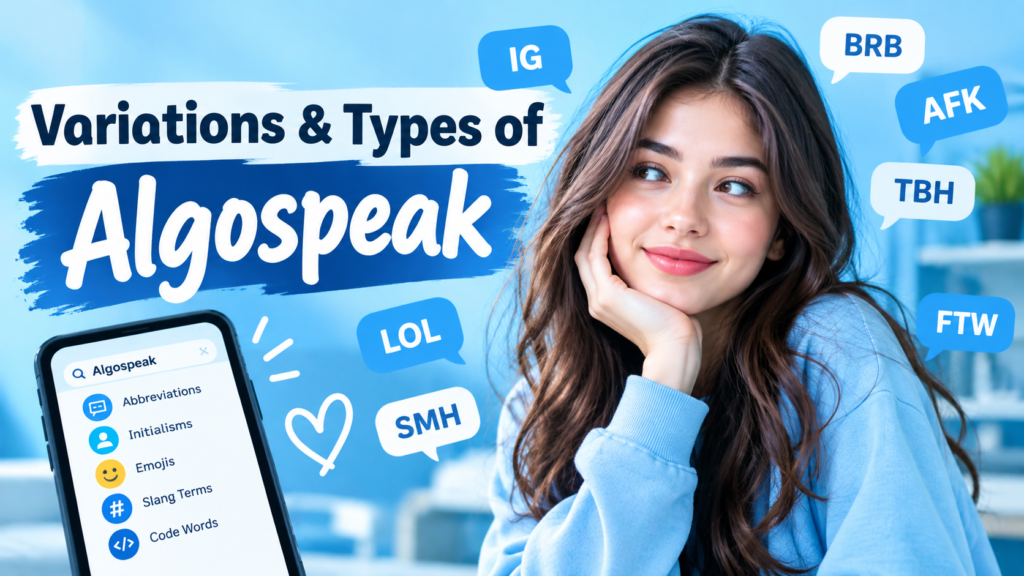
SSA is one move in a larger toolbox. Here are the main categories of algospeak you will meet online.
1. Reversed Spelling
Flip the letters. SSA is the classic case. It is simple and easy to decode.
2. Letter Swaps and Symbols
Replace letters with numbers or symbols (for example, “@” for “a”). Common in captions and hashtags.
3. Emoji Substitutes
Use pictures instead of words. Fruit and vegetable emojis are famous examples, and many are understood across platforms.
4. Euphemisms and Replacement Words
Choose a softer or unrelated word. “Unalive” is the best-known example.
5. Intentional Misspellings
Change a word just enough to dodge filters but stay readable, like “seggs.”
6. Acronyms and Initialisms
Use letters only. “SA” falls into this group, which is why it is not the same thing as a reversed word.
7. Spoken Algospeak
Creators sometimes say coded words out loud so automated captioning does not pick up the original term.
Why It Keeps Changing
Platforms update their systems. Users adjust. New code words appear and old ones fade. Any list, including this one, is a snapshot of how things look in 2026.
How to Respond When Someone Uses It
Your reply depends on the tone and your relationship. Here are ready-to-use options.
Casual Replies
Use these with friends or in comment sections.
- “Haha yeah, that was rough.”
- “Ngl, that one hurt.”
- “Same, worst timing ever.”
- “Bro, I felt that.”
Funny Replies
Match the joke and keep it light.
- “Plot twist: the cable won.”
- “That’s going into the hall of fame of bad decisions.”
- “I’m not laughing. (I am. Loudly.)”
- “Someone give that jacket a trial.”
Mature Replies
Use these if you want to stay calm or shift the tone.
- “I get frustrated. Want to talk it through?”
- “Fair, that does sound like a bad day.”
- “Let’s keep it simple. What happened?”
- “I’d rather not use that kind of language, but I hear you.”
Respectful Replies
Use these when you are unsure of the meaning or the situation is sensitive.
- “I’m not sure I understood that. Could you explain what you meant?”
- “Just checking, are you joking or serious?”
- “Thanks for telling me. I’m here if you want to talk.”
- “I don’t want to assume. What does that mean here?”
A Special Note on Sensitive Topics
If a conversation seems to involve something painful, do not guess. Ask gently, listen, and avoid jokes. If someone shares a personal, difficult experience, respond with care, not slang. If you or someone you know needs support, contact a trusted person or a local helpline.
Regional & Cultural Usage
Slang rarely stays in one place, but each region puts its own spin on it.
United States
SSA has two strong identities here. The government’s meaning is everywhere in daily life, from benefits to paperwork. The slang meaning lives mostly on TikTok and other social platforms. Americans learn quickly to tell them apart by setting.
United Kingdom, Canada, and Australia
Users in these countries pick up TikTok slang quickly because trends cross borders in hours. The government meaning is less familiar, so the slang reading often comes first.
South Asia and the Middle East
In regions where English is a second or third language, slang spreads through short videos and comment sections. Many users learn terms like SSA from context and replies, not from formal explanation. Mixing local languages with English slang is also common.
Non-English Platforms
Other languages have their own versions of the same trick, using homophones, symbols, or altered spellings. The idea is global, even if the letters differ.
Why Culture Matters
Words carry different weights in different places. A term that sounds mild in one country may sound rude in another. When chatting across cultures, lean toward clear and respectful wording.
Global Internet Culture

Algospeak is a worldwide habit, not a single platform’s quirk.
- Shared platforms: Millions of people from different countries watch the same videos and read the same comments.
- Shared pressures: Automated moderation exists nearly everywhere, so creators everywhere adapt.
- Shared humor: Memes and code words cross language barriers quickly.
- Shared confusion: Newcomers ask what a term means, which spreads it further.
Linguists studying this phenomenon point out something interesting: the language rules are set not by a community’s choice alone, but by what an algorithm seems to punish. That makes online slang different from older slang, which usually grew out of friendship groups, music scenes, or neighborhoods.
For readers, the takeaway is simple. If a word looks odd, there is probably a reason. Look at the platform, the audience, and the topic.
Generational Differences
Different age groups meet SSA in different ways.
| Generation | Typical Reaction | Common Use |
| Gen Alpha (born 2010s) | May see it in videos, often without knowing the original word | Repeating what they see |
| Gen Z (born 1997–2012) | Usually understands it immediately | Frequent use in comments and chats |
| Millennials (born 1981–1996) | Often recognize the trick, may use it ironically | Occasional, mostly with friends |
| Gen X (born 1965–1980) | May think of the government agency first | Rare |
| Baby Boomers (born 1946–1964) | Likely to read it as the Social Security Administration | Almost never as slang |
Why the Gap Exists
Younger people spend more time in the comment sections where this slang is born. Older people more often meet SSA in official letters, news, and benefit paperwork.
Bridging the Gap
If you are explaining SSA to a parent or grandparent, keep it short: “It is a code spelling people use online. In normal life, SSA is still the Social Security Administration.”
If you are a parent, you do not need to track every term. Watch for patterns and talk openly with your kids.
Is It Safe for Kids?
Short answer: SSA itself is not dangerous, but it is not “kid-friendly” either.
What Makes It Mild
- It is a disguised version of a mild swear word.
- It is usually used jokingly.
- It does not describe a threat or a harmful act.
What Parents Should Watch For
- Context matters: Where a child sees the term can matter more than the term itself.
- Similar-looking codes can be serious: “SA” and other abbreviations may point to heavy topics that are not suitable for young children.
- Comment sections can be unfiltered: Slang often sits next to rude or upsetting content.
- Kids may repeat words without understanding them: That can lead to awkward moments at school or home.
Practical Tips for Families
- Talk early: Ask your child what words they see and what they think they mean.
- Stay calm: If your child asks about a term, answer simply and honestly.
- Use platform tools: Turn on safety settings, restricted modes, and comment controls.
- Teach context clues: Help kids understand that tone, emojis, and the creator’s topic change what a word means.
- Keep the door open: Let them know they can come to you if something online confuses or upsets them.
For Teens
Teenagers can usually handle the meaning of SSA, but they should know where it fits. It is fine in a casual chat. It is a poor choice for school emails, job applications, or conversations with adults they do not know well.
Conclusion
The SSA meaning in text depends on where you meet it. On TikTok and other social platforms, it is most often a reversed spelling of a mild swear word, a small piece of algo speak that helps people dodge filters. In official settings, it still means the Social Security Administration. And although “SA” and “SSA” look alike, they are not the same, so context should always come first.
If you remember only a few things, keep these:
- SSA in slang is typically a coded, mild swear word.
- Check the platform, tone, and surrounding words before deciding what it means.
- Do not confuse it with SA, which is tied to a serious subject.
- Avoid it in professional, formal, or sensitive situations.
- When unsure, ask instead of guessing.
Slang changes quickly, and 2026 will bring new code words. But the skill you used here, reading context with curiosity and care, works for every new term that follows.

Hi, I’m Munaza, the creator of RTMeaning.com. I’m passionate about explaining internet slang, abbreviations, texting terms, and modern language in a simple and easy-to-understand way. Through this website, I help readers discover the meanings behind trending words, social media expressions, and online communication. My goal is to make learning new terms quick, clear, and enjoyable for everyone.