
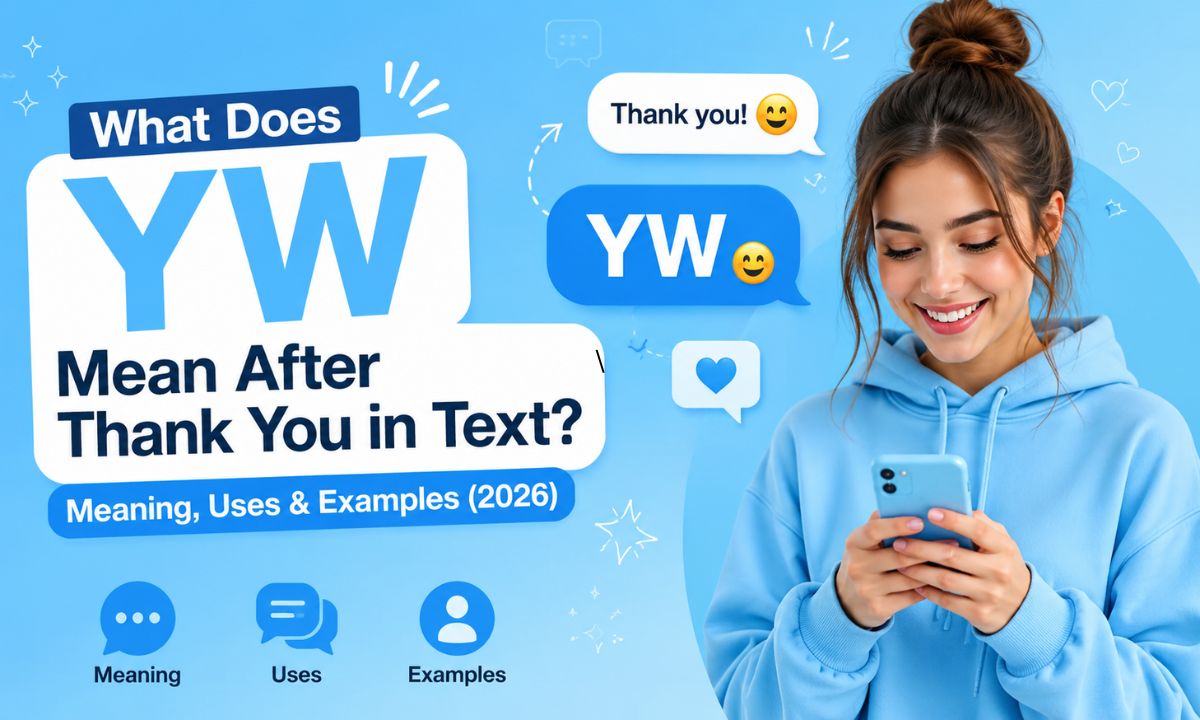

Ever sent a “thanks!” and gotten back a quick “yw” instead of a full sentence? You’re not imagining things; it’s one of the most common replies in texting today.
If you’ve ever paused mid scroll wondering what those two letters actually mean, this guide clears it up completely, with real examples and context for every platform.
By the end of this article, you’ll know exactly what YW means, when to use it, when to avoid it, and how tone can completely change the way it lands.
Quick Answer
YW means “You’re Welcome.” It’s the standard, friendly reply people send after someone says “thank you” in a text, DM, or online chat.
It’s casual, fast to type, and appears everywhere from group chats to gaming lobbies. In fact, it has become one of the default responses people use without even thinking about it.
Because texting culture moves fast, short replies like YW have become second nature. It saves time while still keeping the conversation polite.
What Does YW Mean After Thank You?
When someone thanks you and you reply “yw,” you’re simply saying “you’re welcome” in shorthand. It carries the same warmth as the full phrase; it’s just been trimmed down for speed.
Texting favors short replies, and YW lets people acknowledge gratitude without breaking the flow of a fast-moving conversation.
This is especially true in group chats, where messages come in quickly and nobody wants to slow things down with long, formal sentences. YW keeps the rhythm going.
It also works well because it doesn’t demand a response back. It closes the loop cleanly, letting both people move on with their day.
Full Form of YW
The full form of YW is straightforward:
- Y = You’re
- W = Welcome
Put together, it reads “You’re Welcome,” nothing more complicated than that.
Unlike some internet slang that hides a deeper or unrelated meaning, YW is a direct abbreviation. There’s no trick to decode, no secondary meaning buried inside it.
That simplicity is exactly why it spread so widely across texting apps, comment sections, and chat platforms.
Plain English Explanation
Think of YW as the texting equivalent of a nod and a smile. When a friend says “thanks for helping me move,” replying “yw” tells them their thanks landed and that helping out wasn’t a big deal.
It’s polite without being formal, and quick without feeling dismissive, as long as the context is casual.
In many ways, YW works like a small social gesture. It’s not meant to carry deep meaning; it’s meant to acknowledge the other person and keep the interaction friendly.
The simplicity of YW is part of its charm. It doesn’t try to be clever or elaborate. It just does its job quickly and moves the conversation along.
Why People Use YW
People reach for YW instead of typing out “you’re welcome” for a few simple reasons:
- Speed two letters beat eleven characters every time.
- Habit once one person in a chat uses it, others naturally mirror it.
- Tone matching it keeps a casual exchange feeling casual, not overly formal.
- Mobile convenience typing on a small keyboard makes shortcuts appealing.
There’s also a social element to it. When everyone in a friend group or gaming server uses YW, it becomes part of the shared language of that community.
Using the full phrase “you’re welcome” in a casual setting can sometimes feel oddly formal, almost like the conversation suddenly shifted tone. YW avoids that awkwardness.
Short Example Sentence
Text: “Thanks for the ride home!” Reply: “yw, anytime 😊”
Notice how the emoji softens the reply and adds warmth, even though the words themselves are minimal.
Where Is YW Commonly Used?
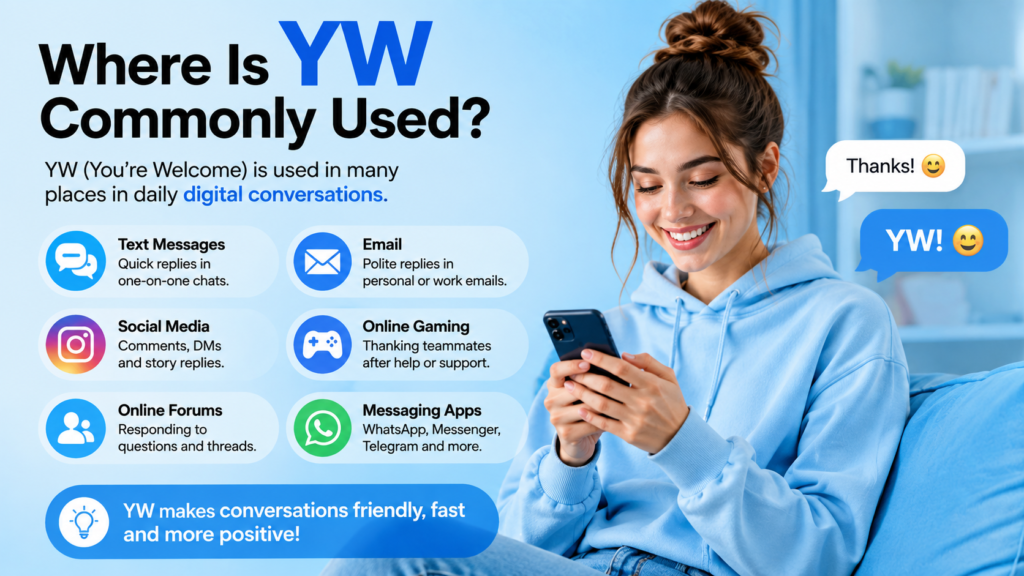
YW isn’t limited to one app or platform. It shows up anywhere quick, informal replies are normal.
It has become so widespread that most people don’t even think twice before typing it. It’s simply built into how digital conversations flow today.
Common Places You’ll See YW
| Platform | Typical Use |
| SMS/Texting | Quick reply after a friend says thanks |
| Casual chats with friends or family | |
| Instagram/TikTok | Comment replies or DM acknowledgments |
| Snapchat | Fast responses to snaps or chats |
| Gaming chats (Discord, Xbox, etc.) | Acknowledging a teammate’s thanks |
| Slack/Teams (informal channels) | Casual internal messages, not formal emails |
Each platform has its own texting culture, but YW fits naturally into almost all of them because it’s short, familiar, and universally understood.
Tone of YW
YW is generally neutral to friendly. But like most short texts, its tone shifts depending on what surrounds it.
Because the phrase itself is so short, punctuation, capitalization, and emojis do a lot of the emotional heavy lifting. A single letter change or added symbol can completely shift how the message feels.
- “yw 😊” warm and genuine
- “yw.” can read as a little flat or curt, especially with a period
- “YW!!” enthusiastic and upbeat
- “yw bro” casual and buddy like
This is why context matters so much when reading texts. The same two letters can feel completely different depending on how they’re written.
If you’re unsure how your “yw” might come across, adding an emoji or a few extra words is usually a safe way to keep the tone friendly.
Realistic Conversation Examples (Text Style)
Example 1 Friends Friend: “Thanks for helping me study!” You: “yw, good luck on the test!”
Example 2 Coworkers Coworker: “Appreciate you covering my shift.” You: “yw, happy to help”
Example 3 Siblings Sibling: “Thanks for picking me up.” You: “yw dude”
Example 4 Social Media Comment: “This tutorial saved me so much time, thank you!” Reply: “yw! glad it helped 🙌”
These examples show how flexible YW really is. It adapts naturally to different relationships, whether it’s a close friend, a coworker, or a stranger online.
The Simple Explanation Everyone’s Searching For
If you only remember one thing: YW = You’re Welcome, and that’s it.
It’s not sarcasm, it’s not a hidden code, it’s just the fastest way to close the loop after someone thanks you. Any deeper meaning usually comes from the words or emojis around it, not the abbreviation itself.
A lot of people search for hidden meanings behind common slang, but YW is refreshingly simple. There’s no secret layer to uncover here.
When to Use and When Not to Use YW
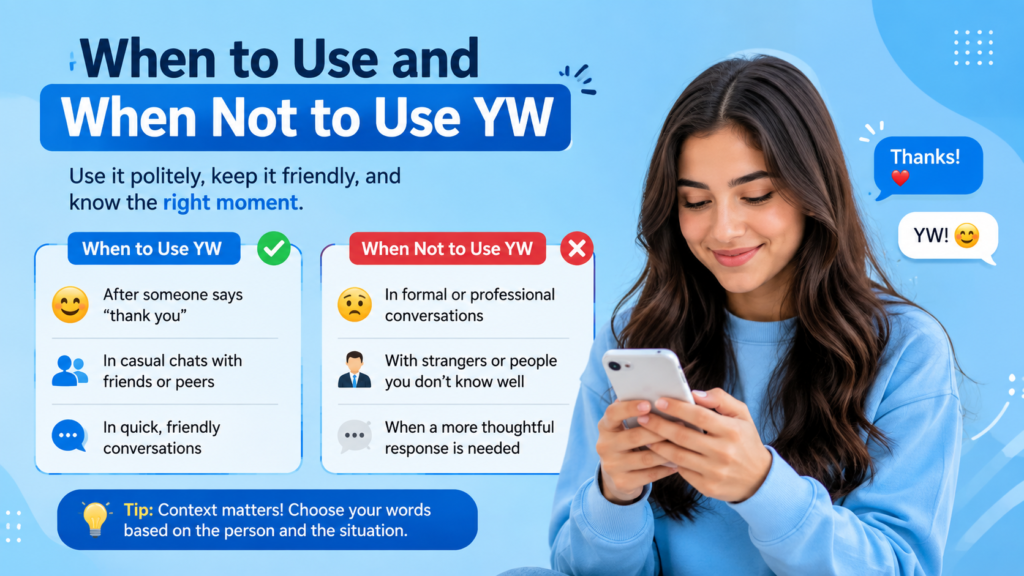
Since YW is informal, knowing where it fits matters just as much as knowing what it means.
Using it in the right setting keeps your replies feeling natural. Using it in the wrong setting, however, can come across as careless or too casual.
✅ When to Use YW
- Texting friends or family
- Replying to casual social media comments or DMs
- Gaming chats or group chats
- Informal workplace channels like Slack or Teams
❌ When Not to Use YW
- Formal emails or business correspondence
- Messages to clients, teachers, or people you don’t know well
- Situations where a warmer, more personal reply is expected
- Any message where being misread as dismissive could cause a problem
A good rule of thumb: if you wouldn’t text that person a casual “hey,” you probably shouldn’t reply to them with “yw” either.
Also Read This Meaning AMOS Mean on Instagram
Comparison Table
| Term | Meaning | Formality | Best Used For |
| YW | You’re Welcome | Casual | Texts, DMs, group chats |
| NP | No Problem | Casual | Quick acknowledgments |
| You’re welcome | Full phrase | Neutral/Formal | Emails, professional chats |
| Anytime | Happy to help | Casual/Warm | Friends, close contacts |
| My pleasure | Glad to help | Formal/Polite | Customer service, formal replies |
This table makes it easy to pick the right response depending on who you’re talking to and how the conversation feels.
Similar Slang Words or Alternatives
If YW feels too short for the moment, plenty of alternatives carry a similar meaning with a slightly different tone.
- NP: “No problem,” equally casual
- Anytime: warmer and more personal
- All good: relaxed, reassuring
- Np fam / np bro: playful, used with close friends
- You’re welcome: the safe, full length option for formal settings
Choosing between these often comes down to personal texting style. Some people default to YW, while others prefer NP or Anytime depending on the mood of the conversation.
What Does YW Mean Dirty?
Some people search this out of curiosity, but there’s no hidden or inappropriate meaning behind YW. It’s simply “you’re welcome.”
Occasionally it can come across as flirty or sarcastic depending on the conversation, but that comes from context and tone, not the abbreviation itself.
If a reply feels suggestive, it’s almost always because of the surrounding conversation, the emojis used, or the relationship between the two people texting, not the letters “yw” on their own.
YW Meaning From a Girl
The meaning doesn’t change based on who sends it. When a girl texts “yw,” it still means “you’re welcome.”
The tone might read as friendlier or warmer, especially when paired with emojis, but the core meaning stays exactly the same.
YW Meaning in Text From a Guy
The same rule applies here. “YW” from a guy still means “you’re welcome.” It might look more casual or blunt without emojis, but that’s a style difference, not a different meaning.
Gender doesn’t change what the abbreviation stands for. It only affects the surrounding style, punctuation, and emoji choices that shape the overall tone.
Final Thoughts
Texting shorthand like YW exists because digital conversations move at a different speed than face to face talk. People want to respond quickly without losing warmth or politeness.
That’s exactly what YW delivers. It’s short enough to type in a second, yet it still carries the same basic courtesy as saying “you’re welcome” out loud.
Understanding small details like tone, punctuation, and platform context helps you use YW confidently in any conversation. Once you get comfortable with it, replying naturally becomes second nature.
So the next time you see “yw” pop up on your screen, you’ll know exactly what it means and how to read the tone behind it.

Hi, I’m Munaza, the creator of RTMeaning.com. I’m passionate about explaining internet slang, abbreviations, texting terms, and modern language in a simple and easy-to-understand way. Through this website, I help readers discover the meanings behind trending words, social media expressions, and online communication. My goal is to make learning new terms quick, clear, and enjoyable for everyone.