

If you’ve ever received a text that simply says “ily” and paused for a second wondering what it means, you’re not alone. This three letter acronym shows up everywhere texts, Instagram comments, Snapchat streaks, and gaming chats and its meaning shifts depending on who sends it and when.
Texting culture has compressed emotional language into shortcuts, and ily is one of the most common examples of this shift. What used to take a full sentence now fits into three lowercase letters, yet the feeling behind it hasn’t shrunk at all.
In this guide, you’ll learn exactly what ily means, how it differs from similar slang like ILU, when it’s romantic versus platonic, and how to reply to it in any situation. By the end, you’ll be able to read the tone behind an “ily” almost instantly.
What Does “ily” Mean in Text?
ily is short for “I love you.” It’s a lowercase, casual text abbreviation people use to express affection quickly without typing the full phrase.
Unlike a full “I love you,” which usually carries emotional weight, ily is lighter and more flexible. It fits naturally into fast paced conversations where typing out three separate words would feel unnecessarily formal.
People send it to:
- Romantic partners
- Best friends
- Family members
- Group chats, as a signoff
Because it’s so short, ily often functions more like a friendly punctuation mark than a formal declaration of love. A quick “ily” at the end of a text can mean anything from deep affection to a casual “thanks, you’re great.”
This flexibility is exactly why the acronym has survived so long. It adapts to almost any relationship or mood without needing extra explanation.
What Does “ILY” Mean With a Heart Emoji?

Adding a heart emoji like ❤️, 💕, or 🥺 to “ily” usually intensifies the emotion behind it. “ily ❤️” tends to signal warmth, sincerity, or romantic affection, rather than a purely casual sendoff.
Emojis act as emotional shorthand in texting, filling the gap left by missing tone of voice and facial expression. A single heart can turn a routine goodbye into something that feels genuinely tender.
| Combination | Typical Meaning |
| ily | Casual affection, friendly love |
| ily ❤️ | Romantic or heartfelt affection |
| ily 🥺 | Emotional, soft, sometimes vulnerable |
| ily 😭 | Overwhelmed with love, often playful/dramatic |
| ily 🤟 | Reference to the ASL “I love you” hand sign |
The emoji essentially acts as a tone indicator, telling the reader how seriously to take the message. Without it, the reader has to rely purely on context and relationship history to guess the intent.
It’s worth noting that emoji meaning can also shift by platform. A 🥺 on Snapchat might read as playful, while the same emoji in a private message to a partner can feel much more sincere.
Also Read This Meaning IGHT Meaning in Texting
What Is the Difference Between “ILY” and “ILU”?
Both ILY and ILU stand for “I love you,” and they’re used almost interchangeably. The difference is mostly regional and generational rather than a difference in meaning.
ILY is the more widely recognized and commonly used version, especially in the US. It appears more frequently across mainstream texting apps and social platforms today.
ILU is a phonetic spelling, popular in earlier internet and texting culture, and still used casually today. Some people even find ILU feels slightly more nostalgic or oldschool compared to ILY.
Some related variations you might come across:
- ILYSM – I love you so much
- ILYSFM – I love you so freaking much
- ILY2 – I love you too
- IRLY – I really love you
These all sit on the same spectrum, just with different levels of intensity. Choosing between them usually comes down to habit, personal style, or how strongly someone wants to express the feeling in that specific moment.
The Most Common Meanings of “ily”
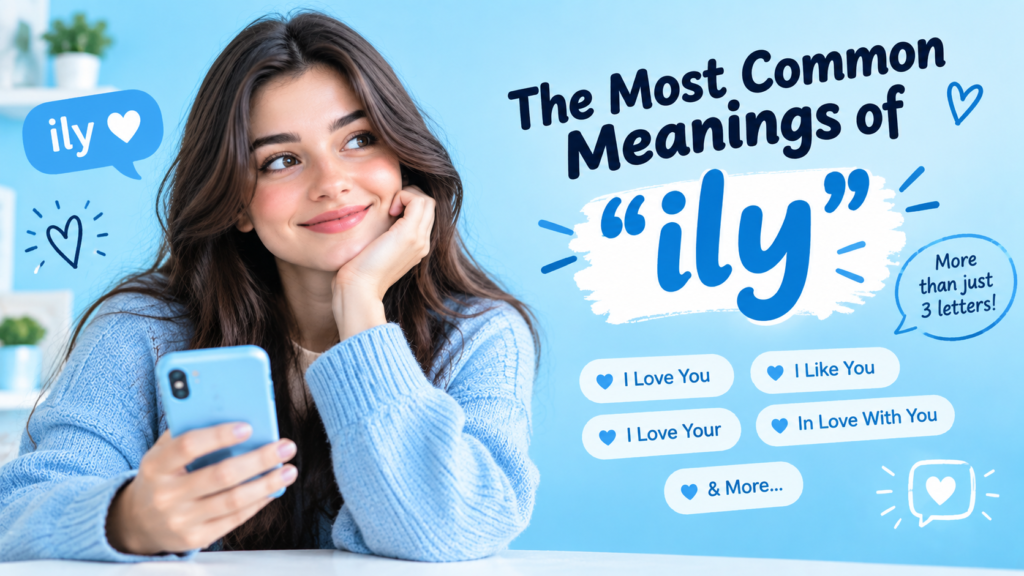
The meaning of ily depends heavily on context. Here are the four most common ways it’s used, ranging from deeply sincere to purely playful.
1. Romantic Love
Between partners, ily is often a quick, affectionate way to say “I love you” during everyday conversation, not just on special occasions. It keeps the emotional connection alive without requiring a big moment.
Many couples use it multiple times a day, almost like a verbal habit that reinforces closeness. It doesn’t replace deeper conversations about love, but it supports them.
2. Close Friendship Love
Among friends, ily expresses platonic appreciation. It doesn’t imply romance; it simply says “I value you” or “I’m grateful you’re in my life.”
This usage has grown especially common among younger generations, who use ily freely with friend groups the same way earlier generations might have said “take care” or “you’re the best.”
3. Playful or Dramatic Love
Sometimes ily is used jokingly or exaggeratedly for example, after a friend sends food pics or does something small but appreciated. It’s more about humor than literal love.
In this context, ily works almost like comedic punctuation, adding warmth to a joke rather than expressing a genuine emotional statement.
4. Internet Culture Expression
On social media, ily has become a general purpose expression of positivity. It’s used in comments, captions, and replies almost like a digital highfive.
It signals support or approval quickly, especially under posts where a longer comment would feel excessive or out of place.
How “ily” Is Used in Real Conversations

The tone of ily changes depending on the platform and the relationship. Here’s a breakdown of common contexts where the acronym shows up most often.
Friends & Casual Texting
Between friends, ily is usually a warm, low stakes way to end a conversation or react to something kind. Example: “Thanks for covering my shift, ily.”
It rarely carries any romantic weight in this setting and is mostly used to close out a message on a positive note.
Instagram & Snapchat
On social apps, ily often appears in comments, story replies, or captions as a quick show of support or affection. Example: commenting “ily 😭❤️” under a friend’s photo.
Because these platforms favor speed and brevity, ily fits naturally into the fast scrolling culture that defines them.
Dating Apps
On dating apps, ily is used more cautiously. Sending it too early can feel intense, so most people wait until there’s an established emotional connection.
Using it prematurely can sometimes come across as insincere or overly eager, especially before meeting in person or having several meaningful conversations.
Gaming & Online Communities
In gaming chats and Discord servers, ily is often used platonically among teammates or community members as a sign of appreciation, not romantic interest.
It’s common after a good match, a helpful tip, or simply as a friendly sendoff at the end of a voice chat session.
Work or Professional Chat
In professional settings, ily is generally avoided. It’s considered too casual and personal for workplace communication, even in friendly teams.
Even close coworkers tend to reserve ily for outside group chats rather than official communication channels.
Is “ily” Rude, Flirty, or Offensive?
On its own, ily is neither rude nor offensive but tone and context can shift how it lands depending on who sends it and when.
When It Feels Positive
Sent between close friends or family, ily usually feels warm, supportive, and genuine. It reinforces an existing bond rather than creating a new expectation.
When It Feels Flirty
Between people who aren’t officially dating, ily can carry romantic undertones, especially when paired with emojis or sent late at night. Timing often says as much as the words themselves.
When It Feels Awkward
Sending ily too early in a new relationship, or to someone who doesn’t reciprocate the sentiment, can create discomfort or confusion. In these cases, silence or a mismatched reply can feel more awkward than the message itself.
Tone Psychology
Because text lacks vocal tone, ily relies heavily on context clues, punctuation, emojis, timing, and relationship history to convey the right meaning. Readers often subconsciously scan these signals before deciding how to interpret the message.
How to Respond When Someone Says “ily”
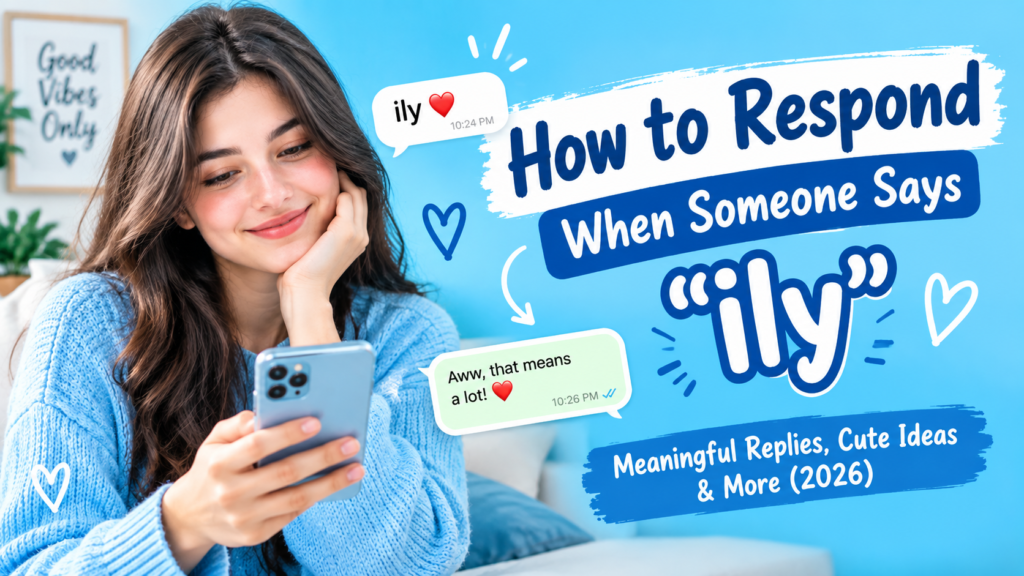
Not sure how to reply? Here are response options depending on your relationship and comfort level with the sender.
Casual Replies
- “ily2”
- “aww ily”
- “same here”
Funny Replies
- “ily but not as much as pizza”
- “noted, ily back”
- “stop it, you’re making me blush 😂”
Neutral Replies
- “thanks, that’s sweet”
- “appreciate you”
- “you’re the best”
Professional Replies
- “Thanks, I appreciate that!”
- “That’s kind of you to say.”
- (Best practice: avoid mirroring “ily” in professional contexts altogether)
Choosing the right reply mostly comes down to matching the sender’s energy while staying true to your own comfort level.
Common Misunderstandings About “ily”
Because ily is so short, it’s easy to misread. Here are the most frequent mistakes people make when interpreting it.
Thinking It Always Means Romance
Many assume ily is exclusively romantic, when in reality it’s frequently platonic, especially among friends and family. This assumption often causes unnecessary confusion in casual friendships.
Confusing It With Serious Love Confessions
Ily is casual by nature. It shouldn’t be treated as equivalent to a deliberate, spoken “I love you” during a serious conversation, which usually carries far more weight.
Misreading Tone in Online Chats
Without vocal cues, it’s easy to misjudge whether ily is meant sincerely, jokingly, or just habitually. Reading the surrounding conversation usually clears up the confusion.
Assuming Everyone Uses It the Same Way
Usage varies by age, culture, and personal texting habits. What feels normal to one person may feel intense to another. It’s always worth considering the sender’s typical texting style before assuming intent.
Similar Slang Terms You Should Know
Here’s a quick reference table of related lovebased text slang that often appears alongside or instead of ily.
| Slang | Full Form | Common Usage |
| ILY | I love you | General affection |
| ILU | I love you | Same as ILY, older/phonetic style |
| ILYSM | I love you so much | Stronger emphasis |
| ILY2 | I love you too | Reciprocal reply |
| IMY | I miss you | Related affection term |
| ILYVM | I love you very much | Formal emphasis |
| LYLAS | Love you like a sister | Platonic, close friendship |
Knowing these variations helps you gauge intensity more accurately, since each one signals a slightly different emotional level than a plain ily.
When You Should Avoid Using “ily”
While ily is common, there are situations where it’s better left out of the conversation entirely.
Professional Settings
Workplace communication should stay neutral. Ily can come across as unprofessional or overly familiar, even with friendly coworkers you interact with daily.
CrossCultural Conversations
In some cultures, expressing love casually via text isn’t the norm, and ily might come across as confusing or overly forward to someone unfamiliar with the slang.
Sensitive Situations
During serious, emotional, or difficult conversations, a quick “ily” can feel dismissive rather than comforting. A fuller message often communicates care more effectively in these moments.
Conclusion
At its core, “ily” is a small acronym with a big emotional range. It can carry deep sincerity or light humor, depending entirely on who’s typing it and why.
Whether it’s a quick sign off between friends, a sweet moment between partners, or a casual comment on social media, its meaning always depends on context, relationship, and tone.
Understanding these nuances helps you use and interpret ily the right way, so you never send or receive mixed signals in your next chat.

Hi, I’m Munaza, the creator of RTMeaning.com. I’m passionate about explaining internet slang, abbreviations, texting terms, and modern language in a simple and easy-to-understand way. Through this website, I help readers discover the meanings behind trending words, social media expressions, and online communication. My goal is to make learning new terms quick, clear, and enjoyable for everyone.