


“Ight” is a casual, shortened spelling of “alright.” In texting, it means “okay,” “sounds good,” or “got it.” People use it to agree with a plan, acknowledge a message, or wrap up a chat without typing much.
You have probably seen it in a group chat, a Snapchat reply, or a quick text from a friend. It looks tiny, but the meaning shifts a little depending on who sends it and how it is delivered.
This guide covers what “ight” means, where it is used, how to read its tone, and how to reply. You will also find real chat examples and a few situations where it is better to skip the word.
What Does “ight” Mean in Text?
“Ight” comes from the way many people say “alright” out loud. In speech, the word gets squeezed into something that sounds like “ite.” Texting simply writes it the way it sounds.
You will also see it spelled “aight.” Both spellings mean the same thing, and people swap between them freely. “Ight” is just the shorter version, which suits fast typing on a phone.
Quick definition:
- Word type: informal slang
- Full form: alright
- Basic meaning: okay, fine, sure, got it
- Best for: friends, group chats, social apps
The word grew out of African American Vernacular English and spread widely through music, social media, and everyday chat. Today, people of all backgrounds use it.
Because it mirrors natural speech, “ight” feels less stiff than a fully typed word. It gives a message a relaxed, spoken quality. That is a big reason it has stayed popular in casual messaging.
Another reason is speed. Typing three letters takes almost no effort, and the reader still understands the message right away. In a world of fast replies, that small saving adds up.
It also helps that the word is easy to understand from context. Even someone who has never seen it before can usually guess its meaning from the message that comes before it.
The Most Common Meanings of “ight”
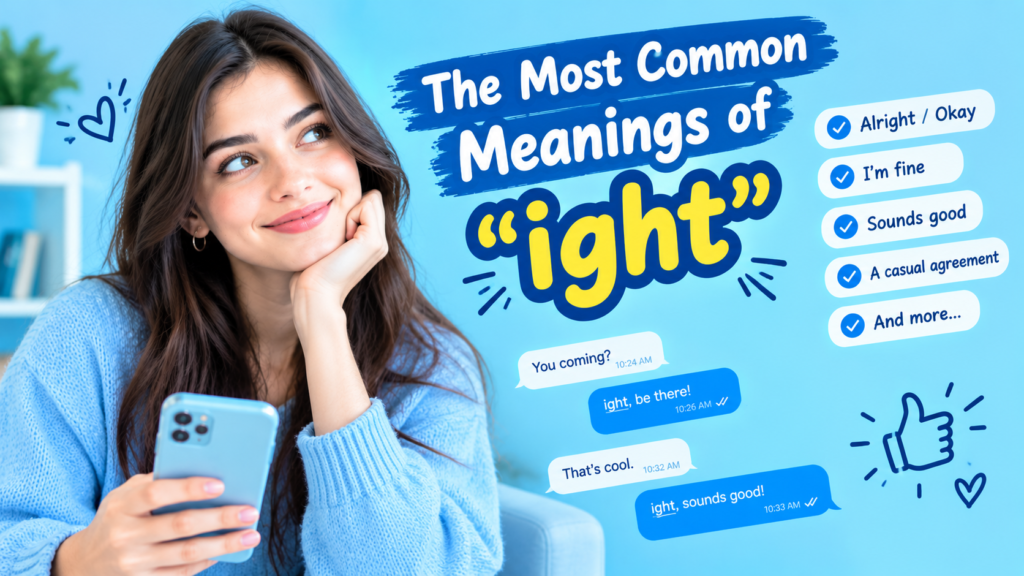
The word is short, so context does most of the work. Here are the four meanings you will run into most often. Once you know them, you can read almost any “ight” with confidence.
1. Simple Agreement
This is the most common use. Someone suggests something, and you say yes. It works like a thumbs-up in word form.
Friend: Wanna grab food at 7?
You: ight
It means “yes, that works.” The sender is not being lazy, just confirming the plan quickly. In most cases, no further reply is needed. The plan is set, and both people know what to do next.
2. A Quick Acknowledgment
Sometimes “ight” just says “I saw that.” There is no big reaction and no extra detail. It is a small signal that your message was received.
Friend: I’ll be five minutes late.
You: ight
It confirms the message landed. Nothing more is meant by it. This use is very common when someone shares a small update, such as a delay or a change in location.
3. Ending the Conversation
A lot of chats wrap up with “ight.” It works like a verbal nod before you leave. It tells the other person that you have nothing more to add.
You: I gotta go, my phone’s about to die.
Friend: ight, talk later
It is a polite and easy way to close a chat without a long goodbye. Most people find it natural.
4. Casual Approval
It can also mean “that’s fine by me,” or even “not bad.” Here the word carries a bit of judgment, usually a mild and positive one.
Friend: Here’s my new haircut 😅
You: ight, looks good
This is mild approval, not full excitement. Think of it as a relaxed nod. If you want to show more excitement, you would normally add extra words or an emoji.
Also Read This Meaning RD Meaning in Text Messages
How “ight” Is Used in Real Conversations

The word changes flavor a little from one platform to the next. Here is how it plays out in the most common places.
Friends & Casual Texting
This is where “ight” feels most natural. It keeps replies fast and relaxed, and nobody reads too much into it.
Sam: Movie at 8, bring snacks
Jay: ight bet
Adding “bet” after it makes the reply sound even more upbeat. It shows that you are happy with the plan.
Instagram & Snapchat
Replies on these apps are quick and often tied to a photo or story. “Ight” fits that fast pace. It lets you react without writing a full message.
Story reply: Just finished my exam 😮💨
Friend: ight finally
It can also work as a light, teasing reaction when a friend shares something funny or dramatic.
Dating Apps
Here it gets tricky. Between two people who are still getting to know each other, a lone “ight” can feel flat. Adding a few more words or an emoji usually keeps the mood warm.
Match: Want to try that new café Saturday?
You: ight, sounds fun 😊
Early conversations need a little extra effort. A short reply may make the other person think you are not interested.
Gaming & Online Communities
Gamers type fast and often mid-match. “Ight” works as a quick “okay, on it.” It saves time when every second counts.
Teammate: Push left, I’ll cover
You: ight
It also keeps team chat clear, since long messages can distract everyone during play.
Work or Professional Chat
It shows up in casual workplaces, mostly between coworkers who know each other well. It is less common with managers or clients. More on that below.
Even in relaxed offices, people tend to switch to fuller words in emails and formal group chats.
Is “ight” Rude, Flirty, or Offensive?
Not by itself. The word is neutral. What shapes the feeling is the situation around it: the message before it, the punctuation, the emoji, and the sender’s usual style.
The same word can feel warm from one friend and cold from another. That is why context matters more than the word itself.
When It Sounds Positive
“Ight” reads as friendly when it comes with extra words or warmth. A small addition can change the whole mood.
- “ight sounds good 😄”
- “ight bet, see you there”
- “ight cool, thanks!”
These extra touches show interest, and they make the reply feel personal.
When It Sounds Neutral
On its own, in reply to a plain message, it is usually just neutral. It simply means the person understood.
- “ight” after a schedule update
- “ight” after directions or logistics
There is no hidden meaning here. The sender is simply being brief.
When It Feels Slightly Negative
Tone can turn cold in certain spots. Watch for a short “ight.” after a disagreement, or an “ight” that replaces what would normally be a longer, warmer reply.
Another warning sign is “ight then” in response to a canceled plan. It can suggest the person is a little disappointed. In these cases, a friendly follow-up message can clear the air quickly.
Here is a quick way to read it:
| Signal | Likely Tone |
| “ight 😊” or “ight cool!” | Friendly |
| “ight” after a simple plan | Neutral |
| “ight.” with a period | Flat or a little cold |
| “ight then” | Possibly annoyed |
| “ight bet” | Enthusiastic agreement |
Do not jump to conclusions from one text. Check how this person usually writes.
How to Respond When Someone Says “ight”
You do not always need to reply. If “ight” closes the chat, leaving it there is fine. When you do want to answer, pick a reply that fits the moment.
Casual Replies
- “Cool, see you then”
- “Bet”
- “Sounds good”
These replies keep the chat friendly and easy. They match the relaxed feel of the original message.
Funny Replies
Humor works well when you know the person. Keep it light so it does not feel sarcastic.
- “Ight, ight, calm down 😂”
- “That’s the most enthusiastic ight I’ve ever seen”
- “Ight, no notes”
Neutral Replies
- “Okay, thanks”
- “Got it”
- “Alright, talk soon”
Use these when you want to stay polite without sounding too casual or too formal.
Professional Replies
If a coworker sends “ight” in a work chat, keep your answer clear and polite. You do not need to copy their casual style.
- “Great, thanks for confirming.”
- “Understood. I’ll follow up tomorrow.”
A calm, clear reply keeps the tone respectful and leaves no room for confusion.
Common Misunderstandings About “ight”
A few wrong assumptions cause most of the confusion. Clearing them up will help you read messages more accurately.
Thinking It Means Anger
A short reply is not always a cold one. Many people type “ight” because it is quick, not because they are upset. Look at the rest of the chat before reading anything into it.
Emotion is hard to read in plain text, so give the sender the benefit of the doubt.
Confusing It With “Aight”
They are the same word in two spellings. “Aight” is slightly more common in writing, while “ight” is the tighter texting version. The meaning does not change.
Pick whichever spelling feels natural to you. Nobody will notice the difference.
Thinking It Ends the Conversation
Sometimes it does, but not always. “Ight, so what time?” keeps things going. The words that follow decide it.
A reply that opens with “ight” and then asks a question is clearly inviting more conversation.
Assuming It Is Always Lazy Texting
Not really. Slang like this is a shortcut, but it is also a signal of closeness. Friends use it because it feels easy and familiar, not because they cannot be bothered.
Using shared slang can even make a friendship feel warmer and more comfortable.
Similar Slang Terms You Should Know
“Ight” has many close cousins in everyday texting. Knowing them helps you understand the small differences in tone.
| Slang | Meaning | Tone |
| Aight | Alright | Casual, friendly |
| Bet | Sure, deal, I’m in | Confident, upbeat |
| Word | I agree / I hear you | Relaxed |
| K / Kk | Okay | Neutral, can feel cold |
| Sure | Okay | Neutral |
| Fine | Acceptable | Can sound reluctant |
| Say less | I get it, no need to explain | Confident |
| Cool | Sounds good | Friendly |
Each of these words carries its own mood, so it helps to choose carefully. A plain “k” can feel abrupt, while “bet” often feels lively.
A useful comparison: “ight” and “okay” are close, but “ight” feels warmer and more relaxed than a plain “k.”
When You Should Avoid Using “ight”
Slang works when both people share the same comfort level. In some places, a fuller reply is the better move.
Professional Settings
Skip it with clients, managers, recruiters, and formal emails. “Alright,” “understood,” or “will do” reads better and keeps things polished.
Formal wording also shows respect for the reader’s time and position.
Cross-Cultural Conversations
Not everyone knows the term, especially newer English learners. A clear “okay” or “sounds good” avoids confusion.
Clear words help everyone feel included, and they lower the chance of a mix-up.
Sensitive Situations
Someone sharing bad news, a personal struggle, or a heartfelt message deserves more than “ight.” A short one word reply can feel like you were not listening. Write a sentence or two instead.
Showing care through your words matters more than saving a few seconds.
Conclusion
“Ight” means “alright.” It is a fast, relaxed way to agree, acknowledge a message, or close a chat. It works in the same way a nod does in face to face conversation.
The word itself is harmless. What matters is the tone around it and who you are talking to. Punctuation, emojis, and the sender’s usual style all change how it feels.
Use it with friends, in group chats, and on social apps. Keep it out of formal messages and emotional conversations. When you are unsure how someone meant it, look at their usual texting style before reading too much into it.

Hi, I’m Munaza, the creator of RTMeaning.com. I’m passionate about explaining internet slang, abbreviations, texting terms, and modern language in a simple and easy-to-understand way. Through this website, I help readers discover the meanings behind trending words, social media expressions, and online communication. My goal is to make learning new terms quick, clear, and enjoyable for everyone.