

If you have ever received a text or comment that just says “HY” and paused to wonder what it means, you are not alone. This short, punchy abbreviation shows up everywhere from group chats to Instagram DMs and its meaning shifts depending on who is typing it and the mood behind the message.
This guide breaks down everything there is to know about HY in plain, simple terms. By the end, you will be able to spot the difference between a friendly greeting and an excited “yes” without even thinking twice.
What Does HY Mean Slang? Quick Meaning
HY is a casual text slang term that most commonly stands for “Hey” or “Hi,” used as a quick, informal greeting. In other contexts, especially when someone is excited, HY can also stand for “Hell Yeah” or “Heck Yeah,” expressing strong agreement or enthusiasm.
In short:
- HY = Hey/Hi → casual greeting
- HY = Hell Yeah → excited agreement
The correct meaning almost always depends on context. A lone “hy” as an opener usually means hello, while “HY!” as a reply to a question usually means an enthusiastic yes.
Punctuation and capitalization often act as invisible signals here. Lowercase “hy” feels calm and conversational, while uppercase “HY” with an exclamation point almost always signals excitement.
Main Meaning of HY
At its core, HY is a shortcut. Texting culture rewards speed, and dropping a vowel or two saves a second of typing without losing the message. That is exactly how “hi” became “hy” in fast, casual conversations.
The second, equally popular meaning treats HY as shorthand for “hell yeah” or “heck yeah” a way to show strong enthusiasm without typing the full phrase.
Both meanings can exist in the same conversation without causing confusion, because native texters instinctively judge which one fits based on the flow of the chat.
Because it is so short, HY also blends well with emojis, GIFs, and stickers. A single “hy 👋” can communicate warmth instantly, without requiring extra words to explain the tone.
Some people even use HY as a placeholder greeting when they are too busy to type a full sentence but still want to acknowledge someone, almost like a quick nod in a face to face conversation.
Simple Examples
Seeing HY inside real sentences helps make the meaning click faster than any definition alone.
- “hy, what’s up?” → Hey, what’s up?
- “Movie night?” / “HY!” → Hell Yes!
- “hyyy 😊” → an extrawarm, excited hello
- “Free tonight?” / “hy absolutely” → a relaxed but enthusiastic yes
Notice how extra letters and punctuation almost always signal stronger emotion. A plain “hy” feels neutral, while “hyyy” or “HY!!” feels closer to genuine excitement.
Why People Use HY

People do not choose slang randomly. There are real, practical reasons HY has become so common in everyday texting.
- It’s faster to type than “hey” or “hell yeah”
- It feels casual and low effort, which fits informal chats
- It carries emotional tone through repetition, punctuation, or emojis
- It works across platforms without needing explanation among peers
HY also fits neatly into the visual rhythm of modern chat apps, matching how people scroll and skim messages quickly rather than reading long paragraphs on a small screen.
Also Read This Meaning WYA Meaning in Text
Origin & Background
Every piece of internet slang has a backstory, even if that backstory is less dramatic than people expect.
Where HY Came From
HY is not tied to one single origin story. It grew naturally out of internet texting habits, where people routinely drop letters to type faster, similar to how “you” became “u.”
Social Media Influence
Platforms like Snapchat, Instagram, and TikTok normalized ultrashort replies. Comment sections and DMs favor quick reactions over full sentences, which helped abbreviations like HY spread quickly among younger users.
How the Meaning Evolved
What started as a simple greeting shortcut picked up a second life as an excitement marker. Once people began using HY to mean “hell yeah” in gaming chats and group texts, both meanings stuck around, and now context does the heavy lifting.
Gaming communities played a particularly important role here, since fast paced voice and text chats during matches rewarded short, punchy confirmations, and HY fit perfectly as a quick way to agree with a teammate’s plan.
RealLife Conversations
Seeing HY in action makes the meaning much clearer.
WhatsApp Conversation
A: “Hy! free tonight?”
B: “Hey! yeah, what’s up?”
Instagram DM Example
A: “New post looks fire 🔥”
B: “Hy thank you 😊”
TikTok Comments
Comment: “We need part 2 of this.”
Reply: “HY!!”
Text Message Example
A: “Want to grab food later?”
B: “hy, I’m starving lol”
Emotional & Psychological Meaning

Slang like HY is not just about saving time it also carries real emotional weight.
What Emotion Does HY Express?
HY typically carries warmth, friendliness, or excitement. As a greeting, it signals approachability. As an agreement, it signals genuine enthusiasm rather than a flat “yes.”
Why People Use It Emotionally
Short slang like HY lets people express feelings without overexplaining. A single “hy” can soften a conversation opener, while “HYYY” or “HY!!” ramps up the emotional intensity.
What It Reveals About Modern Communication
Modern texting favors brevity paired with emotional shorthand emojis, repeated letters, and punctuation do the work that full sentences used to do.
PersonalStyle Scenario
Imagine texting a close friend after a long day: “hyyy, today was rough.” That single word carries both a greeting and an emotional cue you are checking in, and you want to talk.
In moments like this, HY becomes more than slang; it becomes an emotional doorway, and the friend receiving it usually understands, without further explanation, that something is on the sender’s mind.
Usage in Different Contexts
| Context | Common Meaning | Tone |
| Social Media (comments, DMs) | Hey / Hell Yeah | Casual, expressive |
| Friends & Relationships | Hey / Excited yes | Warm, playful |
| Work or Professional Settings | Rarely used | Considered too informal |
| Group Chats | Hey / Agreement | Quick, energetic |
Social Media
On platforms like TikTok and Instagram, HY often shows agreement or excitement in comment threads, especially replying to popular posts or requests.
Friends & Relationships
Between friends or partners, HY is a low pressure way to say hello or show you are enthusiastically on board with a plan.
Work or Professional Settings
HY is almost never appropriate in professional communication; it reads as too casual and can come across as unclear or unprofessional.
Casual vs Serious Tone
HY fits light, everyday exchanges. It does not belong in serious, formal, or emotionally heavy conversations where clarity matters more than speed.
When NOT to Use It
- Professional Communication Emails, work chats, or client messages should avoid slang like HY entirely.
- Serious Emotional Situations If someone shares bad news, replying with “HY” can feel dismissive rather than supportive.
- Cultural Misunderstandings Not everyone recognizes internet slang, especially across different age groups or regions, so it can cause confusion.
- Formal Education Settings Academic emails or assignments should always use full, clear language instead of abbreviations.
Common Misunderstandings
People Think HY Means Only One Thing
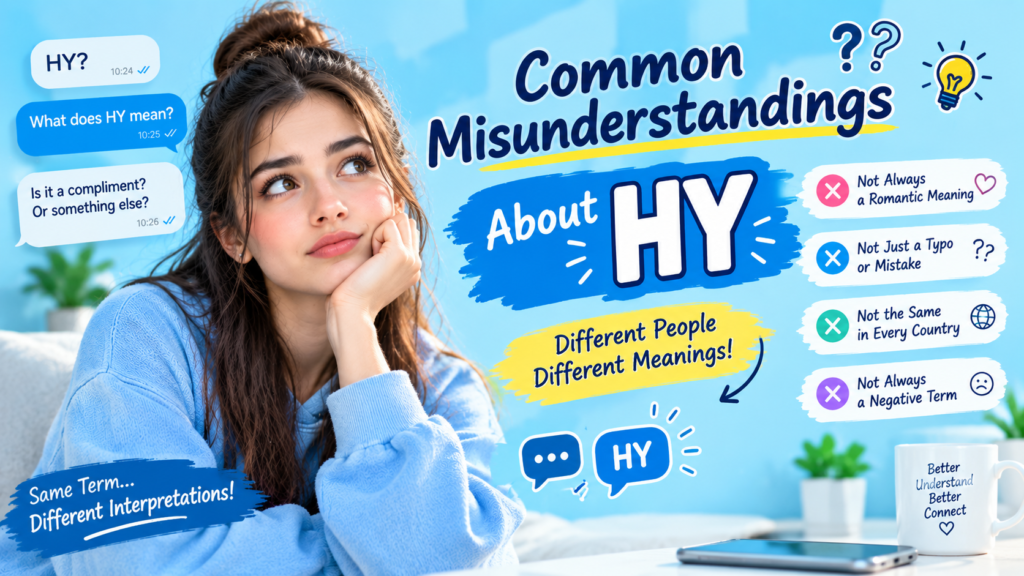
Many assume HY has a single fixed meaning, but as shown above, it swings between “hey” and “hell yeah” depending on the situation.
Tone Confusion
Without emojis or punctuation, a plain “hy” can sound flat even when the sender means it’s warm tone is easy to lose in text.
Literal vs Figurative Meaning
Taken literally, HY looks like a typo. Figuratively, it is an intentional shorthand that regular texters instantly recognize.
Comparison Table
| Term | Full Meaning | Typical Use |
| HY | Hey / Hell Yeah | Greeting or enthusiastic agreement |
| Hey | Hello | Standard casual greeting |
| Hi | Hello | Neutral, everyday greeting |
| HYFR | Hell Yeah, [Expletive] Right | Strong hype/agreement |
| Sup | What’s up | Very casual checkin |
Key Insight
Context not spelling decides what HY actually means in any given message.
Variations / Types
- HY: Standard short form of hi/hey or hell yeah
- HYY: Adds warmth or enthusiasm to a greeting
- HYFR: “Hell Yeah, [Expletive] Right,” a hyped up agreement
- HYB: “Hey You Back,” often used after a pause in conversation
- Hy? Uncertain or questioning greeting tone
- hyyy: Extra playful or excited hello
- HY!! Emphasized excitement or strong agreement
- hy lol: Casual, joking greeting
- HY bro: Friendly greeting between guy friends
- HY absolutely: Enthusiastic confirmation
How to Respond When Someone Uses It
Casual Replies
- “Hey! what’s up”
- “sup”
Funny Replies
- “hyyy back atcha 😂”
- “did you mean hi or hell yeah lol”
Mature Replies
- “Hi there, how’s it going?”
- “yes, definitely!”
Respectful Replies
- “Hello! good to hear from you”
- “absolutely, count me in”
Regional & Cultural Usage

Western Culture
In the US and UK, HY is widely used among teens and young adults as a texting shortcut for hello or excited agreement.
Asian Culture
In parts of Asia, similar vowel dropped greetings exist in local messaging apps, though HY specifically is more common among English speaking or bilingual younger users.
Middle Eastern Culture
Younger, internet active users in the Middle East also use HY in English language chats, often mixed with local slang for a hybrid texting style.
Global Internet Usage
Because gaming platforms, Discord, and social media connect users worldwide, HY has spread as a recognizable shorthand well beyond any single country.
Generational Differences
| Generation | Familiarity with HY | Common Usage |
| Gen Z | Very high | Everyday texting and social media |
| Millennials | Moderate | Casual chats, less frequent |
| Older Generations | Low | Often unfamiliar or confused by it |
Gen Z
Gen Z uses HY fluently, often layering it with emojis or repeated letters to add tone.
Millennials
Millennials recognize HY but tend to use fuller words like “hey” more often in daily texting.
Older Generations
Many older texters are not familiar with HY at all and may misread it as a typo rather than intentional slang.
Is It Safe for Kids?
Understanding the Context
HY itself is harmless; it is simply a greeting or an enthusiastic yes. It does not carry any inappropriate or hidden meaning on its own.
Why Parents Should Still Understand It
Knowing common texting slang like HY helps parents follow along with their kids’ conversations and stay comfortable with the everyday language of online chats, without assuming every abbreviation is cause for concern.
Conclusion
HY is a small piece of internet shorthand with a big presence in everyday texting. Most of the time, it simply means “hey” or “hi,” and in more exciting contexts, it stands for “hell yeah” or “heck yeah.” The real meaning always comes down to context.
Understanding slang like this is not about memorizing rigid definitions, but about reading the mood of a conversation. Once you notice the small cues, punctuation, repetition, emojis, and the message before it HY becomes easy to interpret.
Now that you know the difference between a friendly hello and an excited yes, you will never have to second guess a text that just says “hy” again.

Hi, I’m Munaza, the creator of RTMeaning.com. I’m passionate about explaining internet slang, abbreviations, texting terms, and modern language in a simple and easy-to-understand way. Through this website, I help readers discover the meanings behind trending words, social media expressions, and online communication. My goal is to make learning new terms quick, clear, and enjoyable for everyone.