

If you have ever gotten a text that just says “WYA” and wondered whether you needed to reply with your GPS coordinates or something more casual, you are not alone.This little four letter abbreviation shows up everywhere. Instagram DMs, TikTok comments, late night texts, and understanding it can save you from a lot of confusion.
It can also help you avoid an awkward reply. A single word can carry a lot of meaning once you understand where it comes from.Let’s break down exactly what WYA means, where it came from, and how to use it the right way in everyday conversations.
WYA Meaning in Text Quick Meaning
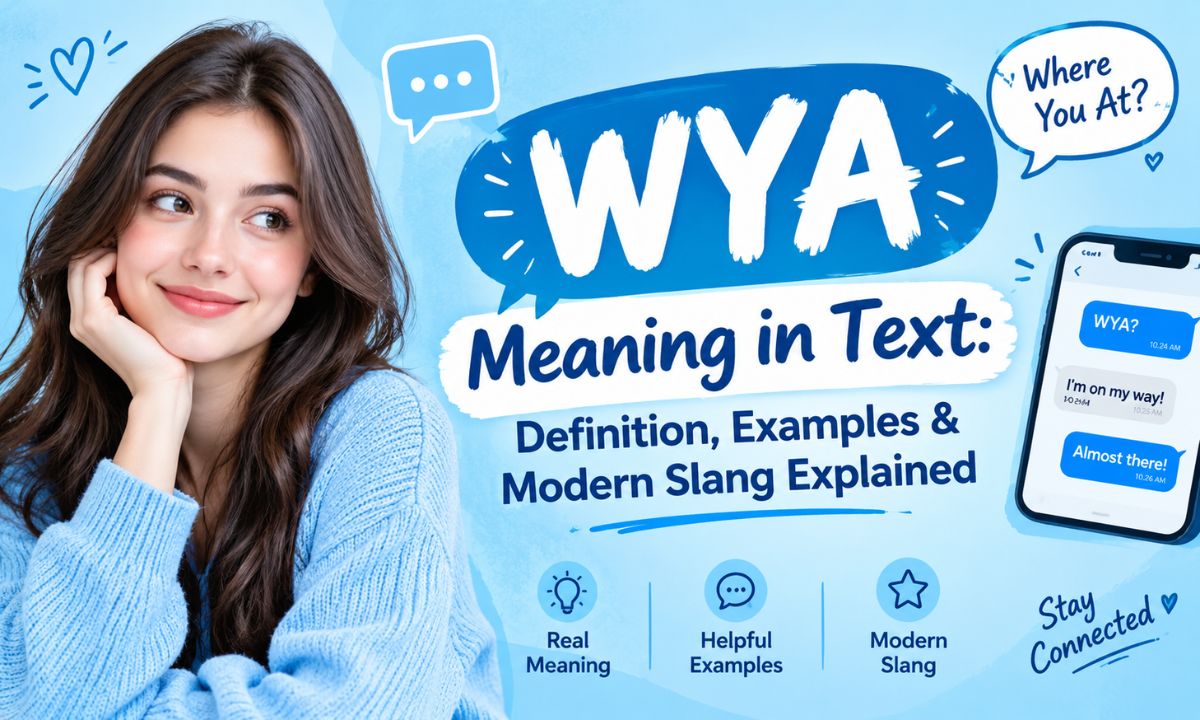
WYA stands for “Where You At?” It is a casual, shortened way of asking someone about their current location, availability, or what they are doing right now.It is one of those abbreviations that feels instantly familiar once you see it a few times.
Most people pick up the meaning simply from context.The beauty of WYA lies in its simplicity. It replaces a full question with just three letters, saving time without losing meaning.
What Does WYA Mean?
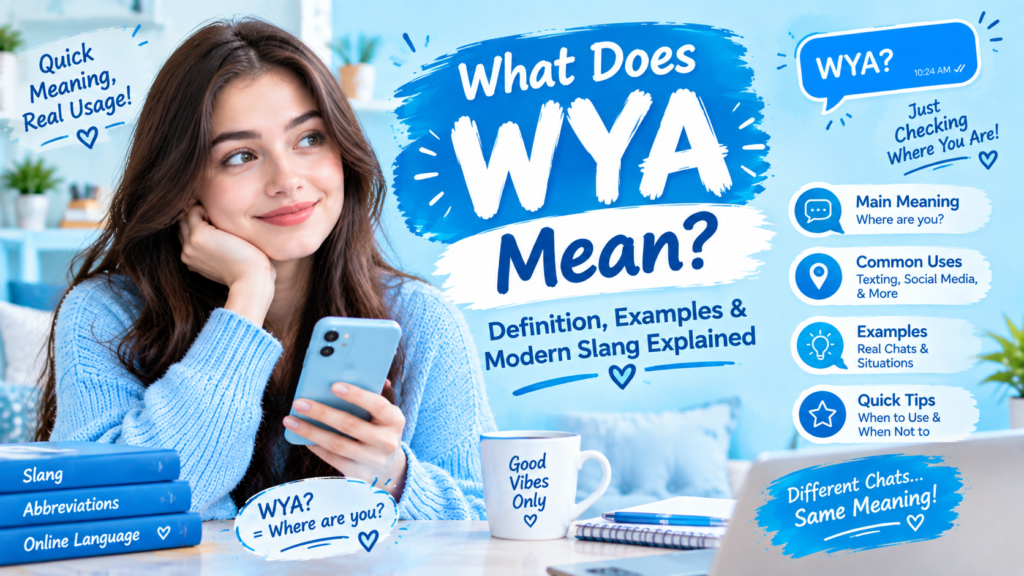
WYA is texting shorthand for “Where You At?” a quicker, more informal version of “Where are you?” People use it when they do not want to type a full sentence.
This is especially true in fast paced conversations on social media or messaging apps. Typing full sentences can feel unnecessary when speed matters more than formality.
It fits naturally into the rhythm of modern texting. Short, quick messages have become the norm rather than the exception.
Simple Definition
In plain terms:
- WYA = Where You At
- Used to ask someone’s location
- Used to check availability or plans
- Common in texting, DMs, and comment sections
Each of these points reflects a slightly different intention. The exact meaning always depends on who is asking and why.
Quick Example Quotes
- “WYA? We’re already outside.”
- “wya rn, everyone’s waiting.”
- “wya tonight? Let’s hang out.”
These examples show how flexible the phrase really is. It can signal urgency, curiosity, or simply a casual invitation.
Origin & Background
Where Did WYA Come From?
The phrase “Where are you at?” has been part of casual spoken English for decades. It has strong roots in African American Vernacular English (AAVE) and hiphop culture.
Long before texting existed, people used this phrase in everyday conversation. It carried a rhythm and tone that felt natural in spoken dialogue.
As mobile messaging became the default way people communicated, the phrase was naturally shortened. Typing quickly meant dropping unnecessary letters and sounds.
This shift mirrors how many slang terms evolve. Spoken language often gets compressed once it moves into text format.
Social Media Influence
Platforms like Snapchat, Instagram, and TikTok accelerated WYA’s popularity. These apps thrive on quick, realtime interaction between users.
Because conversations move so fast on these platforms, short abbreviations fit perfectly. There is little room for long, formal questions in a comment thread.
WYA became a natural fit for this environment. It matched the energy of instant replies and constant back and forth messaging.
Also Read This Meaning ATP Meaning in Text
How the Meaning Evolved
Originally a pure location question, WYA has grown to also mean:
- “Are you free right now?”
- “Why haven’t you replied?”
- “Are you coming to this event?”
The core idea of checking someone’s presence or availability has stayed the same. However, the emotional weight behind it has expanded significantly over time.
What once meant a simple location check can now carry frustration, excitement, or even affection. Everything depends on the surrounding context.
RealLife Conversations

Seeing WYA in context makes its meaning much clearer than any dictionary definition could.
WhatsApp Conversation
Sara: WYA? we started without you
Ali: on my way, 5 mins
This exchange shows a light sense of urgency without any real conflict. It is simply about coordinating a meeting time.
Instagram DM
User1: WYA these days? haven’t seen you post
User2: been busy with work lol, you?
Here, WYA is not about physical location at all. It is really asking, “What have you been up to lately?”
TikTok Comments
Comment: wya bro this video is fire, come live Reply: 😂 I’m right here, just watching
This example shows WYA used playfully, almost as a joke rather than a genuine question. It invites interaction more than information.
LateNight Text Message
Him: WYA Her: home, why? Him: just checking on you
This version carries a softer, more personal tone. Latenight texts often use WYA to express care rather than curiosity alone.
Emotional & Psychological Meaning
What Emotion Does WYA Express?
Depending on tone and timing, WYA can express:
- Curiosity
- Concern
- Urgency
- Flirtation
- Mild impatience
The same three letters can shift dramatically in feeling. A single question mark or added emoji can change everything.
Why People Use It
People default to WYA because it is fast, lowpressure, and does not require a lot of explanation. It opens a conversation without sounding too formal.
There is also something disarming about its casualness. It invites a reply without demanding one, which makes it feel approachable.
What It Reveals About Modern Communication
The popularity of short slang like WYA shows how much digital communication favors speed over full sentences. Efficiency has become a core value in texting culture.
It also reflects how tone in texting depends heavily on context rather than words alone. The same message can be read many different ways.
A Realistic Scenario
Imagine you are at a group hangout and one friend has not shown up. Someone texts “wya???” with three question marks.
That is not really about your literal location anymore. It is about frustration that you are late and holding everyone else up.
Usage in Different Contexts
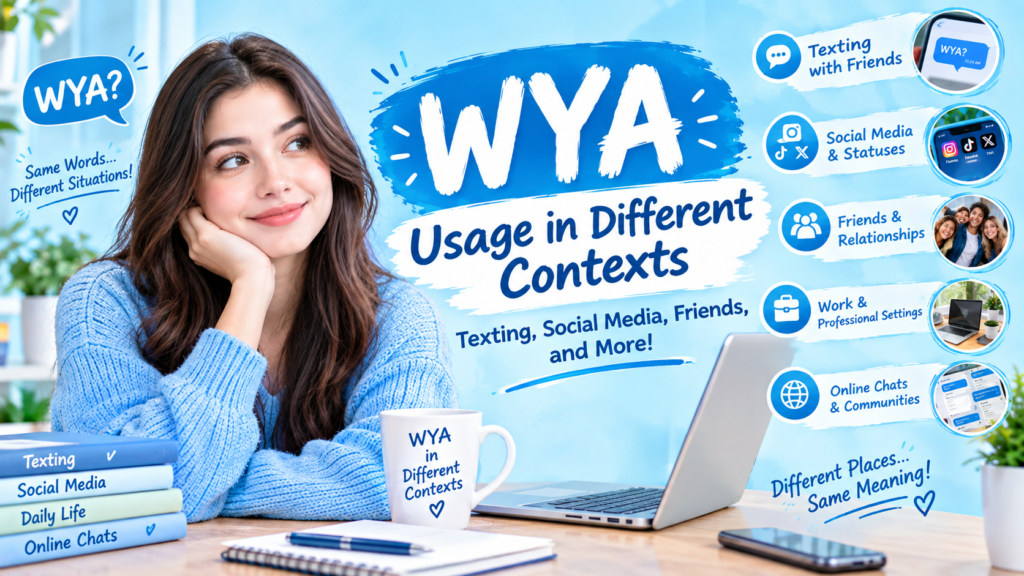
WYA does not mean the same thing in every setting. Context changes everything about how the message should be read.
| Context | Typical Meaning | Tone |
| Social Media Comments | Playful check in or invite | Light, teasing |
| Friends & Relationships | Genuine location/availability check | Casual, warm |
| Work or Professional Settings | Rarely used; considered too informal | N/A |
| Latenight texts | Interest, concern, or flirtation | Personal |
Social Media Usage
On platforms like TikTok or Instagram, WYA is often used playfully in comments. Sometimes it is just to get attention or start a conversation.
It does not always mean the sender genuinely wants your location. Often, it is more about sparking interaction than gathering information.
Friends & Relationships
Among friends, WYA is a normal way to coordinate plans or check in casually. It fits naturally into everyday back and forth messaging.
In relationships, it can carry a more personal or affectionate tone. A partner asking “wya” might really be asking, “Are you thinking of me?”
Work or Professional Settings
WYA is not appropriate for professional communication. It reads as too casual and can come across as unprofessional.
Sending it in an email or workplace chat might confuse colleagues. Formal settings usually call for complete, polite sentences instead.
Casual vs Serious Tone
The same word can feel completely different depending on punctuation, emojis, and timing. “wya 😊” feels friendly and warm.
Meanwhile, “WYA?!” feels demanding and urgent. Small details like capitalization can shift the entire emotional weight of the message.
When NOT to Use It
While WYA is fine in casual chats, there are situations where it should be avoided entirely.
Professional Communication
Sending “wya” to a coworker or boss can come across as unprofessional or too informal. This is especially true in written communication like email.
Professional settings usually expect clear, complete sentences. Slang like WYA can create a poor first impression in these environments.
Sensitive Situations
If someone is going through something serious, a blunt “WYA” might feel dismissive instead of caring. A fuller sentence usually works much better.
Something like “Hey, are you okay? Where are you right now?” shows more genuine concern. It gives the moment the seriousness it deserves.
Cultural Misunderstandings
Not everyone is familiar with texting slang. Using WYA with someone from a different generation or cultural background might lead to confusion.
It is always worth considering who is on the other end of the conversation. Clarity matters more than speed in unfamiliar situations.
When Tone Could Be Misread
Without emojis or context, WYA can sound aggressive or accusatory, even if that is not the intention behind it. Text lacks the warmth of a spoken voice.
Adding a small emoji or a followup sentence can soften the tone. This helps prevent unnecessary misunderstandings between two people.
Common Misunderstandings
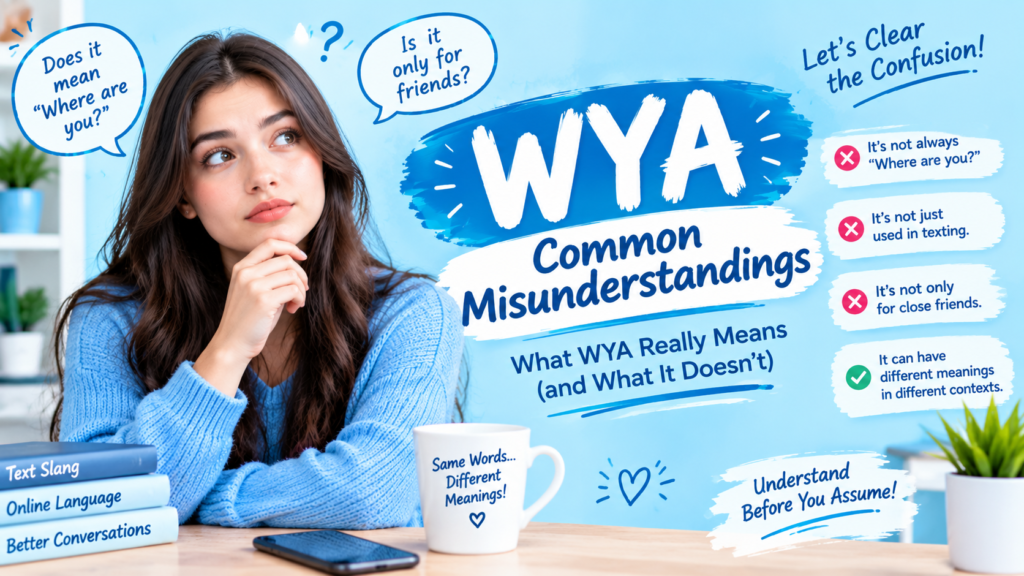
Thinking It Always Means Physical Location
WYA does not always ask for an exact address. Sometimes it simply means “what are you up to” or “are you free.”
Taking it too literally can lead to confusing replies. Understanding the sender’s intent matters more than the literal words used.
Tone Confusion
Because text lacks vocal tone, a simple “WYA” can be misread as annoyed or urgent when it was meant casually. This is a common issue in digital communication.
Readers often fill in emotional gaps based on their own mood. This can lead to unnecessary tension over a harmless message.
Literal vs Figurative Meaning
Sometimes WYA is rhetorical, used more as a greeting or way to start a conversation than an actual question about location. It can function almost like “hey” or “what’s up.”
Recognizing this distinction helps avoid overthinking a simple, friendly message.
Comparison Table
| Term | Meaning | Common Use |
| WYA | Where You At | Location/availability check |
| WYD | What You Doing | Asking about current activity |
| OTW | On The Way | Confirming someone is coming |
| WYI | What You Into | Asking about interests |
These abbreviations often appear together in the same conversations. Knowing all of them makes texting slang much easier to follow.
Key Insight
WYA is less about geography and more about connection. It is a quick way to check in on someone without overthinking the message.
Variations / Types
WYA often gets modified depending on the mood or urgency of the message being sent.
- WYA RN: Where you at right now (urgent tone)
- WYA ASAP: Wants an immediate reply
- WYA Bro: Casual, used between male friends
- WYA Babe: Affectionate, used in relationships
- WYA Tonight: Asking about evening plans
- WYA Though: Slightly teasing or curious tone
- WYA Fr: “Where you at, for real” (emphasizing sincerity)
- WYA At: Redundant but common informal phrasing
- WYA Twin: Friendly slang, often used between close friends
- WYA Gang: Used in group chats to check on multiple people
Each variation adds a small layer of personality to the base phrase. They help texters finetune tone without typing extra words.
How to Respond When Someone Uses It
Casual Replies
- “Home, why what’s up?”
- “Just chilling, you?”
These replies work well among close friends. They keep the conversation light and easygoing.
Funny Replies
- “Lost somewhere between my bed and reality.”
- “Currently avoiding responsibilities.”
Humor often works best in low stakes conversations. It keeps things fun while still answering the question.
Mature Replies
- “At work, we can talk in an hour.”
- “Running errands, I’ll call you soon.”
These responses fit better in slightly more formal or busy situations. They show respect for both people’s time.
Respectful Replies
- “Hey! I’m a bit busy, can I get back to you shortly?”
- “At home resting, everything is okay on your end?”
These replies work well when checking on someone else’s wellbeing too. They balance honesty with genuine care.
Regional & Cultural Usage

Western Culture
In the US and UK, WYA is extremely common among teens and young adults. It appears constantly in texting and social apps.
It has become such a normal part of everyday language that most young people no longer think twice about using it.
Asian Culture
In parts of Asia, English texting slang like WYA is popular among younger, urban, English speaking populations. It is often mixed with local languages.
This blending creates a unique texting style that combines global slang with regional expression.
Middle Eastern Culture
WYA appears frequently in bilingual texting. It is often blended with Arabic or other native expressions in casual chats among younger users.
This mixing reflects how global internet culture influences local communication styles everywhere.
Global Internet Usage
Thanks to social media, WYA has become a nearuniversal texting term. It is recognized by younger internet users worldwide, regardless of country.
This global spread shows how quickly internet slang can cross borders and languages.
Generational Differences
Gen Z and younger Millennials use WYA naturally in daily conversation. Older generations may find it confusing or overly casual.
This generational gap often creates small but noticeable communication differences within families.
Is It Safe for Kids?
Understanding the Context
WYA itself is harmless slang, but like any location related question, it is worth teaching kids to be cautious. Sharing realtime locations with strangers can carry risks.
Parents should treat this phrase as an opportunity for a small safety conversation rather than a threat itself.
Healthy Online Communication
Parents and guardians can use terms like WYA as a natural opening to talk with kids about privacy. Safe texting habits are worth reinforcing early.
Recognizing red flags in online conversations is an important lesson tied to everyday slang like this.
Final Thoughts
WYA is one of the simplest yet most versatile pieces of modern texting slang. At its core, it means “Where You At?” but its real meaning shifts depending on tone and timing.
Whether it is a friend checking if you are coming to hang out or a partner sending a late night checking, context always shapes the message. The words rarely change, but the feeling behind them constantly does.
Next time you see “WYA” pop up on your screen, you will know exactly what is really being asked. A little understanding goes a long way in modern digital conversation.

Hi, I’m Munaza, the creator of RTMeaning.com. I’m passionate about explaining internet slang, abbreviations, texting terms, and modern language in a simple and easy-to-understand way. Through this website, I help readers discover the meanings behind trending words, social media expressions, and online communication. My goal is to make learning new terms quick, clear, and enjoyable for everyone.