

Ever gotten a text that just says “rd” and had absolutely no idea what your friend was trying to tell you? You’re not alone. This tiny two letter abbreviation has quietly become one of the most used pieces of texting shorthand among Gen Z and younger millennials and it’s confusing an entire generation of parents, coworkers, and late adopters in the process.
The tricky part? “RD” doesn’t have just one meaning. Depending on who’s texting you, the platform you’re on, and the context of the conversation, “RD” can mean “alright,” “ride or die,” “read,” or even something else entirely. This guide breaks down every common meaning of “RD,” shows you how it’s actually used in real conversations, and helps you figure out exactly what someone meant when they dropped it in your DMs.
What Does “RD” Mean in Text?
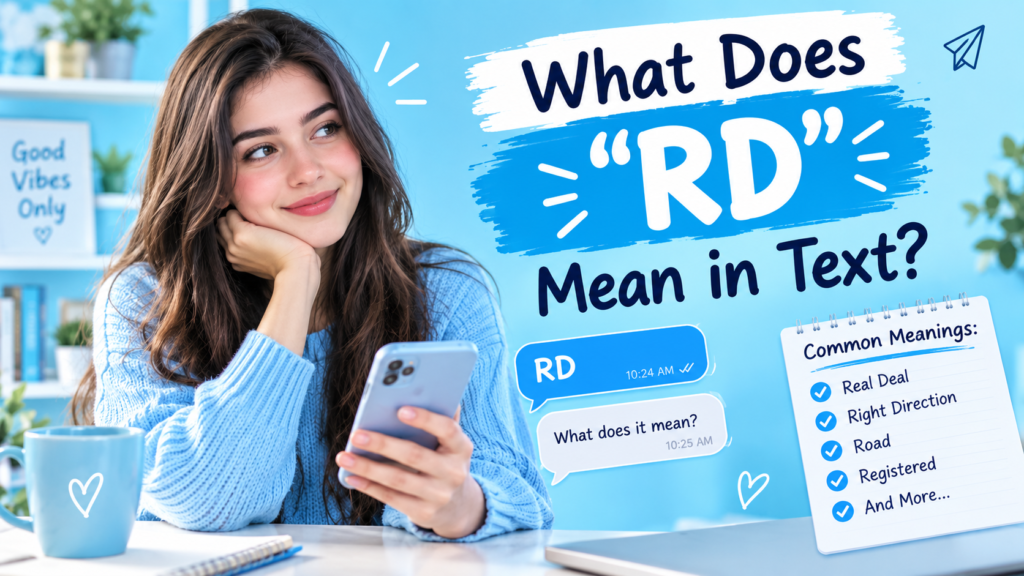
In most casual texting situations, “RD” is short for “alright.” It works as a quick, loweffort way to acknowledge, agree with, or confirm something someone just said. Think of it as a faster, trendier cousin of “ok” or “k.”
The abbreviation gained traction through the shortened chain “alright” → “aight” → “ard” → “rd,” with each version stripping away more letters as people typed faster and cared less about spelling things out. This kind of letterdropping is common in internet slang, where speed and rhythm often matter more than proper spelling.
It’s especially common in casual chats, group texts, comment sections, and DMs on apps like Instagram and Snapchat. You’ll also see it pop up in gaming lobbies, TikTok comment threads, and fastpaced group chats where nobody wants to type out full sentences.
That said, “RD” isn’t locked into one single definition. It shifts meaning depending on context, which is exactly what makes it confusing for anyone encountering it for the first time. A single glance at the surrounding message is usually enough to figure out which version is being used.
Does “RD” Always Mean “Alright”?
No and this is where most confusion starts. While “alright” is the most common interpretation, “RD” can also mean several other things depending on the situation it’s used in.
Ride or die describing intense loyalty or commitment to a person.
Read confirming you’ve seen and processed a message.
Real deal calling something genuine, impressive, or authentic.
The correct meaning almost always depends on the sentence around it. A one word “hard” reply to a plan usually means “alright.” A caption under a photo of two best friends is more likely “ride or die.”
Context is doing most of the heavy lifting here. The people involved, the platform, and even the punctuation used around the word can all shift what “rd” is actually communicating in that moment.
Also Read This Meaning AWL Mean in Text
RD vs. “ALR” vs. “Aight”: What’s the Difference?
These three abbreviations are close cousins, but they aren’t identical twins. Each one carries a slightly different tone, even though they all trace back to the same root idea of agreement.
| Abbreviation | Meaning | Typical Vibe | Common Platform |
| RD | Alright / okay | Casual, quick, loweffort | Texting, Snapchat, gaming chats |
| ALR | Alright | Slightly more neutral, still casual | Texting, group chats |
| Aight | Alright | Laidback, conversational | Texting, spokenstyle captions |
All three trace back to the same root word, but “RD” is the shortest and feels the most rushed or casual of the group. It’s often used when someone wants to reply fast without putting much thought or emotion into the message.
“ALR” sits somewhere in the middle, still casual, but a touch more readable to people who aren’t deep into internet slang. “Aight” leans closer to how people actually speak out loud, which makes it feel a bit warmer in tone.
Choosing between the three often comes down to personal texting habits rather than any strict rule. Some people default to “rd” simply because it’s the fastest thing to type on a phone keyboard.
The Most Common Meanings of “RD”
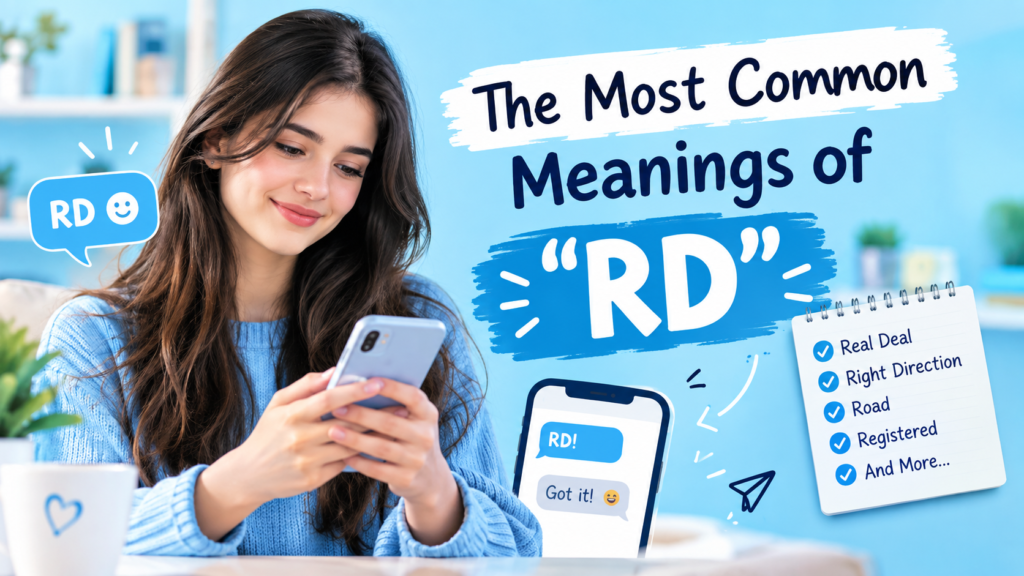
Here’s a closer breakdown of the four meanings you’re most likely to encounter in everyday conversations, along with examples of how each one typically shows up.
1. “Alright” or “Okay”
This is the default meaning in most everyday texting. It’s a neutral, no frills way to say “sounds fine” or “got it,” without adding extra emotion to the reply.
Example: “We’re leaving at 7.” → “rd”
This version is so common that most young texters won’t even pause to think about alternate meanings unless the context clearly points elsewhere.
2. “Understood”
Closely related to “alright,” this version leans more toward confirming comprehension rather than agreement. It’s often used after instructions or explanations rather than after a suggestion.
Example: “Turn left after the gas station.” → “rd”
Here, “rd” is functioning almost like a nod, a signal that the information has landed and no further clarification is needed.
3. “Sounds Good”
When “RD” follows a suggestion or plan, it often carries the tone of enthusiastic, or at least willing, agreement similar to saying “works for me” or “I’m in.”
Example: “Wanna grab food after class?” → “rd, I’m down”
Pairing “rd” with additional words like this usually pushes the tone from neutral toward genuinely positive.
4. “Ride or Die”
This meaning shows up mostly in captions, bios, and emotional or loyalty themed posts rather than quick replies. It signals deep trust or unwavering support for someone close to you.
Example: “Me and my RD since 2015 😤❤️”
This use case is much rarer in one texting and almost always appears in a more public or sentimental context, like a social media caption.
How “RD” Is Used in Real Conversations
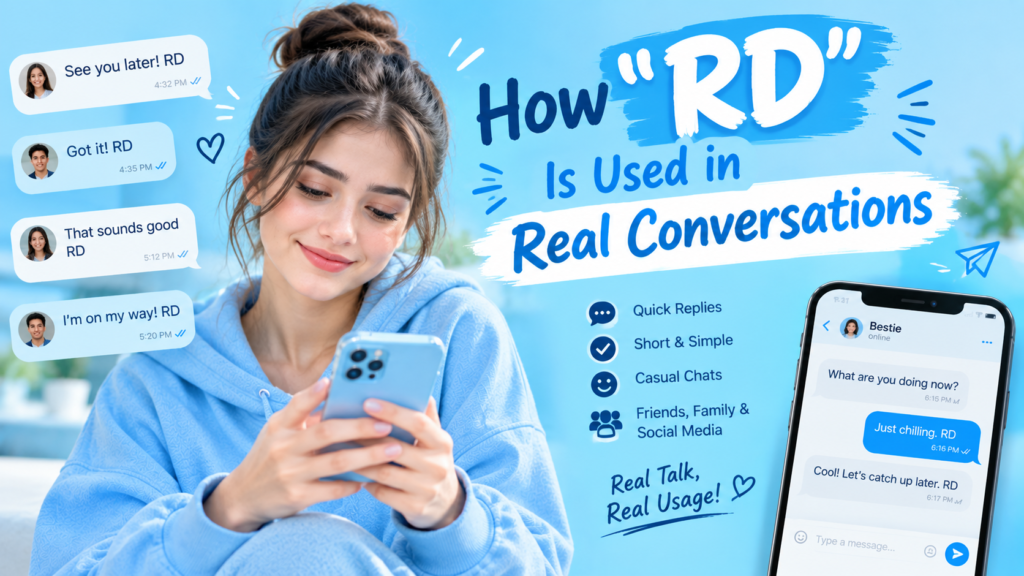
The meaning of “RD” often shifts depending on where the conversation is happening. Here’s a platform breakdown of how the abbreviation tends to function in different spaces.
Friends & Casual Texting
Among friends, “RD” is almost always shorthand for “alright.” It’s the texting equivalent of a quick nod, low effort, no drama, just simple acknowledgment of whatever was just said.
Close friends rarely overthink a plain “rd,” since the shared context of the friendship usually makes the intended meaning obvious.
Instagram & Snapchat
On these platforms, “RD” pops up in both DMs (usually meaning “alright” or “read”) and captions (often meaning “ride or die” or, less commonly, “real deal”). Emojis nearby can hint at which meaning is intended.
A caption paired with heart emojis is far more likely to mean “ride or die” than a plain DM reply sent midconversation.
Dating Apps
In dating app conversations, “RD” typically signals casual agreement confirming a date, time, or plan without overexplaining. It keeps things light and low pressure during the early stages of chatting.
Using “rd” too often on a dating app, though, can sometimes come across as disengaged, so it’s worth balancing with fuller replies occasionally.
Gaming & Online Communities
Gamers use “RD” as a fast way to confirm readiness or agreement midmatch, when typing full sentences would slow things down and cost valuable reaction time.
It functions almost like a quick “yes” or “go ahead,” letting teammates know everyone’s on the same page without breaking focus from the game itself.
Work or Professional Chat
“RD” rarely belongs in professional communication. If it does show up, it’s usually between coworkers who already text casually outside of formal channels and even then, it’s risky.
Using it in front of clients, managers, or anyone outside your immediate casual circle can come across as careless or overly informal.
Is “RD” Rude, Flirty, or Offensive?
By itself, “RD” isn’t rude or offensive. But tone and context can shape how it lands, sometimes in ways the sender never intended.
When It Feels Positive
Paired with emojis, exclamation points, or a fast, enthusiastic reply, “RD” reads as friendly and agreeable. In this form, it usually signals genuine excitement or eagerness to move forward with a plan.
When It Feels Neutral
A plain “rd” with no punctuation usually just reads as a simple matter of fact acknowledgment: nothing more, nothing less. Most everyday uses of the word fall squarely into this neutral category.
When It Feels Cold
In an emotional or serious conversation, a oneword “rd” reply can come across as dismissive, especially if the other person was expecting a longer or warmer response to something meaningful they shared.
When It Might Feel Rude
If someone shares exciting news or asks a heartfelt question and gets only “rd” back, it can feel abrupt or uninteresting even if that wasn’t the intention behind the short reply at all.
How to Respond When Someone Says “RD”
Not sure how to reply when someone sends you “rd”? Here are some options depending on the vibe and setting you’re going for.
Casual Replies
“bet”
“ok cool”
“for sure”
Funny Replies
“rd rd 🫡”
“say less”
“understood chief”
Neutral Replies
“ok”
“got it”
“sounds good”
Professional Replies
“Understood, thank you.”
“I’ll follow up shortly.”
“Sounds good, I’ll take care of it.”
Matching your reply to the tone of the original message usually keeps the conversation flowing naturally, without any awkward mismatch in energy.
Common Misunderstandings About “RD”
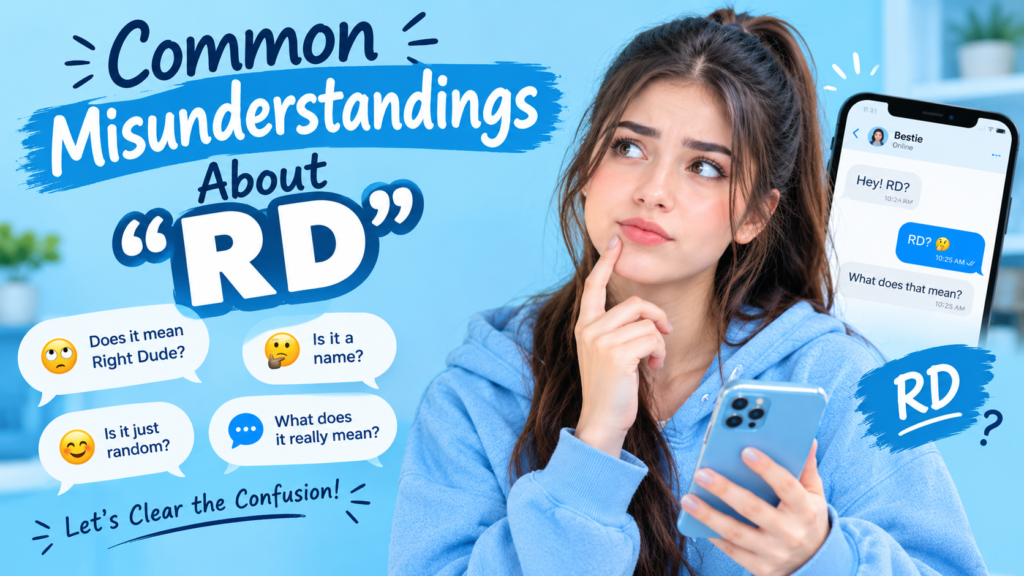
A few mixups happen often enough that they’re worth calling out directly, especially for anyone new to this particular piece of slang.
Thinking It Means Something Negative
Because it’s short and blunt, some readers assume “rd” signals annoyance or disinterest. Most of the time, it’s simply efficient texting, not an attitude directed at the other person.
Confusing It With “Ride or Die”
Readers unfamiliar with the slang sometimes assume every “RD” is the “ride or die” meaning, even in casual oneword replies where “alright” is far more likely to be the intended message.
Thinking It Is an Acronym Only
Some assume “RD” always stands for something formal, like a job title or department. In texting culture, it’s almost always informal slang, not a technical acronym with a fixed definition.
Misreading the Tone
Without vocal tone or facial expressions, a short reply like “rd” can be misread as cold or dismissive when the sender meant nothing by it beyond simple acknowledgment.
Similar Slang Terms You Should Know
If “RD” made sense to you, these related terms will too, since they often appear in the same kinds of casual conversations.
Ard the slightly longer version of “RD,” also meaning “alright.”
Bet used to confirm agreement or acceptance of a plan.
Saying less signals immediate understanding, no further explanation needed.
WRD is short for “word,” used to express agreement or validation.
K a blunt, minimal confirmation, similar in tone to “rd.”
Learning these related terms together makes it much easier to follow fastmoving group chats and comment sections without constantly asking what something means.
When You Should Avoid Using “RD”
While “RD” works well in casual settings, there are moments when it’s better left out of the conversation entirely.
Professional Settings
Emails, work Slack messages, and client communication call for full words. “RD” can come across as unprofessional or careless in these spaces, even among coworkers who text casually elsewhere.
CrossCultural Conversations
Slang abbreviations don’t always translate well across cultures or languages. Someone unfamiliar with English internet slang may not understand “RD” at all, leading to confusion instead of clarity.
Sensitive Situations
When someone is upset, sharing bad news, or looking for emotional support, a oneword “rd” can feel dismissive. These moments call for a more thoughtful, complete response instead.
Conclusion
“RD” is a small abbreviation with a surprisingly wide range of meanings from a simple “alright” to a heartfelt “ride or die.” Most of the time, context will tell you exactly which meaning applies, especially once you factor in the platform, the relationship between the people texting, and the tone of the surrounding conversation.
Knowing when to use it, and when to avoid it, matters just as much as knowing what it means. Save “rd” for casual friends, group chats, and low stakes conversations, and switch to full words whenever the setting is professional, emotional, or unfamiliar to the other person.
The next time “rd” shows up in your messages, you won’t have to guess. Just glance at the context, consider who sent it, and you’ll know whether it’s a casual nod of agreement or something with a little more heart behind it.

Hi, I’m Munaza, the creator of RTMeaning.com. I’m passionate about explaining internet slang, abbreviations, texting terms, and modern language in a simple and easy-to-understand way. Through this website, I help readers discover the meanings behind trending words, social media expressions, and online communication. My goal is to make learning new terms quick, clear, and enjoyable for everyone.