

You have probably seen it in a caption, heard it in a rap lyric, or spotted it in a group chat: “that’s my opp.” It sounds tough and a little dramatic. In reality, it is often just a playful label for someone on the other side of a joke, a game, or a debate.
This guide explains the meaning, full form, and origin of the word. It also shows real examples, platform differences, and the best ways to reply when someone calls you an opp.
Quick Answer
Opp is slang for “opponent” or “opposition.” It describes an enemy, a rival, or anyone who seems to be against you. The plural form, “opps,” is the most common version you will hear.
Among friends, the word is often a light jab. It can point to a rival sports fan, a competitive sibling, or someone who simply annoys you. The tone and the setting decide how serious it really is.
What Does Opp Mean?
The Core Definition
The full form of opp is opponent, and sometimes opposition. In slang, it describes any person or group you see as standing on the opposite side. That could be a real enemy, a business competitor, or a friend you are teasing.
The word is short, sharp, and easy to use in a sentence. That is one reason it spread so quickly across music, gaming, and social media. It says a lot in just one syllable.
| Term | Full Form | Meaning |
| Opp | Opponent / Opposition | An enemy or rival |
| Opps | Opponents | Enemies, rivals, or a rival group |
| Opp behavior | Opponent behavior | Actions that feel hostile or disloyal |
The Plural Form: Opps
“Opps” is the version you will meet most often. It usually points to a group of people. That group might be a rival crew, a rival fan base, or simply people who do not like you.
Because it covers a whole group, the plural form works well in captions and songs. It also feels more casual and less personal than pointing at one single person.
- “Watch out for the opps.”
- “All my opps are quiet now.”
Opp as a Verb
Online, people now use “opp” as an action word. Instead of naming a person, they describe what that person is doing. This shift from noun to verb shows how internet slang keeps changing.
When used as a verb, it often carries a mild or humorous tone. The speaker is usually complaining about behavior rather than declaring a real conflict.
- “Stop oppressing me.” (Stop treating me like an enemy.)
- “He’s popping again.” (He is acting hostile or causing trouble.)
The Origins of Opp Slang
Early Roots in Hip-Hop
The word grew out of street language and hip-hop culture. Artists needed short, punchy words to describe rivals in their lyrics. “Opposition” was shortened to “opp,” and it slipped easily into verses.
It also fits neatly into rhythm and rhyme. A one-syllable word is easy to repeat in a hook, which helps it stick in listeners’ minds. Over time, fans began using it in daily speech.
The Chicago Drill Scene
The term spread widely in the 2010s through drill music, especially from Chicago. Drill lyrics used “opps” constantly, and the word traveled along with the songs. Listeners around the world picked it up.
As drill grew into a global sound, the slang crossed borders. Scenes in the UK and other countries adopted it as well. The word became a shared piece of vocabulary for a whole generation of listeners.
From Street Slang to Mainstream
Streaming and social media did the rest. Once TikTok and Instagram picked it up, “opp” left its original setting behind. Users turned it into memes, captions, and jokes that had nothing to do with its roots.
Today, many teens use it as a joke rather than a threat. If a teenager mentions their “opps,” it does not mean they are in a gang. More often, they are talking about a rival team or an annoying classmate.
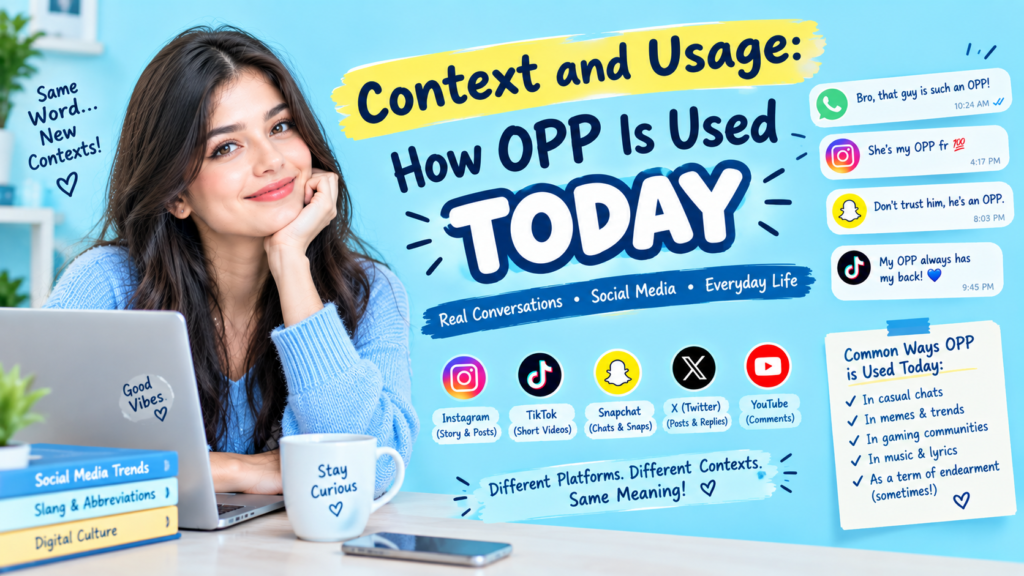
Context and Usage: How Opp Is Used Today
The Spectrum of Meaning
The meaning of opp shifts depending on who says it and why. It can range from a harmless joke to a real sign of hostility. That is why understanding context matters so much.
Think of it as a scale. On one end, you have friends teasing each other. On the other end, you have serious conflict, which is mostly limited to certain rap and street settings.
| Level | Tone | Example |
| Playful | Joking, friendly | “My sister is my opp when we play Mario Kart.” |
| Mild | Petty rivalry or dislike | “That group chat is full of opps.” |
| Serious | Real hostility | Common in some rap and street contexts |
When Context Matters
Before you react, take a moment to check three simple things. This habit can save you from a lot of needless drama. Most misunderstandings happen because people skip this step.
- Who said it? A close friend or a stranger?
- Where was it said? A meme page or a heated argument?
- What was the tone? Laughing or angry?
Who Uses Opp?
The word is used mostly by teens and young adults. Gamers, sports fans, and hip-hop listeners use it the most. These groups enjoy rivalry, so the word fits naturally into their conversations.
It is rare among older adults, so expect blank looks outside those groups. If you use it with parents or coworkers, you may need to explain what you mean.
Also Read This Meaning Elegy Meaning
Real Life Examples of Opp in Conversation
1: Playful Rivalry Among Friends
Sports rivalries are one of the most common places to hear this word. Fans love to tease each other about the teams they support. Calling someone an opp is a quick way to show friendly competition.
Friend A: “You’re supporting Real Madrid? You’re my opp now 😂”
Friend B: “Lol, I’m going to enjoy this.”
2: Sarcastic Usage About a Teacher
Students often use the word to complain in a dramatic way. It turns a small annoyance into a joke. The speaker is not really angry, just venting.
“Our teacher just gave homework over the weekend. Straight-up opp behavior.”
Nobody is in danger here. It is simply a theatrical way to complain about a boring situation.
3: Social Media Dramatic Usage
On social media, the word often appears in short captions. A post like “Opps stay mad” usually means the poster is celebrating a win. They are also sending a playful message to people who doubted them.
The “opps” in this case are rarely named. The caption works like a wink to the audience rather than a direct attack.
4: Competitive Gaming Context
In gaming, the word has a very simple meaning. It refers to the other team or the players you are up against. There is no personal anger behind it.
“The opps are camping at the spawn point.”
Here, “opps” simply means the enemy team in the match. Once the game ends, everyone usually goes back to being friends.
5: Casual Flirtatious Usage
Sometimes the word is used to tease someone you like. The speaker pretends to be upset over something tiny. The emoji usually gives away the true mood.
“You’re such an opp for stealing my fries 😏”
In this case, it is teasing and often a sign of affection. It shows comfort and closeness between two people.
Platform Specific Meaning
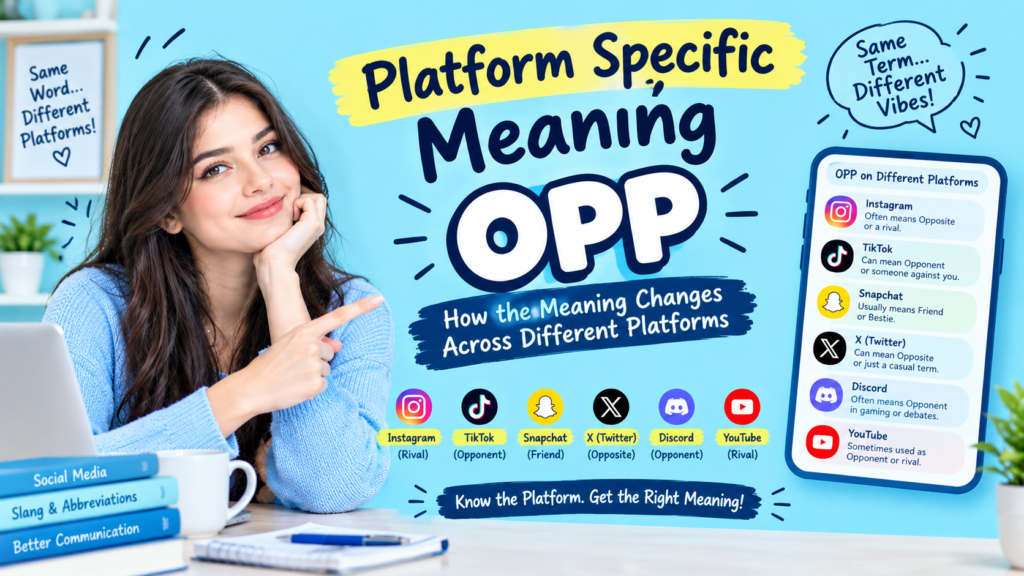
Opp on TikTok
On TikTok, the word appears mostly in memes, skits, and captions. It is humorous and lighthearted. Creators use it to set up relatable jokes about everyday rivalries.
A common example is “POV: you meet your opp at the party.” Viewers understand the joke right away, and the tone stays fun.
Opp on Instagram
On Instagram, you will find the word in captions, stories, and comment sections. It can work as a flex, such as “Opps watching.” It can also be a joke between friends.
The photo or video usually explains the mood. A smiling group picture with the word “opps” is almost always playful.
Opp on Snapchat
Snapchat is more private, so the word is used in a relaxed way. Most messages are between close friends who already know each other well. The tone is usually playful banter.
Since snaps disappear quickly, people feel free to joke. There is less pressure to sound polished or serious.
Opp on Twitter/X
Twitter/X is more likely to give the word an edge. It shows up in arguments, fandom battles, and sports trash talk. Public posts can attract strangers, which raises the tension.
Because your audience is wider, the same word can be read in very different ways. A joke to your friends might look like an attack to someone else.
Opp on WhatsApp and Text Messages
In private chats, the tone is usually light. People use the word for friendly teasing or for venting about someone annoying. It rarely signals real conflict.
Since there is no tone of voice in text, emojis help a lot. A laughing face or a shrug makes your meaning clear.
Alternative Meanings and Confusions
The Naughty by Nature Confusion
The 1991 hit “O.P.P.” by Naughty by Nature is a separate thing. In the song, the letters stand for a different phrase and have nothing to do with the “enemy” meaning. The similar spelling causes a lot of mix-ups.
Many people connect the two because they look identical in writing. If you see the letters with periods, it is most likely a reference to the song.
OP vs. Opp
OP means “original poster.” It refers to the person who started a forum thread or a post. You will see it often on Reddit and other discussion sites.
Opp means opponent. One extra “p” changes the meaning completely, so always check the spelling.
Opp as “Opposite”
Some dictionaries list “opp.” as a written abbreviation for “opposite.” In business, you may also see it as short for “opportunity,” as in “sales opp.” Context usually makes the meaning obvious.
If you see it in a work email or a formal document, it almost certainly has nothing to do with enemies. It simply saves space.
| Term | Meaning | Where You’ll See It |
| Opp | Opponent / enemy | Slang, music, social media |
| OP | Original poster | Forums, Reddit |
| Opp. | Opposite | Written text, dictionaries |
| Opp | Opportunity | Business and sales |
| O.P.P. | Naughty by Nature song | Music references |
Related Terms and NLP Variations
Common Variations
Several related phrases have grown around the main word. Each one adds a slightly different shade of meaning. Knowing them helps you understand conversations more fully.
- Opps: the plural form
- Opp pack: a rival group
- Opp behavior: hostile or disloyal actions
- Opp stoppers: people who fight or resist rivals (from drill slang)
Synonyms
If you want a more general word, there are plenty of alternatives. Some are formal, and some are casual. Pick the one that fits your audience.
- Enemy
- Rival
- Hater
- Foe
- Competition
- Adversary
Antonyms
The opposite of an opp is someone you trust and stand beside. These words describe loyalty and close friendship. They are often used in the same captions and songs.
- Ally
- Friend
- Bestie
- Day one
- Ride or die
How to Respond If Someone Calls You an Opp
1: Assess the Context
Start by asking yourself whether the person is joking. Look at their emojis, your past history, and the setting. A “😂” changes the meaning completely.
If the message came from a close friend in a fun chat, it is almost certainly playful. If it came from a stranger during a heated moment, take a little more care.
2: Respond Appropriately
Choose a reply that fits the situation. A good response keeps the mood healthy and avoids drama. Here are a few options you can use.
If it’s a joke:
- “Lol, guilty as charged.”
- “I’ll take that as a compliment.”
- “Opp? Never. You need me.”
If it’s unclear:
- “Wait, are we joking or is something up?”
If it seems serious:
- “Why do you see me as an opp? Let’s talk.”
3: Match Their Energy
Reply with humor if they are joking, and stay calm if they are not. Matching the mood shows that you understand the situation. It also keeps the conversation friendly.
Do not escalate a message that could be harmless. A calm reply can turn a possible fight into a laugh.
Misinterpretations to Avoid
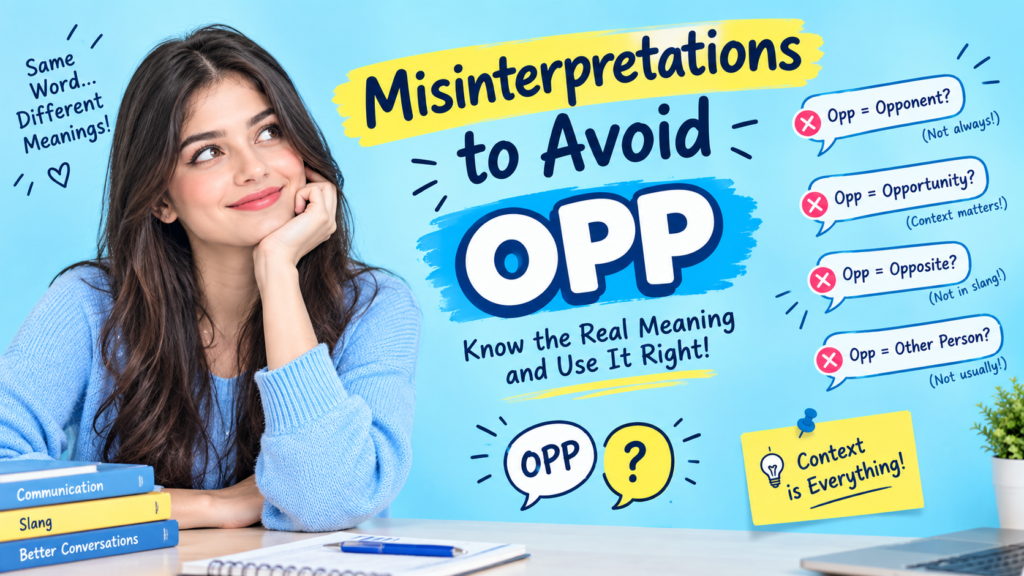
Don’t Assume It’s Always Hostile
Most casual uses among young people are jokes. Reading the word as a threat can create drama that never existed. Give the person a chance to explain before you react.
A quick question like “Are you joking?” often clears things up. It protects the friendship and saves you stress.
Don’t Use It in Formal Settings
Skip the word in emails, school essays, and job applications. It is informal slang and can make you look careless. Formal writing needs clear and professional language.
If you need to describe a competitor, use words like “rival” or “competitor” instead. They carry the same idea without the risk.
Don’t Overuse It
Dropping “opp” into every sentence sounds forced. Slang works best when it is used naturally and sparingly. Too much of it can make you seem like you are trying too hard.
Use it only when it fits the moment. A single well-placed word is far more effective than constant repetition.
Don’t Confuse It with “OP”
Calling someone an “OP” on Reddit is not an insult. It only means they wrote the original post. The extra letter makes a big difference.
If you mix them up, you may confuse people or start an unnecessary argument. Double-check the spelling before you post.
When NOT to Use Opp
Professional Settings
Avoid the word with clients, bosses, and colleagues. Even as a joke, it can sound unprofessional. Workplaces usually expect polite and neutral language.
If you want to be playful with a coworker, choose a softer phrase. Friendly humor should never risk your reputation.
With People Who Won’t Understand
Parents, teachers, and older relatives may take the word literally. They might read it as aggressive or even worrying. That can lead to awkward conversations.
If you are unsure, explain the meaning first or choose a simpler word. Clear communication is always better than a confusing joke.
In Serious Conflicts
Using the word during a real argument can sound like a threat. It may make the other person feel attacked. That can turn a small problem into a bigger one.
When emotions are high, it is wise to speak plainly and calmly. Avoid slang that could be misunderstood.
When You’re Not Sure of the Tone
If you cannot tell whether the word will land as funny or offensive, choose a different one. It is better to be safe than to hurt someone by accident. A simple alternative works fine.
Trust your instincts here. If something feels risky, it probably is.
Usage Tips for Mastering Opp
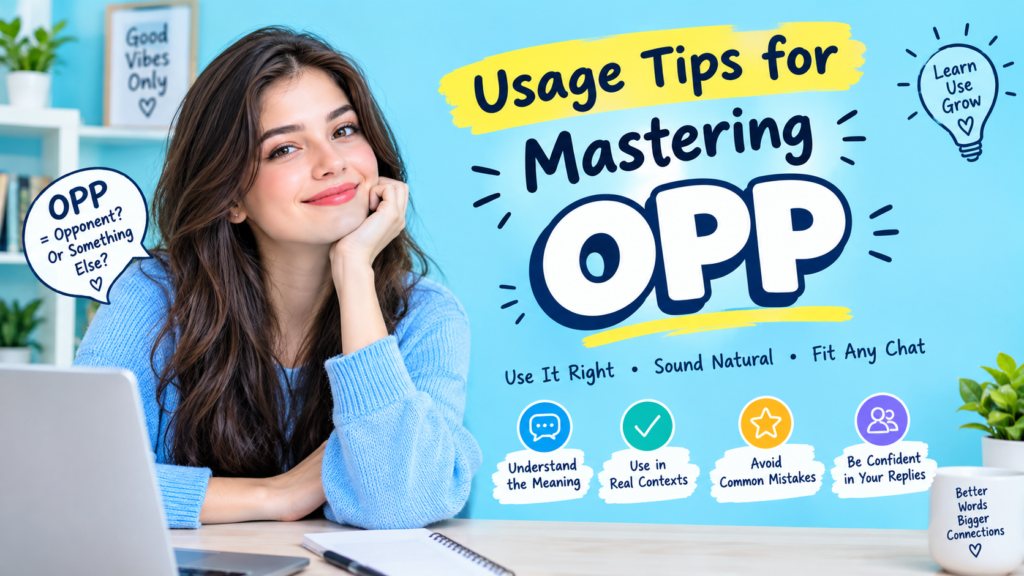
1: Start with Friends
Try the word first with people who share your sense of humor. They will quickly tell you whether it lands well. Friends are also more forgiving if you make a mistake.
This gives you a safe space to practice. Over time, you will learn the right tone and timing.
2: Match the Platform
The word fits TikTok captions and group chats very well. It does not fit LinkedIn or formal email. Always think about where you are posting.
Each platform has its own style and audience. Respecting that style helps your message feel natural.
3: Use the Plural Form
“Opps” sounds more natural than “opp” in most everyday uses. It is the version most people expect to hear. It also feels less personal and less sharp.
When you are unsure, the plural is usually the safer choice. It blends easily into captions and casual talk.
4: Don’t Force It
If slang does not fit your normal way of speaking, people will notice. Forced language can sound awkward and fake. Being yourself is always more convincing.
Use the word only if it feels comfortable. There is no pressure to follow every trend.
5: Learn from Context
Watch how others use the word in real conversations. Tone, emojis, and setting will teach you more than any definition. Pay attention to who is speaking and who is listening.
With time, you will understand the small details. That awareness will help you use slang with confidence.
Conclusion
Opp means opponent or enemy. It started in street language and hip-hop, then spread through drill music. Today it is a normal part of everyday internet talk.
Sometimes the word is serious, but far more often it is a joke about a rival or an annoying friend. It appears in gaming, sports, memes, and casual chats. Most people who use it mean no harm.
Always read the context and check the tone before you react. Reply in a way that matches the mood, and avoid the word in formal or tense situations. That simple approach is usually all you need.

Hi, I’m Munaza, the creator of RTMeaning.com. I’m passionate about explaining internet slang, abbreviations, texting terms, and modern language in a simple and easy-to-understand way. Through this website, I help readers discover the meanings behind trending words, social media expressions, and online communication. My goal is to make learning new terms quick, clear, and enjoyable for everyone.