

You get a message that says “wdym.” There is no context, no explanation, just four letters. Is the sender confused, annoyed, or simply curious?
WDYM stands for “what do you mean?” People use it when they do not understand something and want a clearer explanation. This guide explains the meaning, the tone, the platforms, and the best ways to reply.
What Does WDYM Mean?
WDYM = “What do you mean?” It is a short way to ask someone to clarify a statement, a question, or even an emoji. Instead of typing the full phrase, people save time with four quick letters.
Texting culture loves shortcuts, and this one has become very common. It appears in private chats, group conversations, comment sections, and gaming lobbies. Almost every regular texter has used it or received it.
The abbreviation grew out of early internet chat rooms and SMS messages, where every character counted. Today, the limit is gone, but the habit stayed. People now type it because it feels faster and more natural than a full question.
You will see it in lowercase (wdym), uppercase (WDYM), or stretched out (“wdymmm”). All of these versions carry the same core meaning. The style only changes the mood a little.
Quick example:
Sam: That movie was something else.
Ana: wdym? Was it good or bad?
Sam’s message was vague, so Ana asked for a clear answer. That is the everyday job of WDYM. It turns a fuzzy comment into a useful one.
WDYM Meaning in Text and Chat
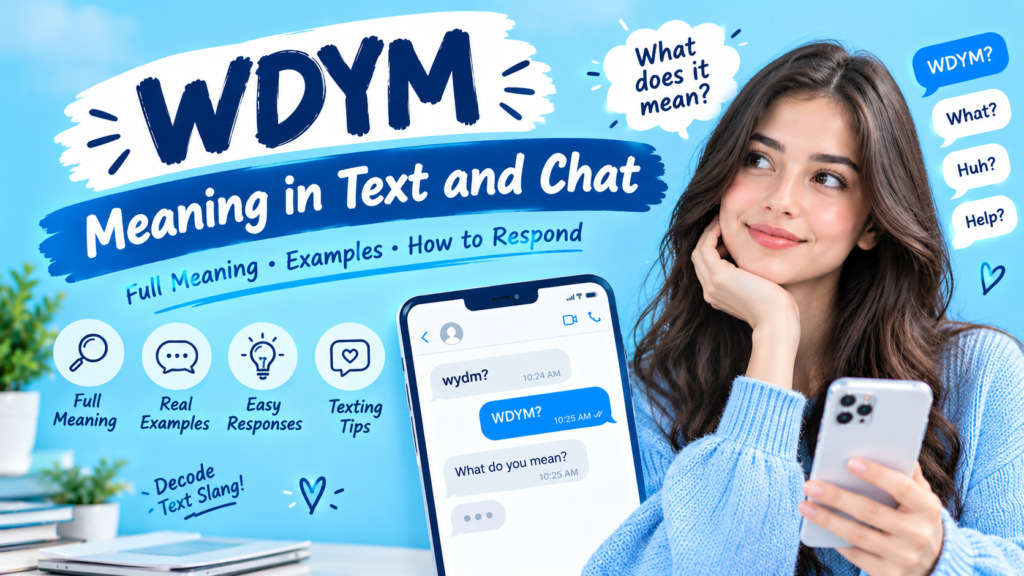
In text and chat, WDYM works as a clarification request. It quietly says, “I did not get that, can you explain?” It is short, direct, and needs no extra words to make sense.
People use it in a few different ways:
- To ask for more detail: “I’m not sure about this plan.” → “wdym?”
- To show confusion: “Your message makes no sense to me.”
- To challenge a statement: “You think I’m lazy? wdym?”
- To keep a chat going: It shows interest and invites the other person to say more.
WDYM works as a full reply on its own. That is why it fits so well in fast messaging, where people send many short messages back and forth.
It also saves the reader from guessing. Instead of assuming what a vague message meant, the person simply asks. This avoids small misunderstandings before they grow into bigger ones.
It also helps the conversation feel more human. A quick WDYM shows that the sender is listening and paying attention. Nobody likes talking to someone who nods along without really understanding.
Does WDYM Have Different Meanings?
Almost always, WDYM means “what do you mean?” There is no hidden second definition that changes the words themselves. If someone sends it, they want you to explain something.
It is also different from “what?” or “huh?” Those replies can sound blunt, while WDYM sounds more focused. It points to the exact idea that needs an explanation, which makes it more useful in most chats.
Some people read it as “what did you mean?” when they ask about something already said earlier. The core idea is still the same. The sender wants you to explain yourself.
What changes is the tone behind the message, and that is where confusion often starts. The same three letters can sound friendly, upset, or teasing depending on how they are sent.
| Tone | What the sender feels | Example |
| Curious | Wants to understand | “wdym by that?” |
| Confused | Did not follow | “wdym I invited?” |
| Defensive | Feels criticized | “wdym I never listen” |
| Annoyed | Frustrated | “WDYM.” |
| Playful | Teasing | “wdym 😂” |
Reading the tone correctly is the real skill. The meaning is easy, but the feeling behind it takes a closer look at the whole message.
Also Read This Meaning OPP Mean in Slang
How Context Changes the WDYM Meaning
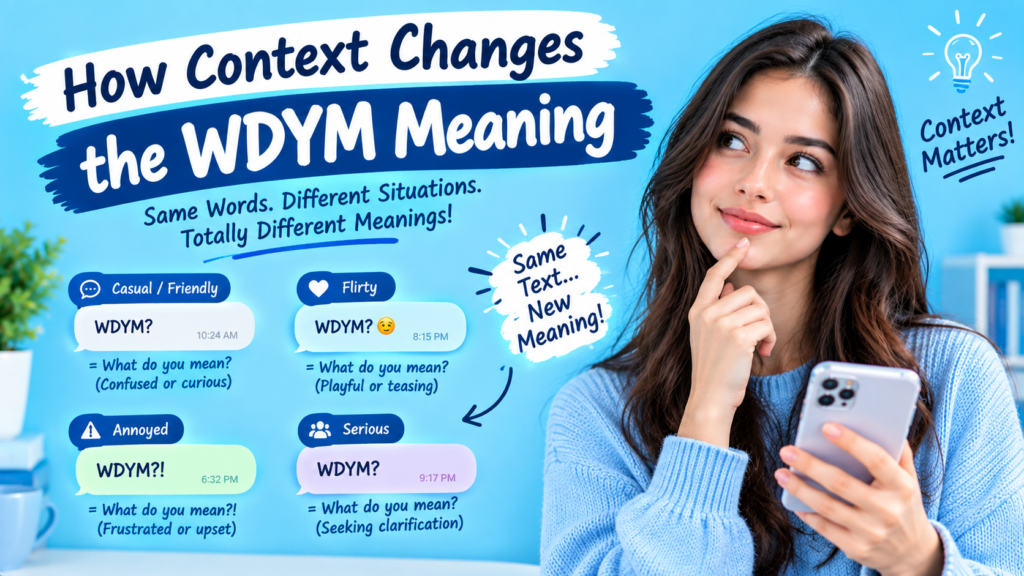
Text strips out tone of voice. You cannot hear a smile or a sigh, so small details carry a lot of weight. Four things matter most: the surrounding words, the punctuation, the emojis, and the relationship.
1. Surrounding Words
Extra words usually make WDYM friendlier. They show the sender is trying to understand rather than argue.
- “wdym exactly?” → genuine curiosity
- “wdym by that?” → asking for detail
- “wdym, I did nothing” → defensive
When WDYM stands completely alone, the meaning is less clear. Adding even two words gives the reader a clue about the mood.
2. Punctuation
Punctuation shifts the mood very fast. A single mark can turn a simple question into a cold remark.
- wdym? → neutral question
- wdym?? → more confused or urgent
- wdym. → cold or irritated
- WDYM!? → shocked
A question mark keeps things open and calm. A period at the end often sounds final, as if the sender has already lost patience.
3. Emojis
Emojis soften or sharpen the message. They act like a replacement for facial expressions.
- 😂 or 😅 → light and playful
- 🤔 → thoughtful, curious
- 😐 or 🙄 → annoyed or sarcastic
- 🥺 → hurt or worried
If you are unsure how a WDYM sounds, check the emoji first. It is often the fastest clue to the sender’s real mood.
4. Relationship
Who you are talking to matters most. The same message can mean different things from different people.
- A close friend saying “wdym” is usually just curious.
- A boss or teacher saying it may want a clearer, more professional explanation.
- A partner saying it in an argument might feel hurt or defensive.
Think about the history you share with the person. Their usual texting style will tell you more than the acronym itself.
If a normally warm friend suddenly sends a cold WDYM, something may be wrong. Notice the change and gently ask about it. Small shifts in style often reveal big feelings.
WDYM on Different Platforms
The meaning of WDYM stays the same everywhere. However, the style shifts a little from one app to another. Knowing these habits helps you read the message correctly.
| Platform | Typical Use |
| WhatsApp / iMessage | Quick clarification in personal chats |
| Instagram DMs | Casual, often paired with emojis |
| Snapchat | Fast, lowercase, playful |
| TikTok comments | Asking creators to explain a joke or claim |
| X (Twitter) | Replying to confusing or bold posts |
| Discord / gaming chats | Short, quick, often mid-game |
| Work chat (Slack, Teams) | Less common; “Could you clarify?” is safer |
On personal apps like WhatsApp and iMessage, WDYM is simple and friendly. On Instagram and Snapchat, it often comes with jokes and emojis. On TikTok and X, it usually reacts to a public post.
Gaming chats use it in a hurry. Players type it between actions, so it rarely carries any emotion at all. Work chats are different, since a full sentence looks more respectful there.
Regional habits matter too. In some groups, people stretch the word or add slang for fun. In others, they keep it plain and short. Watch how your own friends type, and you will read them better.
Real Conversation Examples
Examples make the tone easier to see. Here are three common situations where people use WDYM, along with a short note on what is really happening.
1: Friends
Mia: I might skip tonight.
Jay: wdym? You were so excited yesterday.
Mia: Yeah, I’m just tired.
Jay isn’t upset. He is just surprised and wants the reason. His extra sentence shows he cares about her plans.
Mia answers honestly and briefly. The conversation moves forward without any tension, which is how WDYM works best between friends.
2: Group Chat
Leo: Let’s do the usual place.
Nora: wdym usual? We have three usual places 😂
Leo: The pizza spot!
Nora uses WDYM with a joke to get a clear answer. The laughing emoji tells everyone she is not annoyed.
Leo fixes the problem in one line. Group chats depend on this kind of quick clarification, because many people can misread one vague message.
3: Social Media
Post: Nobody talks about how overrated Mondays are.
Comment: wdym overrated? Mondays are the worst 😭
Here WDYM is a reaction to a statement the commenter did not expect. The commenter disagrees, but in a light and funny way.
On public posts, WDYM often starts a friendly debate. It invites the original poster to defend an opinion without sounding aggressive.
Comment sections move fast, so short questions win. Still, be careful with strangers. A sharp WDYM under a personal post can start a fight, while a kind one usually gets a helpful answer.
Is WDYM Rude?
Not by default. WDYM is a neutral question. It becomes rude only when the tone around it is sharp.
It can come across as rude when:
- It is typed in all caps with a period (“WDYM.”)
- It follows a heated message
- It is sent with an eye-roll emoji
In these cases, the sender is usually showing frustration. The words are not the problem, but the way they are delivered makes them feel cold.
To keep it polite, add a softener like “wdym exactly?” or “can you explain what you mean?” A small friendly touch changes the whole feeling of the message.
If you receive a sharp WDYM, do not react right away. Read the earlier messages again and try to see what upset the sender. Calm replies usually solve the tension quickly. Patience is the best response to any confusing message.
Remember that text can look harsher than it really is. Many people type quickly and never think about how their message sounds. A friendly follow-up question often reveals that no offense was ever meant.
Is WDYM Flirty?
Sometimes, but only with the right cues. By itself, WDYM is not flirty. It is just a question, and most of the time it means nothing more.
In a flirty chat, though, it can be playful. This is especially true when the sender wants the other person to say more or to give a compliment.
Example:
Him: You’re trouble, you know that?
Her: wdym 😏
The emoji and the setting make it teasing. She is not confused at all. She is inviting him to keep going.
Without those cues, it is just a question. So do not read romance into every WDYM. Look at the emojis, the timing, and the general mood of the conversation before deciding.
Flirty WDYM messages often come late at night or after a compliment. They usually include a winking or smiling emoji and a relaxed style. If those signs are missing, treat it as a normal question and answer it simply.
How to Reply to WDYM
The best reply is short, clear, and answers what the person is confused about. Do not just repeat yourself. Rephrase your message in simpler words so the meaning becomes obvious.
Match the tone of the sender when you can. If they sound playful, a light answer works well. If they sound serious, keep your reply calm and direct.
Friendly Replies
- “Sorry, I meant that I’m running late.”
- “Good question! What I meant was…”
- “Let me explain.”
- “I was talking about the meeting tomorrow.”
- “Basically, I just need a little more time.”
These replies are warm and helpful. They show that you care about being understood and that you are not offended by the question.
Funny Replies
- “Exactly what I said, but with more confidence 😄”
- “Even I’m not sure anymore.”
- “It’s a mystery for the ages.”
- “I meant every word. I just don’t know what they were.”
- “Let me get back to you after coffee ☕”
Humor works well with friends and in relaxed group chats.
Keep your answer honest even when you joke. If the person is truly confused, a funny line alone will not help them. A short joke followed by a clear explanation is the best mix. Use it only when the mood is light, and always follow up with a real answer if the person still looks confused.
When You Are Unsure What They Mean
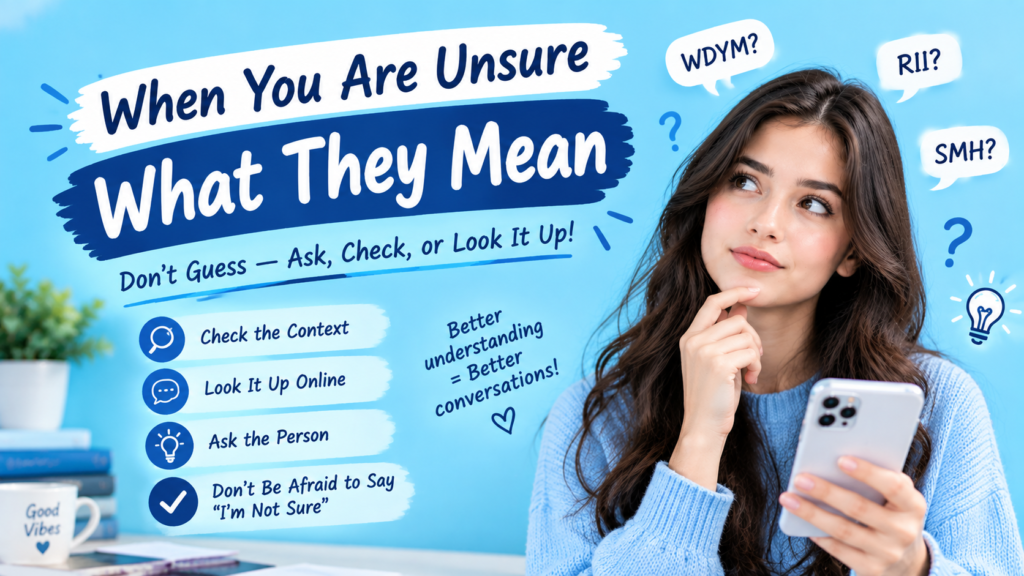
Sometimes you receive a WDYM and cannot tell the tone. Maybe there are no emojis, and the earlier messages give no clue. In that case, do not guess.
Guessing wrong can turn a small question into an argument. A short check is much safer than a wrong assumption. Try one of these simple steps:
- Ask a clarifying question: “Which part didn’t make sense?”
- Restate your point simply: Shorter sentences help.
- Check the mood: “Did that come across wrong?”
- Move to a call: For sensitive topics, voice beats text.
A quick phone call solves many problems because the tone is easy to hear.
Voice notes are another good option. They also prevent the extra confusion that short typed replies can create. They let you explain slowly and keep your tone warm. Many people find them easier than typing a long message. If the topic is emotional, calling is often the kindest choice.
You can also wait a moment before replying. A short pause gives you time to think about what the sender really needs. A calm, thoughtful answer is always better than a fast, careless one.
When to Use WDYM
WDYM is a great tool in the right place. It keeps conversations moving and makes you sound natural and relaxed.
Use it when:
- You are chatting with friends, family, or peers
- You need a quick clarification
- The conversation is casual
- You want to sound natural and relaxed
In these situations, WDYM saves time and feels friendly. Nobody expects a long, formal sentence when they are texting a close friend.
It is especially handy when a message is vague or too short. Instead of waiting and worrying, you can ask right away. This keeps the chat smooth and stops small confusion from building up.
Tip: Pairing it with a follow-up (“wdym by that?”) gives the other person more direction. They will know exactly which part you want them to explain.
When to Avoid WDYM
WDYM is casual, so it does not fit every setting. Sometimes a short acronym can look lazy or even disrespectful.
Skip it when:
- You are writing to a boss, client, or professor
- The topic is serious or emotional
- The other person might read it as dismissive
- You are in a formal email or document
In professional spaces, clear and polite language builds trust. A full sentence shows respect and leaves less room for misunderstanding.
Serious or emotional topics also need more care. If a friend shares bad news and you reply with a quick WDYM, it may feel cold. A softer sentence like “I want to understand, can you tell me more?” shows real concern.
Better alternatives: “Could you clarify?” or “Can you explain what you mean by that?” Both are polite, simple, and safe in almost any situation.
Common Mistakes About WDYM
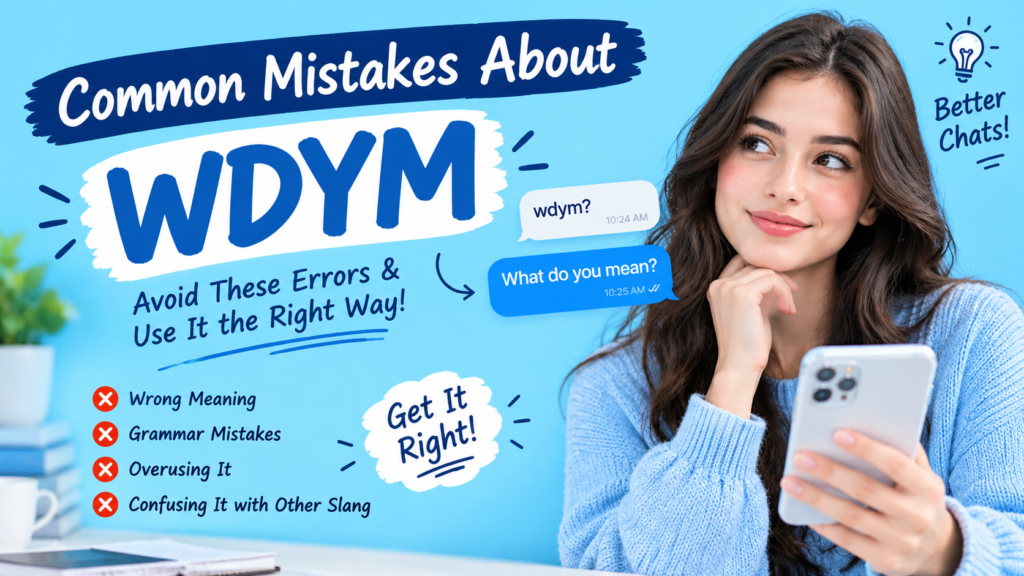
Even a simple acronym can cause problems when people misuse it. Here are the most common mistakes to avoid.
- Assuming it is always rude. Tone decides that, not the acronym.
- Confusing it with WTM or WYM. Those are different or unclear abbreviations.
- Using it in formal writing. It looks too casual.
- Replying with just “nothing.” That leaves the person more confused.
- Ignoring context. The same three letters can sound curious or annoyed.
- Overusing it. Constant WDYM can make you seem disengaged.
The biggest mistake is reading too much into it. Most senders simply want to understand you better, and nothing more.
Another common error is sending WDYM too often in one chat. If every message from the other person gets the same reply, it can feel tiring. Try to use full questions now and then to keep the talk fresh.
The second biggest mistake is a lazy reply. If someone asks what you mean, give a real answer. A clear response ends the confusion and keeps the chat friendly.
Similar Slang Terms
WDYM belongs to a large family of texting shortcuts. Learning the others helps you understand modern chats much faster.
| Slang | Meaning | Use |
| IDK | I don’t know | Showing uncertainty |
| IMO | In my opinion | Sharing a view |
| TBH | To be honest | Adding honesty |
| SMH | Shaking my head | Disapproval |
| WYD | What are you doing? | Asking about activity |
| HBU | How about you? | Returning a question |
| IYKYK | If you know, you know | Inside jokes |
| FR | For real | Agreement or emphasis |
Many of these also depend on tone. Like WDYM, they can sound friendly or sharp based on punctuation and emojis.
Learning these terms takes only a little practice. Reading slang well is really about understanding people, not memorizing letters. Start with the ones you see most often in your own chats. Soon you will read fast messages easily and reply with confidence.
WYD is the closest cousin, since both start with “W” and both are questions. However, WYD asks about activity, while WDYM asks for an explanation.
Conclusion
WDYM means “what do you mean?” It is a fast, casual way to ask for clarification in texts, chats, and comments. Once you know this, the acronym stops being a mystery. It is simple, useful, and almost always friendly.
The words themselves are simple. The tone comes from punctuation, emojis, and your relationship with the sender. Read those cues carefully before you decide how to feel or respond.
Save WDYM for casual chats, and use a full sentence in formal settings. Next time someone sends you “wdym,” you will know exactly how to respond.

Hi, I’m Munaza, the creator of RTMeaning.com. I’m passionate about explaining internet slang, abbreviations, texting terms, and modern language in a simple and easy-to-understand way. Through this website, I help readers discover the meanings behind trending words, social media expressions, and online communication. My goal is to make learning new terms quick, clear, and enjoyable for everyone.