

If someone just sent you “LYT” in a text and you have no idea what it means, you are not the only one. Texting slang changes fast. New abbreviations show up in group chats, comment sections, and DMs long before most people get a chance to look them up.
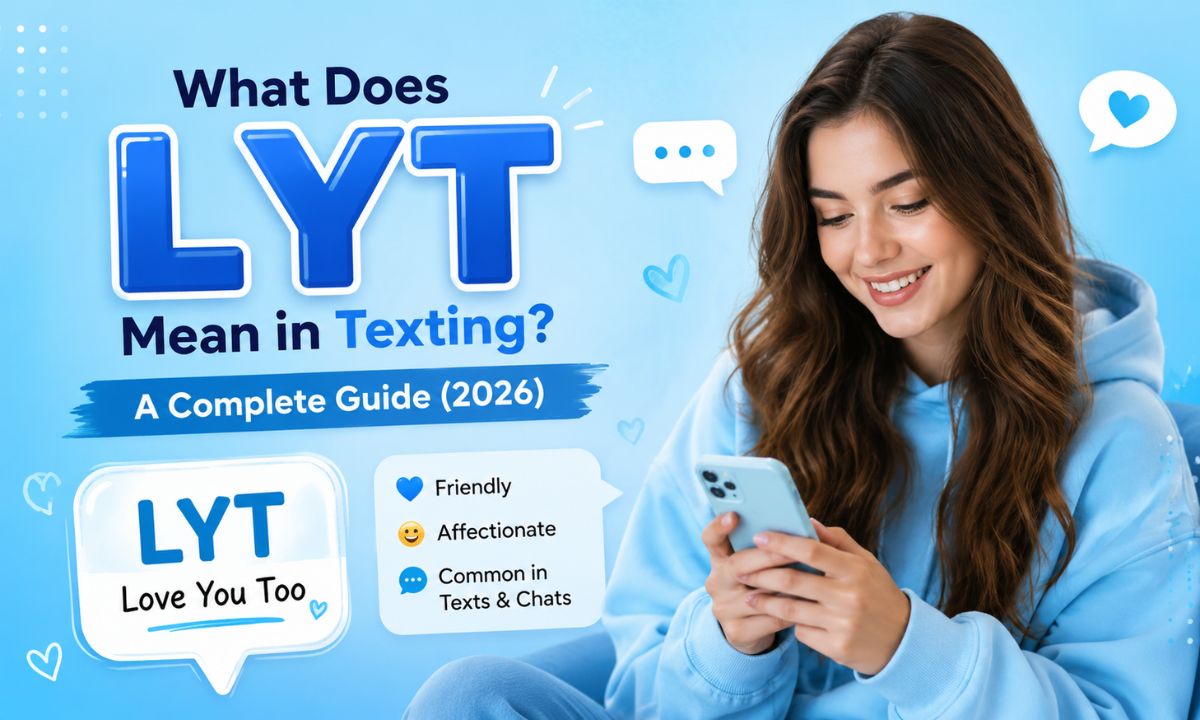
Here is the short answer. LYT usually means “Love You Too.” It is a quick, warm reply that people send after someone else has already said “I love you” or “love you” first.
That said, there is more nuance to it than a simple definition. The meaning of LYT can shift slightly depending on who sends it, what platform it appears on, and the type of relationship between the two people texting. This guide walks through the meaning, real examples, when it fits, when it does not, and how it compares to similar slang terms.
What Does LYT Actually Stand For?
LYT is a texting abbreviation for “Love You Too.” It is a reciprocal phrase, which means it almost always appears as a response. Someone says “I love you” first, and the other person replies with LYT instead of typing out the full sentence.
Shortening the phrase to three letters saves time, especially in a fast-moving conversation where both people are typing quickly on a phone keyboard.
Here is a simple example:
Person 1: “Goodnight, love you!” Person 2: “LYT, sleep well.”
In this exchange, LYT works as a fast, casual echo of affection. It is short, but it still carries real emotional meaning. Nobody reads it as a throwaway response, even though it takes only a second to type.
Where People Use LYT
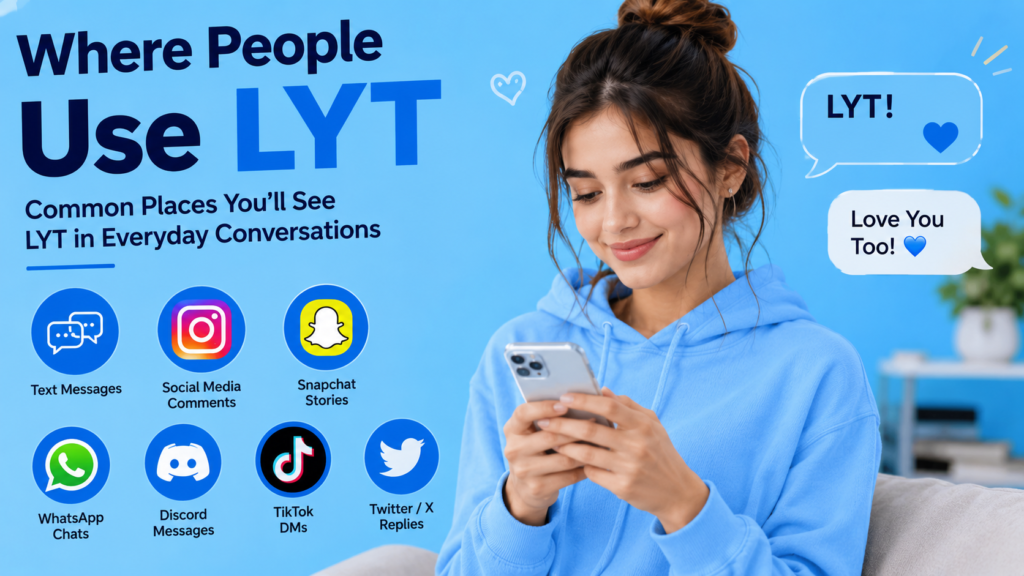
LYT tends to show up in personal, informal conversations rather than professional or academic writing. It is designed for speed, so it thrives in places where people text quickly and casually.
You will most often see it on:
- Text messages, including SMS and iMessage
- Snapchat
- Instagram direct messages
- TikTok comment sections
- Discord chats
It is rare to see LYT in a work email, a school assignment, or any formal writing. The abbreviation belongs to casual digital spaces, not professional ones.
The Tone Behind LYT
LYT generally carries a warm and affectionate tone. It is not meant to sound cold or dismissive. It is simply a faster version of saying the same three words.
The emotional weight tends to be light to moderate. It is not usually used for grand declarations of love, but rather for everyday affection between people who already have that closeness established.
The formality level is very informal. You would not use LYT with a coworker, a new acquaintance, or in any setting that calls for polished language.
The typical senders are romantic partners, close friends, family members, and sometimes people you follow closely on social media. It is often paired with emojis such as a red heart, a smiling face with hearts, or a kissing face, which help soften the abbreviation and make the affection feel more genuine.
Real Examples of LYT in Conversation
Seeing LYT used across different relationships helps make the meaning click. Here are several situations where it naturally appears.
Romantic conversation
Him: “I love you so much.” Her: “LYT, always.”
Between best friends
Friend 1: “You’re the best, love you!” Friend 2: “Lyt bro, you know it.”
Parent and child
Mom: “Drive safe, love you.” Kid: “LYT mom, see you soon!”
Long distance relationship
Partner 1: “Missing you like crazy, love you.” Partner 2: “LYT so much, can’t wait to see you.”
Birthday message
Friend: “Happy birthday! Love you, hope it’s amazing.” You: “Aww LYT, thank you.”
Snapchat exchange
Snap caption: “love you” Reply: “lyt”
Instagram DM
DM: “you’re literally the best, love u” Reply: “LYT fr fr”
Notice how the tone barely changes across these examples. Whether it is a parent, a friend, or a partner, LYT keeps the same light, affectionate feel. The context around it, like emojis or extra words, adjusts the emotional intensity slightly, but the core message stays the same.
When to Use LYT and When to Avoid It
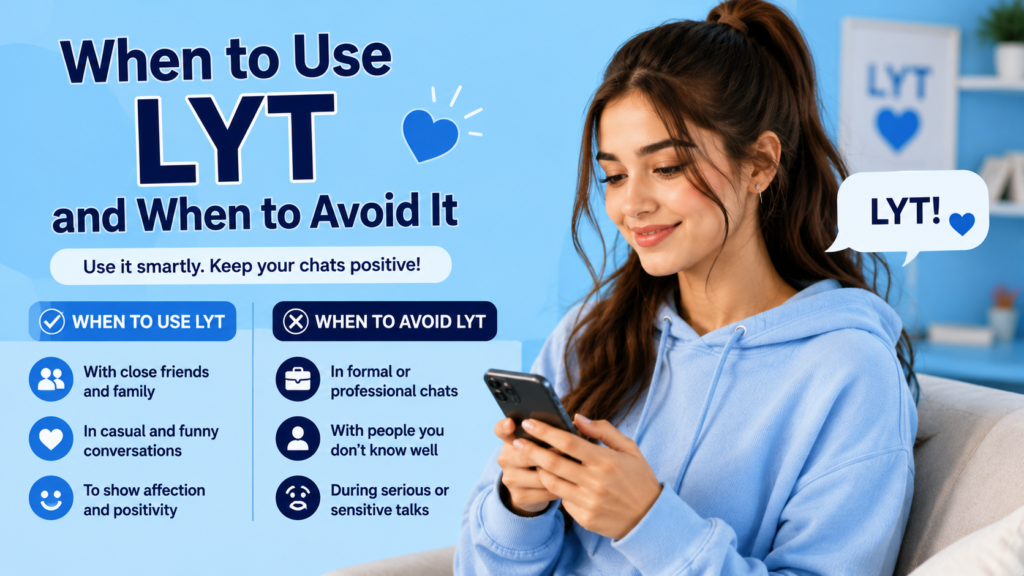
Knowing when LYT fits is just as important as knowing what it means.
Good times to use it:
- Replying to someone who said “love you” first
- Texting close friends, partners, or family members
- Casual conversations on social media
- Moments when a quick, light response feels appropriate
For example, if someone texts “I appreciate you so much, love you,” replying with “LYT, means a lot” feels natural and warm.
Times to avoid it:
- Formal emails or workplace messages
- Conversations with someone you barely know
- Serious or emotional discussions that need a fuller response
- Moments where a short reply might come across as dismissive
If a friend is going through something difficult and shares how much they appreciate you, a bare “LYT” might feel too brief. In emotionally heavy moments, it is often better to type out a complete sentence instead of relying on shorthand.
Other Meanings of LYT
“Love You Too” is by far the most common meaning, but LYT occasionally shows up with a different meaning depending on the platform and context.
On Twitter or X, some people use LYT to mean “Like Your Tweet,” often as a quick acknowledgment rather than an expression of affection.
In music-sharing contexts, LYT can stand for “Listen to This,” usually attached to a song link or audio clip.
In caption-style posts, LYT sometimes means “Living Your Truth,” typically used as a form of encouragement or self-affirmation.
If you come across LYT outside of a romantic or affectionate exchange, it is worth checking the surrounding conversation. The meaning shifts depending on where it appears and what the rest of the message says.
Also Read This Meaning “WUT” Mean in Text
Similar Slang Worth Knowing
LYT belongs to a small family of similar abbreviations, each with a slightly different tone.
ILY stands for “I Love You” and reads as slightly more direct than LYT.
ILY2 means “I Love You Too” and carries a tone similar to LYT, though a bit more expressive since it spells out the full phrase in shortened form.
LY simply means “Love You.” It is even shorter than LYT and less commonly used as a direct reply.
LYSM stands for “Love You So Much” and carries a stronger emotional tone than a basic LYT.
ILYSM means “I Love You So Much” and represents one of the more intense versions of this family of abbreviations.
Understanding these related terms helps you read the emotional temperature of a conversation. A plain LY feels almost too brief, while ILYSM signals deeper intensity. LYT sits comfortably in the middle, warm but not overwhelming.
Why People Use LYT Instead of Typing It Out
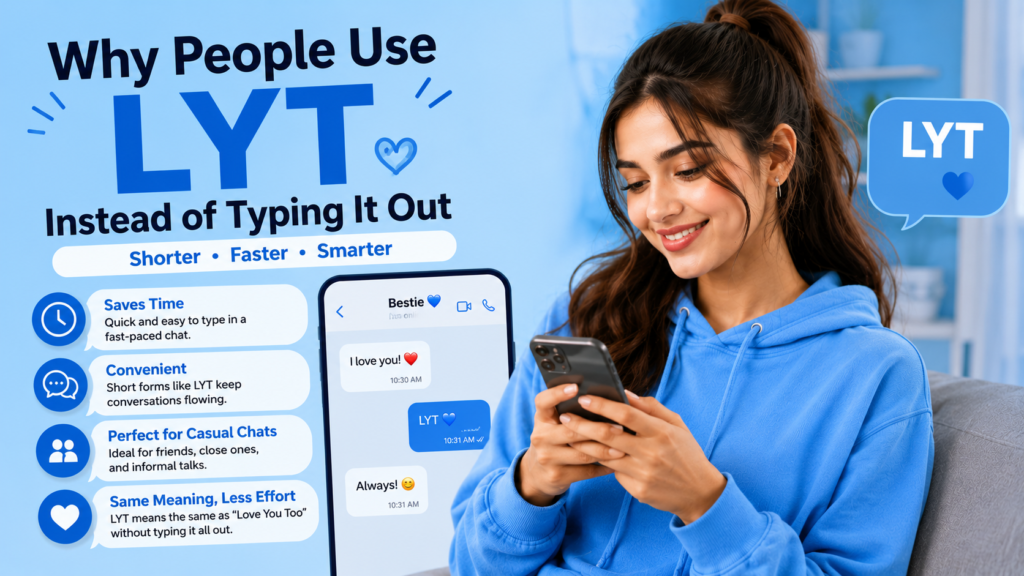
There are a few clear reasons this abbreviation caught on and stuck around.
It saves time: Typing three letters takes far less effort than typing a full sentence, which matters in the middle of a back-and-forth conversation.
It fits fast-paced texting: Modern texting culture rewards quick replies. LYT keeps the conversation flowing without forcing either person to slow down.
It softens the intensity: Saying “I love you too” out loud or in full can feel heavier in certain moments. LYT keeps things light and easy rather than serious.
It spread through everyday use: Like most internet slang, LYT became common because it kept appearing in group chats and social media until it turned into shorthand that most people recognize instantly.
It works well on small keyboards: Fewer letters mean fewer typos, which is genuinely helpful when typing quickly on a phone screen.
Is LYT Friendly or Rude?
For the most part, LYT is friendly. It reflects real affection, just delivered in a shorter, more efficient format. Nobody sending LYT is trying to be cold.
A cheerful “LYT” after a goodnight message reads as sweet and casual. The same goes for something like “lyt bestie” between close friends, which feels playful rather than distant.
There are neutral cases too. A plain “lyt” sent quickly, without punctuation or an emoji, in the middle of a busy conversation usually just reflects speed rather than any lack of feeling.
It can occasionally come across as dismissive, though. If someone shares something emotionally significant and the only response is a bare “lyt,” it might feel like the moment deserved more attention. Context and the nature of the relationship matter far more than the abbreviation itself.
How LYT Shows Up Across Different Platforms
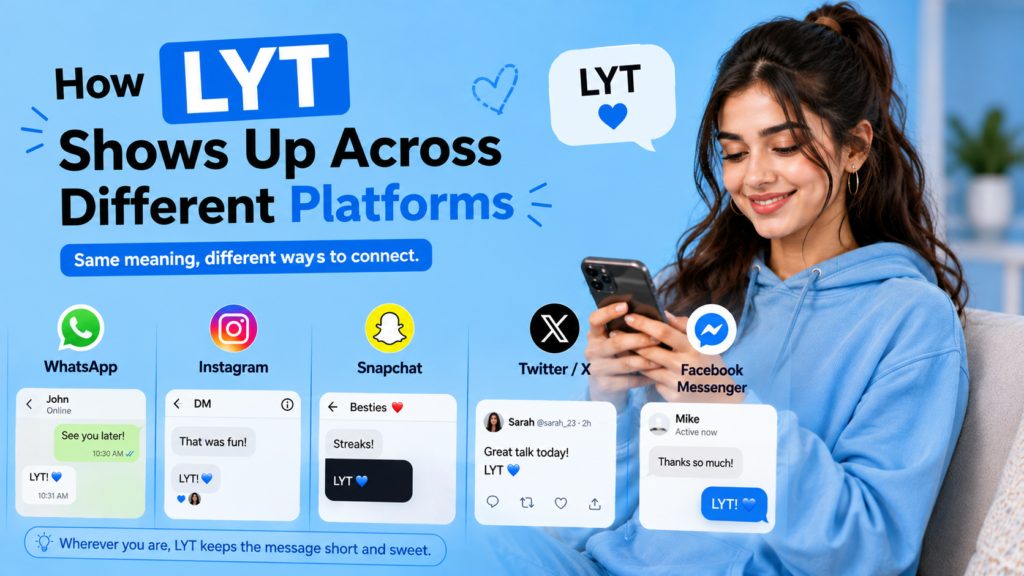
Each platform has its own flavor of how LYT gets used.
On Snapchat, it commonly appears as a quick reply to a snap that already includes a “love you” caption, keeping the exchange fast and lighthearted.
On TikTok, LYT often shows up in comment sections, frequently paired with emojis or as part of a duet reply between creators and fans.
On Instagram, it is frequent in direct messages and comment replies between friends and couples, especially in ongoing conversations.
On WhatsApp, LYT appears in casual chats, particularly with family members and close friends who message regularly throughout the day.
On Discord, it shows up in server chats and private messages, often among tight knit friend groups who already share an established communication style.
Why LYT Has Stayed Popular
LYT fits neatly into how people communicate today: fast, casual, and often paired with emojis. It manages to capture genuine emotion without slowing down the pace of a conversation, which explains why it has remained a fixture across texting apps and social platforms for years.
As texting culture continues to favor speed and shorthand, abbreviations like LYT are likely to stick around. They offer a quick way to express something meaningful without breaking the rhythm of a conversation.
Final Thoughts
LYT is a simple, affectionate texting abbreviation for “Love You Too.”
It shows up across platforms like Snapchat, Instagram, WhatsApp, TikTok, and standard text messages. It is casual, quick, and generally friendly, making it a natural fit for close friends, family members, and romantic partners who want to return affection without typing out a full sentence every time.
Now that you understand what LYT means, where people use it, and when it fits best, you should never feel confused seeing it pop up in a text again.

Hi, I’m Munaza, the creator of RTMeaning.com. I’m passionate about explaining internet slang, abbreviations, texting terms, and modern language in a simple and easy-to-understand way. Through this website, I help readers discover the meanings behind trending words, social media expressions, and online communication. My goal is to make learning new terms quick, clear, and enjoyable for everyone.